Know what’s happening
Access the private noticeboard for verified neighbours near you. Keep informed about any suspicious activity, send urgent updates to your neighbours when required and discuss emergency planning.
Get to know your neighbours
Browse the directory and start getting to know your neighbours. Don’t want to post to the whole neighbourhood? Send a private message.
Buy, sell and give away
Want to declutter your garage? Buy some used household items? Give away some garden stuff? Become a verified neighbour to browse and post items for sale. Trading is simple when everyone lives nearby.
These five tips will help to keep your house greens looking lush!
1. Potting and repotting
When potting a plant, choose a pot that has good drainage and always use a good quality potting mix (I use Tully’s Perfect Potting). If you do have a pot without drainage, you can pot it in a smaller … View moreThese five tips will help to keep your house greens looking lush!
1. Potting and repotting
When potting a plant, choose a pot that has good drainage and always use a good quality potting mix (I use Tully’s Perfect Potting). If you do have a pot without drainage, you can pot it in a smaller plastic pot and pop it inside.
When repotting, pick a pot that’s one size bigger than the one you have, place some firmly packed potting mix in the bottom and a small sprinkle of plant fertiliser (I use Ecostore Organic Biophos). Give the plant a good water and gently tip the pot on its side and ease out the plant, place it in the new pot and gently fill with potting mix, press down soil and keep filling until you are about 2-4cm from the top of the pot.
2. Light
Most plants like bright indirect sunlight. Plants get their nourishment and energy from the sun so don’t be shy about placing them in bright sunlight. As the seasons change, watch the light levels and move plants closer or further away from windows. Some plants can survive in very dim light but give them a bright light holiday one day a week. Pale foliage is a sign that your plant might not be getting enough light and brown patches on leaves can mean the plant is getting singed.
3. Water
One of the most common reasons indoor plants die is overwatering. The majority of plants need to be watered once a week. Once a month place them in a sink or bucket and drench the soil and roots, then let the water drain out well before placing them back in their spots. There are a few plants that like more water, such as peace lilies, and some that like less, including ZZ plants and snake plants.
4. Humidity
Lots of indoor plants, and the majority of what we sell, originate from sub-tropical rainforest-type climates. They love a light misting daily or you can sit them in the bathroom while you take a shower.
5. Choosing plants
Pick the right plant for you and your lifestyle. If you are new to house plants, start with an easy-care plant such as a succulent or cactus, then you can graduate to other types. If you go away a lot choose a plant that can survive without attention. If you live in the city you might want to think about plants that have super air cleansing powers.
The whole process of choosing plants and their weekly routine can be quite meditative. Enjoy the watering rituals you create — it’s a good chance to practise your mindfulness. Just remember once you start it’s hard to stop!
The new school year is upon us! Though we can’t predict what 2021 will bring, we can set our children up for success, and help them start the school year strong.
Hi there,
Canterbury has been named the fifth most welcoming region in the world in the Booking.com Traveller Review Awards, while Oamaru, Hokitika and Invercargill have been named the most welcoming towns in NZ. They were followed by Cambridge, Picton, Lake Tekapo, Kerikeri, Palmerston North, … View moreHi there,
Canterbury has been named the fifth most welcoming region in the world in the Booking.com Traveller Review Awards, while Oamaru, Hokitika and Invercargill have been named the most welcoming towns in NZ. They were followed by Cambridge, Picton, Lake Tekapo, Kerikeri, Palmerston North, Paihia and Twizel.
We'd be really keen to hear your thoughts on this based on your own travels around New Zealand. Do you think Canterbury is NZ's most welcoming region? And are these our most welcoming towns?
Where in NZ have you been made to feel particularly welcome on your travels?
As usual, please put 'NFP' in your comment if you don't want it to be included in an article. Cheers.
Love is in the air this month! We’re not just talking about Valentine’s Day, we’re talking about this month’s national campaign.
Our theme for February is all about finding ways to show your home and community a little extra love and care. Whether it’s organising a street clean up, … View moreLove is in the air this month! We’re not just talking about Valentine’s Day, we’re talking about this month’s national campaign.
Our theme for February is all about finding ways to show your home and community a little extra love and care. Whether it’s organising a street clean up, helping a neighbour tidy up their property, collaborating on a mural, putting together a working bee, or installing a communal pātaka or library - there are countless ways to make our neighbourhoods more beautiful and enjoyable for everyone.
Share your tips, projects, photos and experiences with us by tagging us in your social media posts or emailing us at:
Fraser High School is the hub of adult learning in Hamilton and the Waikato district. We offer over 70 evening and weekend classes. Our courses are very reasonably priced as we are supported by the Ministry of Education to offer interesting and useful short programs.
Pick from our courses on … View moreFraser High School is the hub of adult learning in Hamilton and the Waikato district. We offer over 70 evening and weekend classes. Our courses are very reasonably priced as we are supported by the Ministry of Education to offer interesting and useful short programs.
Pick from our courses on business management, computing, food and cooking, gardening, language, music and dance, photography, and art.
Enrol now for Term 1, starts 15th February. You can LOOK, BOOK and PAY online at www.fraserace.ac.nz or just call us on 07 846 8624. It's easy!
Addictive Eaters Anonymous on Air is a 25 minute show which features a member of Addictive Eaters Anonymous sharing about their addictive eating and recovery from the compulsion and obsession with food. This will include what their life was like when they were … View moreAddictive Eaters Anonymous On Air
Addictive Eaters Anonymous on Air is a 25 minute show which features a member of Addictive Eaters Anonymous sharing about their addictive eating and recovery from the compulsion and obsession with food. This will include what their life was like when they were caught in addiction, how finding sobriety in Addictive Eaters Anonymous changed their lives, and what their lives are like now.
Our show airs at 12 noon on the 4th Monday of each month.
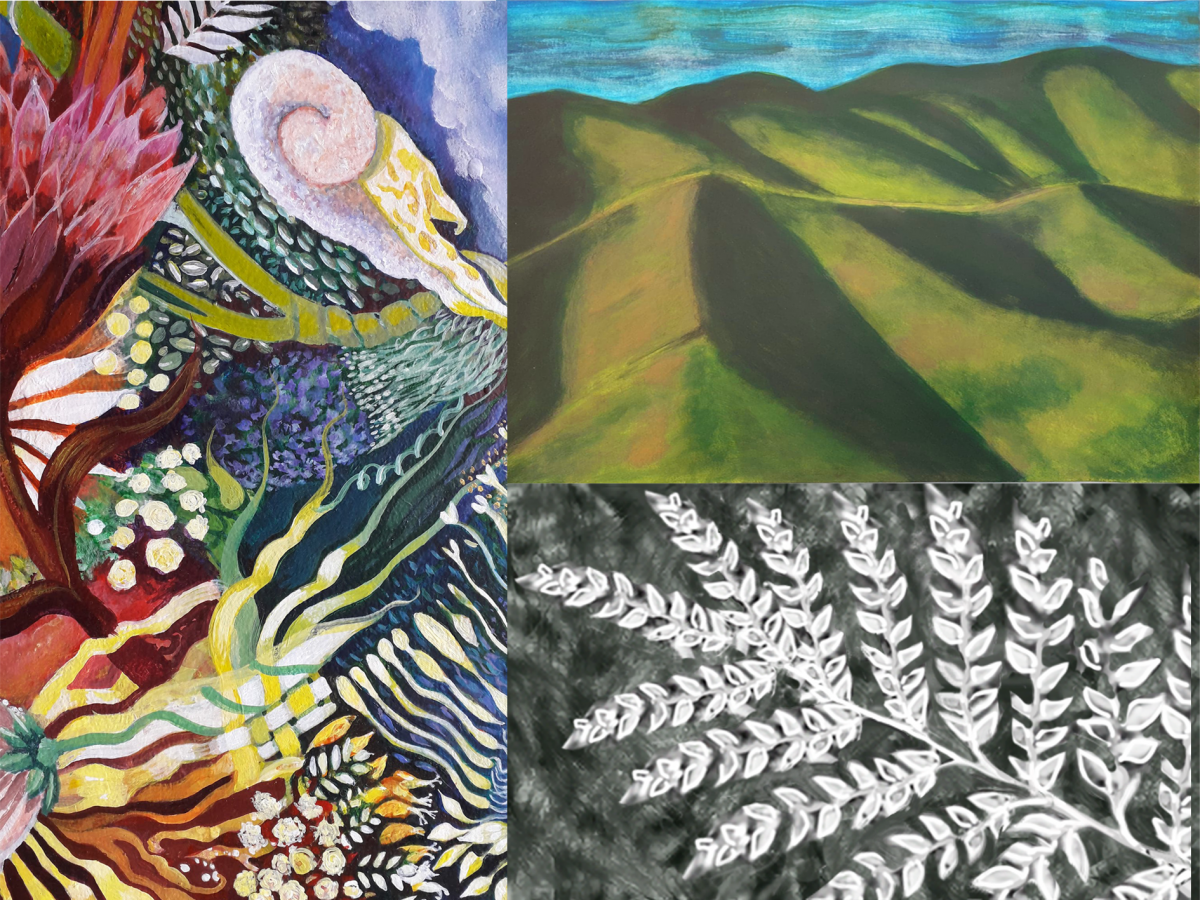
We're launching Term 1 2021 NOW - classes will be starting the week of Feb 9. A line-up of practical visual art ( Studio Exploration) sessions, and we are also offering the opportunity to learn digital storytelling - make a short meaningful digital movie about something significant to you - … View moreWe're launching Term 1 2021 NOW - classes will be starting the week of Feb 9. A line-up of practical visual art ( Studio Exploration) sessions, and we are also offering the opportunity to learn digital storytelling - make a short meaningful digital movie about something significant to you - acquire or create your own images and narration. All sessions are in small friendly groups and are suitable for beginners and continuers. ADULTS: a choice of two evening studio classes: Monday and Wednesday 6 - 8:30 pm, and two daytime classes: Tuesday and Thursday 10:30 - 1pm. KIDS age 8+, two after school sessions for kids age 8 - teens: 4 - 5:30 pm Monday (Studio) and Wednesday (Digital Storytelling). Our Saturday morning class 9:30 - 12 is for for kids 7 to teens. Check the website for more details and / or get in touch by e-mail <info@artmakers.co.nz> or ph 021 991576. WEB: artmakers.co.nz...
EarthDiverse is pleased to announce it's Term 1 Language programmes in Arabic, Hebrew, Hindi, Japanese, Portuguese, Swahili and Urdu. Introductory and Intermediate levels available. Check out our website for more information on these language programmes, and have a look at the other courses we… View moreEarthDiverse is pleased to announce it's Term 1 Language programmes in Arabic, Hebrew, Hindi, Japanese, Portuguese, Swahili and Urdu. Introductory and Intermediate levels available. Check out our website for more information on these language programmes, and have a look at the other courses we offer in Art & Architecture, History, Philosophy and Religious Diversity. Term 1 courses begin the week starting Monday 15 February 2021.
We are passionate about fabrics and finding the right solutions for our customers. With over 110 years of experience in the textile industry we have compiled some of this knowledge and look forward to sharing it with you over the next year through our blog series – An Educational Yarn. Our … View moreWe are passionate about fabrics and finding the right solutions for our customers. With over 110 years of experience in the textile industry we have compiled some of this knowledge and look forward to sharing it with you over the next year through our blog series – An Educational Yarn. Our first topic explores the different characteristics of textile fibres.
Textile fibres are natural or synthetic structures that can be spun into yarn. Yarns are then woven, knitted or bonded into fabric. The inherent characteristics of fibre properties directly relate to the performance and required care and maintenance of the finished fabric, therefore understanding fibres and yarns will in turn help you to understand the how to apply specific fabrics within your interior schemes.
Natural Fibres: Occurring in nature; which are of animal, vegetable/plant or mineral origin.
COTTON (Plant Origin)
• A strong fibre, even stronger when wet, cotton has good natural durability.
• Can be affected by mildew however a mildew resistant finish can be applied to reduce this issue.
• Generally has reasonable sunlight resistance but should be protected with a quality lining when used as a drapery and protected from direct sunlight when used as an upholstery.
• It is an absorbent fibre which means it can move with changing humidity levels.
• May shrink with laundering but this can be reduced through a finishing process on the fabric known as sanforising.
Sunlight resistance can be greatly reduced in acidic polluted conditions.
SILK (Animal origin; an animal fibre that comes from the silkworm. The silkworm creates its cocoon from very long silk fibres which are harvested from mulberry trees.)
• It is naturally fine in texture, and colours beautifully.
• Its biggest disadvantage in furnishing is its sensitivity to UV light degradation (direct and reflected). Due to its sensitivity, it should not be used in direct sunlight or even bright light.
• An absorbent fibre, it has the potential to move in humid environments.
• Silk is a relatively strong fibre and can withstand a certain amount of abrasion, particularly when used in conjunction with
• a backing fabric.
• Unrivalled in splendour and smoothness, silk is regarded the most exclusive of all natural fibres.
LINEN
Plant origin; derived from cellulose fibres that grow inside the stalks of the flax plant.
• As with cotton it is affected by acidic pollution.
• Can be affected by mildew which will likely cause the fibre to deteriorate over time.
• Considered to be the strongest of the natural fibres; if constructed for upholstery it is very durable, particularly when blended with up to 10% nylon.
• Is regarded as a luxury fibre because of its lustre and texture.
• It is an absorbent fibre which means it can move with changing humidity levels
• Linen has moderate sunlight resistance and should be protected by a quality lining when used as a drapery and protected from direct sunlight when used as an upholstery.
Washing chicken doesn’t remove bacteria, it just spreads it around. The best way to protect your whānau from getting sick is to wash your hands and kitchen tools after touching raw chicken, and make sure you cook chicken all the way through. Juices
should run clear and there shouldn’t be any … View moreWashing chicken doesn’t remove bacteria, it just spreads it around. The best way to protect your whānau from getting sick is to wash your hands and kitchen tools after touching raw chicken, and make sure you cook chicken all the way through. Juices
should run clear and there shouldn’t be any pink meat in the centre.
Remember to Clean Cook Chill and check our easy food safety tips here.
Cockroaches are an extremely common household pest throughout all of New Zealand and although they make you shudder when you see them, they thankfully do not pose many health risks, however they can transmit diseases, so it is best to keep them out of your home. As with any pest the number one … View moreCockroaches are an extremely common household pest throughout all of New Zealand and although they make you shudder when you see them, they thankfully do not pose many health risks, however they can transmit diseases, so it is best to keep them out of your home. As with any pest the number one preventative measure is to keep your home and outside surrounding areas as clean as possible. We’ll talk through more information about the different types of cockroaches, how to prevent an infestation before it happens, and if needed how to kill cockroaches.
What are the 3 main types of cockroach?
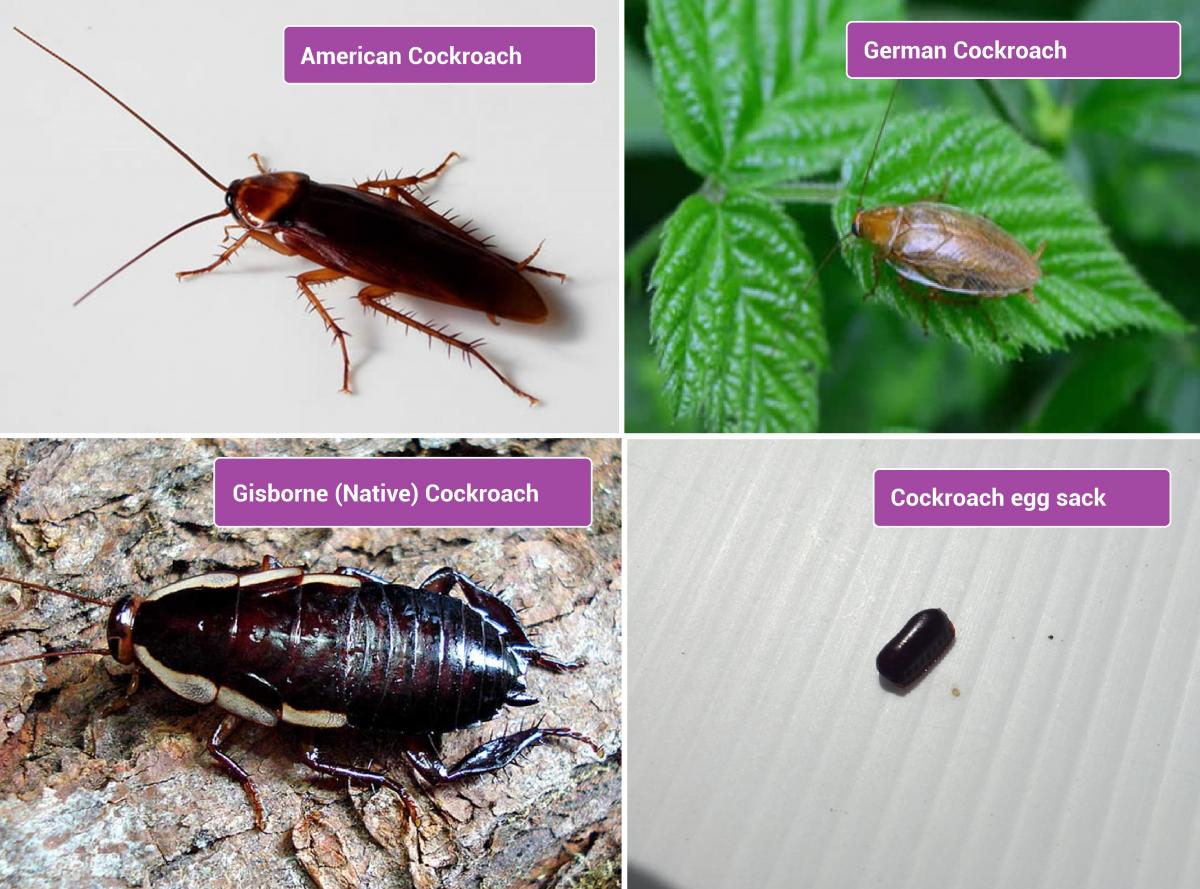
Although there are thousands of different species of cockroach, here in New Zealand we tend to only deal with the following three culprits. They are all pests and have the potential to transmit diseases such as dysentery, salmonella and diarrhoea due to their eating habits. See below for more information on the pests most wanted list.
The Gisborne Cockroach
This is our native representative, although it was first introduced from Australia, they are usually not found in doors at all so if you spot one of these in your home, it was likely by accident such as being carried in through timber and firewood.
They commonly live outdoors in damp dark areas and feed on decaying forest matter, so if you happen to spot one of these, it might be worth just giving a helping hand to get it back outside again.
The American Cockroach
This is the most common species found in New Zealand and is known as a pest throughout the world. Despite the name this species is native to Africa and the Middle East. They have adapted very well to human living spaces as they prefer moist areas with warmer temperatures.
Classified as omnivores, they will eat many foods as well as materials including leather, beer, glue and book bindings. They have the potential to cause sickness in humans, from their odorous secretions and bacteria that they pick up and deposit on food and surface areas and so it is very important to keep your house as clean as possible.
The German Cockroach
Although the smallest of the cockroach species found in New Zealand, they are actually the biggest problem. They do not like cold temperatures to a point where they struggle to survive and so they will always look to go inside of buildings for warmth. They more commonly prefer restaurants, food processing facilities and hotels to residential.
They are defined as omnivore scavengers, meaning they eat everything the American Cockroach does as well as meats, starches, sugars and fatty foods.
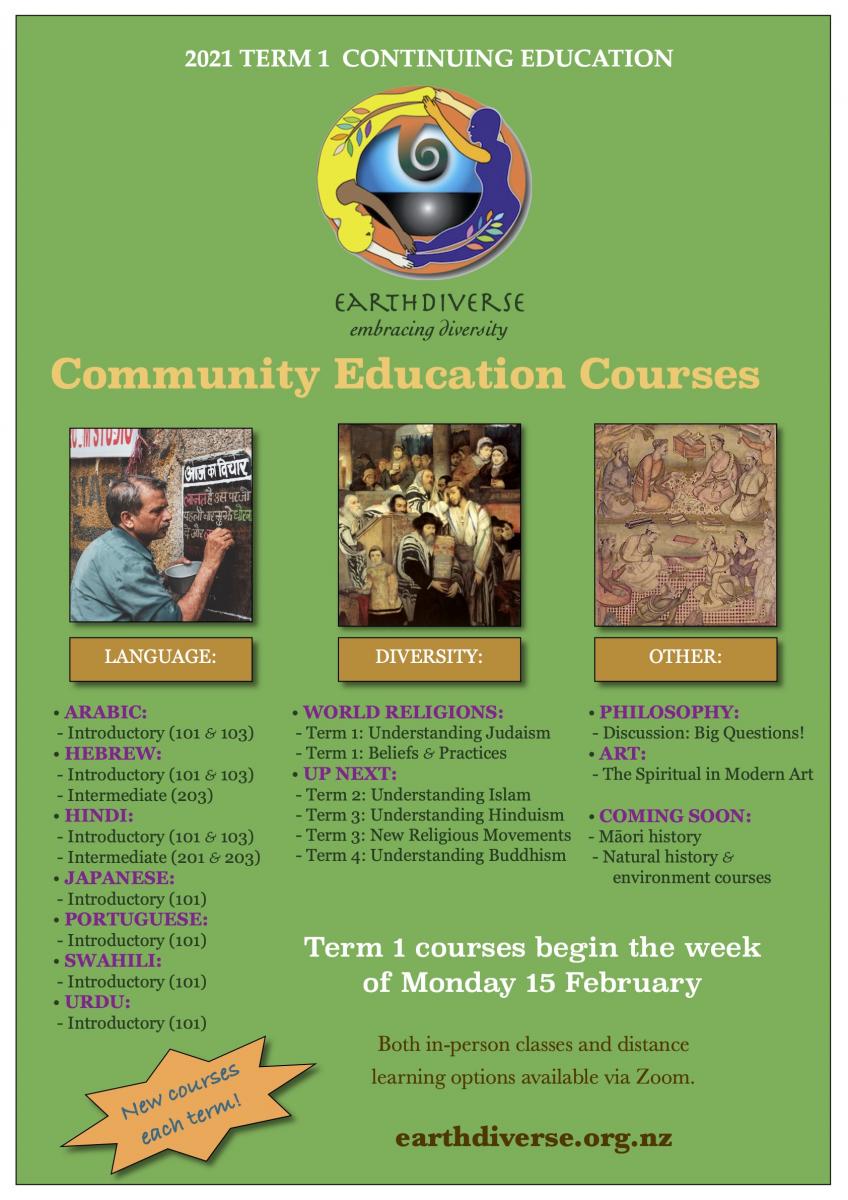
EarthDiverse is pleased to announce its 2021 Term 1 Courses!
We offer the following Introductory language programmes in Arabic, Hebrew, Hindi, Japanese, Portuguese, Swahili and Urdu, with classes at Introductory and Intermediate levels.
We also teach courses on Religious Diversity: this … View moreEarthDiverse is pleased to announce its 2021 Term 1 Courses!
We offer the following Introductory language programmes in Arabic, Hebrew, Hindi, Japanese, Portuguese, Swahili and Urdu, with classes at Introductory and Intermediate levels.
We also teach courses on Religious Diversity: this Term we're offering "Understanding Judaism" in our World Religions series, and we've a course devoted to "Contemporary Beliefs and Practices" that looks at a different topic each session and discusses how the various faith traditions view that topic. Examining religious practice in this way allows us to see the similarities between the various faith traditions rather than the traditional approach which dwells on differences.
We're also offering this Term a new Philosophical Cafe of sorts—a discussion group focused around Life's "Big Questions": What is the meaning of life? Is our universe real? What does it mean to be human? How to live the good life? Is there Truth, and if so, what is it? Does God exist? Explore these questions and others with us in our lounge classroom and be a part of the discussion!
Our other newest course this Term is in our Art & Architecture series, entitled "The Spiritual in Modern Art." This series of eight talks examines how the dimension of the spiritual exhibits itself in the secular art of the nineteenth and twentieth centuries.
OUR TERM 1 COURSES ALL BEGIN THE WEEK OF MON 15 FEB.
Check out these and our other courses at earthdiverse.org.nz
Report this messageDelete this post - Leads feature
If you choose to report this message it will be reviewed by the Neighbourly team.
As a Neighbourly Lead you have the ability to delete this post. We ask that you respect this privilege as deleting this message will also delete it from your neighbours' view.
If you no longer wish to delete the message you can still 'Report the message' for review by the Neighbourly team, or simply 'Hide the message' from being seen on your own newsfeed.
Delete this message?
Are you sure? Deleting this message permanently removes it from the Neighbourly website.
































 Loading…