






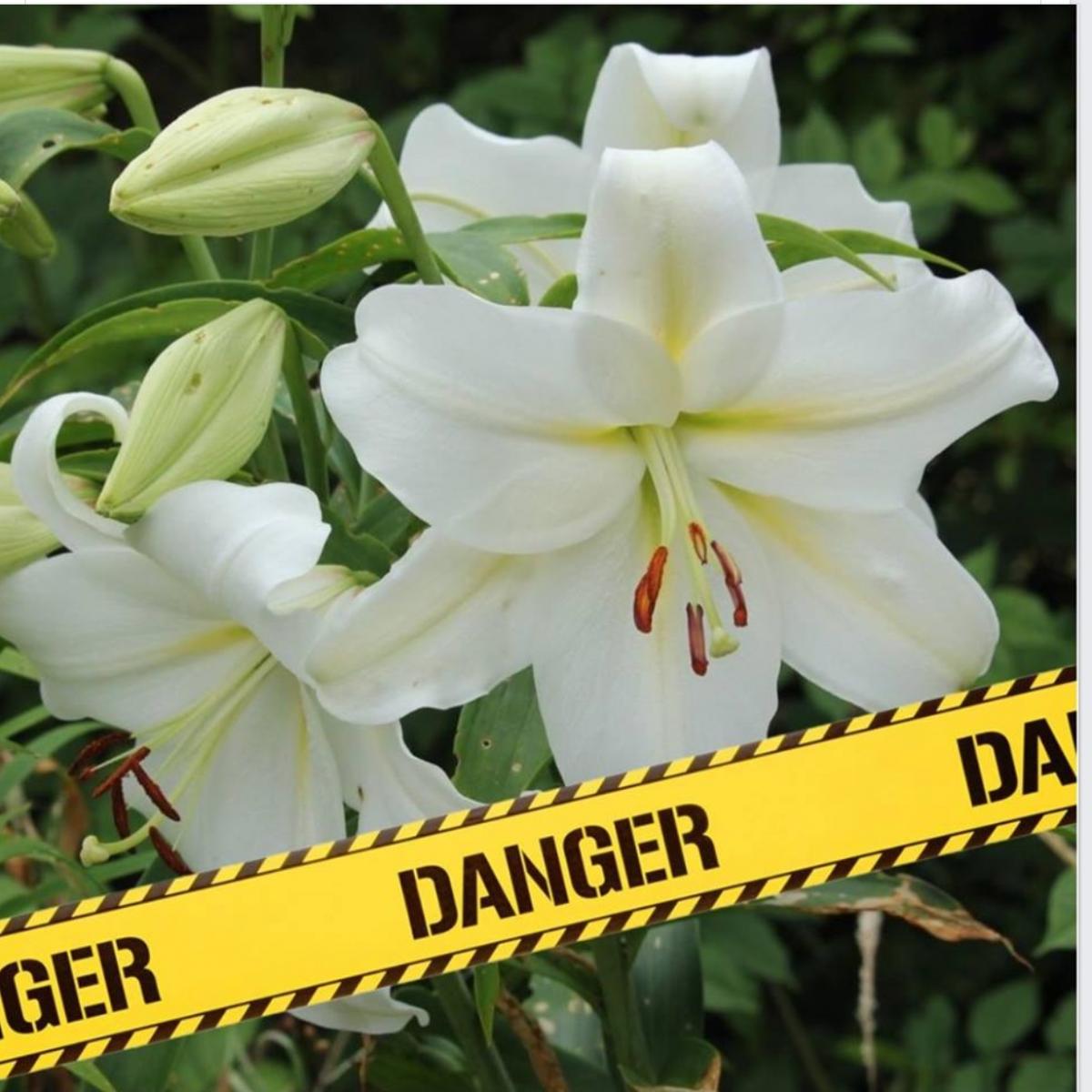
BEWARE - LILIES CAN KILL!
From Gribbles Vets.
At this time of year all types of lilies become quite common in many homes. Lilies of genera Lilium and Hemerocallis (day lilies) have been shown to cause nephrotoxicity in cats.
Cats have been shown to be extremely sensitive to the toxic effects of lilies. As little as 2 leaves or part of a single flower have resulted in deaths. It should be pointed out that the whole plant-petals, stamen, leaves, and pollen are toxic. The exact toxic dose and the precise toxins responsible for renal damage are currently unknown.
The quick onset of clinical signs suggests a rapid absorption rate of the toxin. The renal tubular epithelium appears to be the target of the toxin. Studies indicate that it is the water-soluble fraction of the lily that is nephrotoxic.
In cats, clinical signs of lily intoxication include salivation, vomiting, anorexia, and depression. Polyuric renal failure leads to dehydration and anuric renal failure and death results. No tests to detect lily ingestion are currently available.
Successful treatment includes initiation of fluid diuresis before the onset of anuric renal failure. Once anuria develops, peritoneal dialysis or hemodialysis is the only potential treatment. Differential diagnoses of lily poisoning include any potential cause of acute renal failure in a cat. Prognosis is excellent if fluid diuresis is started before anuric renal failure has developed.
Please remind your clients to be aware of these potentially toxic ornamental house plants.

Poll: Do you set New Year’s resolutions?
🎉 2026 is almost here!
We’re curious ... how do you welcome it?
Do you set resolutions, follow special traditions, or just go with the flow?

-
9% Yes! New Year, New Me
-
21.7% Yes - but I rarely stick to them
-
69.3% Nah - not for me
Poll: Is it ok to regift something that you have been given?
🎁 Holiday Gift Chat!
Do you ever regift?
What’s your take on asking for a receipt if a gift doesn’t fit?

-
78.7% Yes! It's better to regift what I don't need
-
21.3% No. It's the thought and effort that matters

Today’s Mind-Bender is the Last of the Year! Can You Guess It Before Everyone Else? 🌟🎁🌲
I dance in the sky with green and gold, a spectacle few are lucky to behold; I’m best seen in the south, a celestial sight—what am I, lighting up the New Zealand night?
Do you think you know the answer? Simply 'Like' this post and we'll post the answer in the comments below at 2pm on the day!
Want to stop seeing these in your newsfeed? No worries! Simply head here and click once on the Following button.
 Loading…