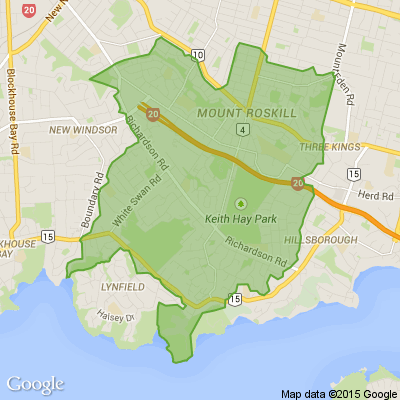

Mount Roskill news is brought to you by the team at Central Leader
Recent posts







Got some bits to give away?
Clear out that garage and pop it on Neighbourly Market for free.


Thank you for using Neighbourly
Thank You
You may receive an email confirmation for any offer you selected. The associated companies will contact you directly to activate your requests.

New dog walking rules from 1 August 2025
Brian from Mount Roskill
New dog rules are being introduced to ensure everyone can safely enjoy the city’s outdoor spaces—people, pets, and wildlife alike. Following strong community feedback, updates approved by the Governing Body for regional rules and local boards for local rules include revised on-leash, off-leash,… View moreNew dog rules are being introduced to ensure everyone can safely enjoy the city’s outdoor spaces—people, pets, and wildlife alike. Following strong community feedback, updates approved by the Governing Body for regional rules and local boards for local rules include revised on-leash, off-leash, and dog-free areas in parks across Auckland, along with new guidelines on how many dogs can be walked at once.
From 1 August 2025, new rules on where you can walk your dog on-leash and off-leash at regional parks, local parks and beaches will take effect. You can find the list of changes below, and our where you can walk your dog webpage will be updated with the new dog access rules from 1 August.
From 1 January 2026, dog owners will be able to walk up to four dogs (two off-leash), while registered walkers can walk up to 12 dogs under clear conditions. These changes aim to strike a fair balance between the needs of dog lovers and other users of our shared spaces.
Why are the rules changing?
=======================
The rules are part of Auckland’s Dog Policy and Bylaw. Councillor Josephine Bartley is chair of Auckland Council’s Regulatory and Safety Committee. She says regularly reviewing the rules helps to keep them clear and up to date so everyone can enjoy our shared spaces safely.
“We’ve listened to feedback from Aucklanders and looked to strike a fair balance – both on the number of dogs that can be walked at once, and how we manage dog access across our regional parks.
“We know how much Aucklanders love getting out with their dogs, particularly in our beautiful regional parks. Our dog rules aim to carefully accommodate these needs as well as those of others who also want to use shared outdoor spaces safely and freely.
“We also need to take care of vulnerable, native wildlife. Dogs are clearly an important part of our lives – by the end of 2024, more than 135,000 dogs were registered in Tāmaki Makaurau. But our regional parks are also home to native species like the northern dotterel and critically endangered fairy tern, and unfortunately, dogs do pose a threat to these birds and their habitats.
“Thank you to everyone who took part in this consultation. We received a huge amount of feedback and it’s very encouraging to see so many people help shape the decisions that affect our communities. Striking a balance with these rules helps everyone to enjoy our shared outdoor spaces together,” she says.
The changes at regional parks made by the Governing Body and changes to local parks made by Local Boards will come into effect from 1 August 2025, and the new limit on the number of dogs that can be walked at once comes into effect from 1 January 2026.
Bylaw pup-dates: What dog owners need to know
Where are dog walking rules changing?
===============================
From 1 August 2025, new rules on where you can walk your dog on-leash and off-leash at regional parks, local parks and beaches will take effect.
Dog access rules at the following regional parks will be changed: Auckland Botanic Gardens, Hunua Ranges, Long Bay, Mahurangi, Pākiri, Shakespear, Tāpapakanga, Waitawa and Whakanewha Regional Parks
Dog access rules at the following local parks will be changed:
=================================================
Gooseberry Flat, Pah Beach and Sandhills Reserve in the Aotea/Great Barrier Local Board area
the status designated dog exercise areas (various) and Kawakawa Bay Beach in the Franklin Local Board area
near Howick Historical Village at Lloyd Elsmore Park in the Howick Local Board area
Sulphur Beach Reserve, Gold Hole Reserve, Kauri Glen Reserve, Kauri Park, Kauri Point Domain, Muriel Fisher Reserve, Soldiers Bay, Søren G Christensen Reserve, 54 Tonar Street and Te Ara Awataha Greenway in the Kaipātiki Local Board area
Freeland Reserve, Monte Cecilia Park (implementation delayed until further notice), Smallfield Reserve, Walmsley Park and Underwood Park in the Puketāpapa Local Board area
Parry Kauri Park, Snells Beach, Vera Reserve Baddeleys Road, Baddeleys Creek Reserve and Pigeon Place Accessway and Wonderview Road Esplanade in the Rodney Local Board area
Rosedale Park in the Upper Harbour Local Board area
Big Oneroa Beach and Blackpool Beach in the Waiheke Local Board area.
No changes to dog access rules will be made at the following local parks (the proposed changes were rejected in response to public feedback):
Big Manly Beach and Tindalls Beach (Hibiscus and Bays Local Board)
Leigh Scenic Reserve, Soldiers Bay Reserve (Kaipātiki Local Board)
Madills Farm Recreation Reserve and Glover Park (Ōrākei Local Board)
John Moore Reserve (Puketāpapa Local Board)
Ontetangi Beach (Waiheke Island Local board).
The decision on dog access at Te Ārai Regional Park is scheduled to be made on 28 August, and the implementation of the decision to change the rules at Monte Cecilia Park has been delayed until further notice.
Can I let my dog off-leash at any of these parks?
=======================================
While the leash is being tightened in some parks, a number of the parks that have been reviewed have large areas where you can exercise your pup off-leash as long as they are under control. You can find out more in the Policy on Dogs.
There are plenty of great places to walk your dog in Auckland. To find out more here or at the Auckland Council website.
How many dogs can I walk at once?
=============================
Following public consultation, Auckland Council is introducing new rules about how many dogs can be walked at once. They reflect the ability of qualified dog walkers to walk a higher number of dogs:
Qualified dog walkers can walk up to 12 dogs at once, on or off-leash, as long as they are kept under control. To walk up to 12 dogs, qualified dog walkers must register with the council and follow the conditions attached to their registration.
Other dog owners can walk a maximum of four dogs at once, with two off-leash, as long as they are kept under control.
The new rules will be introduced on 1 January 2026, to give time for the council to set the conditions and for industry to prepare and adjust to the new requirements. More information on the registration process and conditions will be published on the council’s website later this year.
Councillor Bartley says the new system aims to support all dog walkers to use Auckland’s public spaces responsibly.
“We have listened to public feedback and recognise, for example, that commercial dog walking is a growing industry with many walkers regularly using Auckland’s public spaces.
“To support this to be done in a safe and responsible way, we are introducing a registration system. This will allow qualified dog walkers to walk a higher number of dogs, as long as they keep them under control and stick to the conditions, so we can all enjoy our public places,” she says.
=====================================================


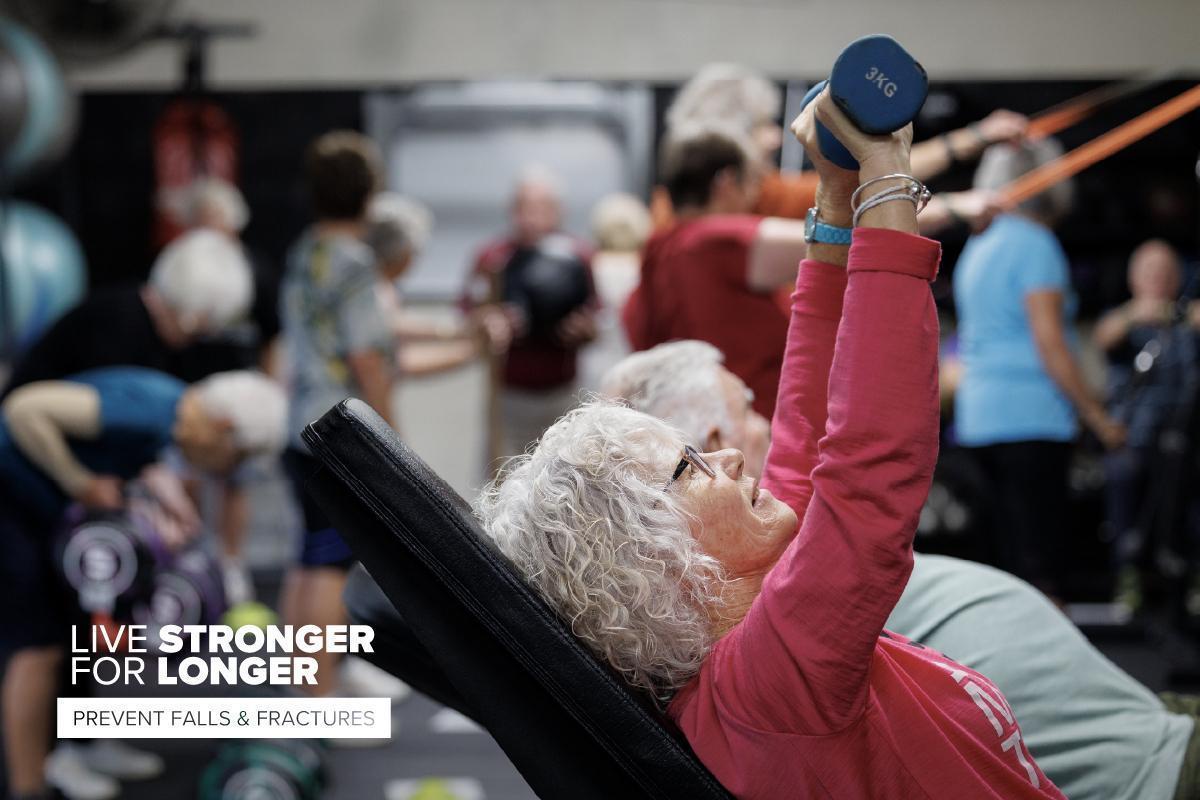
Live stronger for longer
Stay active and keep doing the things you love.
Join a strength and balance class near you. With classes to suit every pace and ability, and trained instructors to guide you through, it’s a great way to keep healthy and make new friends. So you can live stronger for longer, and keep living the … View moreStay active and keep doing the things you love.
Join a strength and balance class near you. With classes to suit every pace and ability, and trained instructors to guide you through, it’s a great way to keep healthy and make new friends. So you can live stronger for longer, and keep living the life you want. Find a class near you today.
Find out more
Mount Roskill Grammar School skirt
Amr from Mount Albert
I'm searching for a long skirt for Mount Roskill Grammar School. Thank you.

Keep What You Love, Store What You Need, Let Go of the Rest
Alan Storage from Kiwi Self Storage - Mt Roskill
The phrase "Keep What You Love, Store What You Need, Let Go of the Rest" is a guiding principle for decluttering and simplifying one's life. It encourages intentionality in keeping possessions, focusing on what is truly cherished, practically useful, and letting go of what is not. … View moreThe phrase "Keep What You Love, Store What You Need, Let Go of the Rest" is a guiding principle for decluttering and simplifying one's life. It encourages intentionality in keeping possessions, focusing on what is truly cherished, practically useful, and letting go of what is not. This philosophy can be applied to various aspects of life, including physical possessions, relationships, and even past experiences.
Applying the principle:
Keep What You Love:
This involves identifying items that hold significant sentimental value or are truly cherished and used regularly. These are the items that bring joy and add value to your life.
Store What You Need:
This refers to items that are necessary for daily life or occasional use but don't necessarily evoke strong emotions. These can be stored in a way that is accessible when needed but doesn't clutter the living space.
Let Go of the Rest:
This involves parting with items that are no longer needed, used, or loved. This can include items that are broken, outdated, or simply cluttering up space. Letting go can be freeing and allows for a more minimalist and organized environment.
Benefits of adopting this principle:
Reduced Clutter:
By letting go of unnecessary items, you can create a more organized and visually appealing living space.
Increased Clarity:
Simplifying your surroundings can lead to a clearer mind and reduced stress.
More Freedom:
Fewer possessions can mean less time spent cleaning, organizing, and managing belongings, allowing for more freedom to pursue other interests.
Stronger Relationships:
Applying this principle to relationships can involve prioritizing meaningful connections and letting go of toxic or draining relationships.
Growth and Transformation:
By letting go of past mistakes and regrets, you can create space for personal growth and a more positive outlook on the future.
If you need the freedom that more space in your life brings get a quote now.
kiwiselfstorage.co.nz...
Call 09 625 6161
4c Carr Road, Mt Roskill, Auckland
kiwiselfstorage.co.nz...


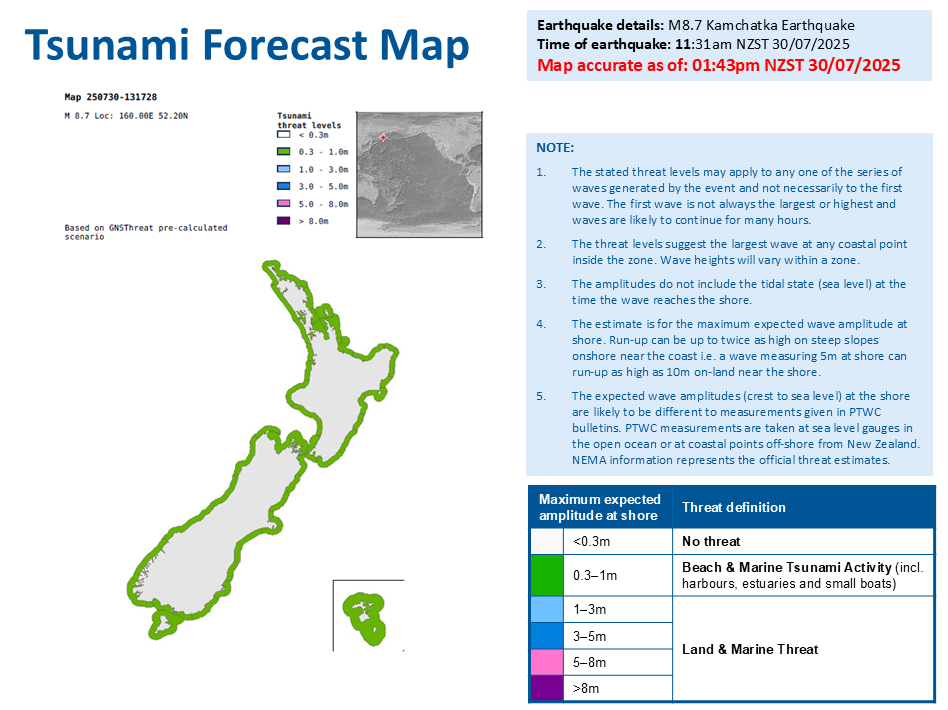
National Advisory: Tsunami activity – expect strong and unusual currents and unpredictable surges at the shore
The Team from Neighbourly.co.nz
New Zealand may experience strong and unusual currents and unpredictable surges at the shore following a magnitude 8.7 earthquake off the East Coast of Russia at 2025-07-30 11:25 AM.
Strong currents and surges can injure and drown people. There is a danger to swimmers, surfers, people fishing, … View moreNew Zealand may experience strong and unusual currents and unpredictable surges at the shore following a magnitude 8.7 earthquake off the East Coast of Russia at 2025-07-30 11:25 AM.
Strong currents and surges can injure and drown people. There is a danger to swimmers, surfers, people fishing, and anyone in or near the water close to shore.
People in or near the sea in the following areas should move out of the water, off beaches and shore areas and away from harbours, marinas, rivers and estuaries.
AREAS UNDER THREAT:
ALL COASTAL AREAS OF THE NORTH ISLAND, GREAT BARRIER ISLAND, THE SOUTH ISLAND, STEWART ISLAND, and the CHATHAM ISLANDS (updated: 3.02pm, 30/07/2025)
ADVICE FOR PEOPLE IN AREAS UNDER THREAT:
STAY OFF THE BEACHES AND SHORE AREAS
People on boats, live-aboards and at marinas should leave their boats/vessels and move onto shore. Do not return to boats unless instructed by officials.
There is no need to evacuate other areas unless directly advised by local civil defence authorities. Coastal inundation (flooding of land areas near the shore) is not expected as a result of this event. We are advising people to:
- Move out of the water, off beaches and shore areas and away from harbours, marinas, rivers and estuaries.
- Do not go to the coast to watch the unusual wave activity as there may be dangerous and unpredictable surges.
- Listen to local civil defence authorities and follow any instructions.
- Share this information with family, neighbours and friends.
- Strong and unusual currents and unpredictable surges will continue for several hours and the threat must be regarded as real until the Civil Defence states otherwise.
The situation may change as new information becomes available. Listen to the radio or TV for updates, or check www.civildefence.govt.nz...
What you need to know about today’s nurses strike
Brian from Mount Roskill
What’s happening?
Nurses are going on strike TODAY.
============================
About 36,000 nurses, midwives and healthcare assistants will be off the job from 9am Wednesday to 9am Thursday.
Last-ditch negotiations on Monday failed to reach an agreement.
There will be pickets and marches … View moreWhat’s happening?
Nurses are going on strike TODAY.
============================
About 36,000 nurses, midwives and healthcare assistants will be off the job from 9am Wednesday to 9am Thursday.
Last-ditch negotiations on Monday failed to reach an agreement.
There will be pickets and marches throughout the country.
Why are nurses striking?
===================
Nurses are concerned about staffing levels and safety.
The latest pay offer was also dismissed as a “massive backward step”.
Health NZ is offering a 3% pay rise over 27 months, plus two lump sum payments of $325.
The counter-offer from the New Zealand Nurses Organisation (NZO) seeks a 5% pay rise over two years, along with $2000 flat rate increases for senior positions. The union also seeks to restore a Tikanga Māori allowance.
“The average salary for both senior and registered nurses, including overtime, professional development recognition programme allowance, and penal rates, is $125,662,” Health NZ said.
“We believe the offer we have made to the union is a fair one given our current financial constraints.”
NZNO chief executive Paul Goulter said: “Members also need a wage offer that enables them to meet the rising cost of living without them and their whānau going backwards financially for the important mahi they do.”
In a statement, Health NZ said: “We are disappointed that the New Zealand Nurses Organisation is taking strike action when there is a fair offer on the table.
“We are concerned about the impact strike action will have on patients who are waiting for planned care.”
Safe staffing tops nurse priorities
===========================
Goulter said the latest offer from Health NZ ignores concerns about safe staffing.
“Patients are at risk because of short staffing. Nurses, midwives and healthcare assistants are stretched too thin and can’t give patients the care they need. This is heartbreaking for our exhausted members who became healthcare workers because they want to help people.”
A safe staffing agreement was dropped from negotiations with Health NZ.
Figures obtained by NZNO from Health NZ show surgical hospital wards were short-staffed more than half of all day shifts last year.
Health NZ said in its statement it seeks to keep nurses and patients safe.
“While we are aware of NZNO’s commentary in recent weeks we would like to reassure New Zealanders that Health NZ is completely committed to safe staffing.
“For us, safe staffing in a busy hospital environment includes the skills mix of the staff, the way care is provided, strong clinical judgment, flexibility and thoughtful decision making from our experienced leaders on the frontline. We take responsibility for operational and patient safety decisions seriously as we are accountable for the safety of patients who access our services.”
Goulter said the key issue was making sure there was enough staff to “ensure patient safety”, which was “foremost in the minds of our members” during negotiations.
“While, obviously, there’s a wage element, we’re trying to do our best to ensure we get staffing that’s appropriate to meet what patients need and we seem to have come up short on that,” he told RNZ.
Negotiations began last October but the union said bargaining had stalled over “big ticket items” centred on public safety.
Nurses also walked off the job for eight hours in strike action in December.
“We are striking because patient safety is at risk every day due to chronic understaffing and under-resourcing,” Wellington nurse Hilary Gardner said.
“We simply don’t have enough nurses to provide the level of care our patients need and deserve. It’s not safe and it’s not fair – for patients, their whānau, or the staff trying to care for them. We’ve raised concerns time and time again, but nothing changes. So now we’re taking action to stand up for safer care.”
What happens if I need medical help
=============================
Acute and emergency services will still be provided, including maternity care, intensive care, ambulance services and emergency departments. Patients already in hospital will still receive ongoing care.
“The public can be reassured that we have an agreement with NZNO for life-preserving services support throughout the strike and our hospitals and emergency departments will remain open,” Health NZ chief executive Dr Dale Bramley said.
“To maintain patient safety, most clinics will be closed. However, if you have a hospital appointment, please come to your appointment unless we have contacted you directly to reschedule.”
However, most appointments for the strike days will be rescheduled.
“It is estimated that 4300 planned procedures and specialist appointments would have to be postponed should the 24-hour strike action on July 30 and 31 go ahead,” Bramley said.
Aged residential care, St John Ambulance, GPs and hospice services are not affected by the strike and will operate as normal.
Anyone unsure about whether they need emergency department care should contact their GP or call Healthline 0800 611 116 for free advice.
What’s next?
==========
The union does not rule out further action if its concerns aren’t addressed, Goulter said.
“Our members have indicated this strike is just the beginning and they are in it for the long haul.
“Our members don’t take this action lightly. They are striking because they are exasperated with being short-staffed and their patients being put at risk because Te Whatu Ora refuses to resource safe staffing levels and instead staffs to an arbitrary budget set by the Government.
“The public know that when there aren’t enough nurses, patients wait longer to get the care they need. Critical observations and treatments may be delayed, errors are more likely and health outcomes worsen. A lack of nurses has reduced numbers of elective surgeries for years and contributed to longer waiting times and the current backlog.
“Any member of the public who has been to a hospital recently knows the reality for patients and the nurses, midwives, healthcare assistants and kaimahi hauora who care for them.”
====================================================

Check your details!
If you have a power account and live in central, east or south Auckland, a dividend payment may be coming your way in late September. Look out for the Entrust pack in your letterbox or email inbox. Check we have your correct details and let us know of any changes by Friday 8 August by email, mail … View moreIf you have a power account and live in central, east or south Auckland, a dividend payment may be coming your way in late September. Look out for the Entrust pack in your letterbox or email inbox. Check we have your correct details and let us know of any changes by Friday 8 August by email, mail or through the secure web link in your email or letter. Find out more

On July 22 1987, New Zealand's first Lotto went on sale 🎉🎉
The Team from Neighbourly.co.nz
Imagine checking your ticket and realising that you have won big ...
Tell us your dreams - what is the very first thing you would do with the winnings?
Would you make that silly purchase you have always wanted, but could never justify?
Call the bank and immediately pay off your mortgage? … View moreImagine checking your ticket and realising that you have won big ...
Tell us your dreams - what is the very first thing you would do with the winnings?
Would you make that silly purchase you have always wanted, but could never justify?
Call the bank and immediately pay off your mortgage?
Stop by the SPCA on the way home and make a donation?
Buy a captain's hat, open up Trade Me and browse "boats for sale"?

85 replies (Members only)

Why Coding? – Free Kids Coding Webinar (Ages 8–14)
Priya from Mount Eden
Curious about how coding can help your child?
Join us for a fun, FREE 1-hour online webinar where kids explore the world of coding through interactive activities/projects.
This session is perfect for beginners — no prior experience needed!
✅ Learn how coding builds creativity, logic … View moreCurious about how coding can help your child?
Join us for a fun, FREE 1-hour online webinar where kids explore the world of coding through interactive activities/projects.
This session is perfect for beginners — no prior experience needed!
✅ Learn how coding builds creativity, logic & problem-solving
✅ Live demo: create an animation or simple game
✅ Parents Q&A included
✅ Hosted by TechBuds – Coding for Kids
Register at www.revelationit.co.nz...

Poll: Are the guidelines around when a child is too sick for school clear?
The Team from Neighbourly.co.nz
A few weeks ago, the Neighbourly team shared a round of complaints over our morning cuppa about the challenges of juggling runny noses and work commitments.
After reading Flip Grater's opinion piece, Playing germ roulette with our kids’ health, we felt a collective sense of relief - … View moreA few weeks ago, the Neighbourly team shared a round of complaints over our morning cuppa about the challenges of juggling runny noses and work commitments.
After reading Flip Grater's opinion piece, Playing germ roulette with our kids’ health, we felt a collective sense of relief - another parent shares our niggling worries.
We wanted to check in with our online neighbours: do you feel the same way? We are all busy, and keeping children home from school is sometimes impossible given other responsibilities. Busy lives and the apparent loss of collective energy around monitoring cold symptoms have led to more students and staff in shared spaces with sniffles and coughs.
But what do you think? Is this a concern?
We want to know: Are there clear Guidelines on when to keep kids off of school?
Should we be having a nuanced conversation about risk management, and how to better support working families?
Share your opinion with us below!

-
55.8% Yes - The messaging about when to keep kids home is consistent.55.8% Complete
-
35.4% No - I want guidance. An illness response flowchart for my fridge would be handy35.4% Complete
-
8.8% It is more complicated - share your thoughts below.8.8% Complete
31 replies (Members only)
More than 100,000 New Zealanders can’t keep warm in their homes over winter as they struggle to afford heating and pay their power bills.
Brian from Mount Roskill
Which companies offer hardship discounts?
===================================
Only a few power companies provide discounts for customers facing hardship, according to a survey conducted for this series by Common Grace.
Mercury said it excluded 135 households from the April 1 price increase and… View moreWhich companies offer hardship discounts?
===================================
Only a few power companies provide discounts for customers facing hardship, according to a survey conducted for this series by Common Grace.
Mercury said it excluded 135 households from the April 1 price increase and froze their prices. It supported about 2000 customers a month experiencing financial hardship. Globug, owned by Mercury, gave the same answer.
Contact has its “HandUp programme”, which it says gave individual payment options and discounted energy to customers in need. It said it also offered short-term energy credits for customers needing immediate relief, and full debt forgiveness to clear long-term, unmanageable debt.
“In 2024, this programme assisted 3500 households, and in the last year, almost $500k of support has been offered.”
Genesis, and now-defunct Frank, pointed to the Power Shout scheme, wherein 328,830 hours of free power were supplied to 4205 vulnerable customers.
Toast, a not-for-profit social retailer, has up to 300 customers who have been referred by its community partners specifically for discounted power.
“Toast provides them with all-year lower pricing than their previous retailer and also aims to discount their tariffs by 30% over winter months. They estimate these discounts will amount to $70,000 off standard Toast tariffs during winter 2025,” the company said.
The remaining companies that responded to the survey said they did not provide discounted power.
Meridian said, “In our experience, discounts are not the way to help people transition out of energy hardship.”
Meridian has its Energy Wellbeing Programme. It provides customers with budgeting support, in-home assessments and tailored support to make their homes healthier, easier and cheaper to heat.
“In some cases, this involves providing items like curtains, insulation, or heat pumps. With more than 2500 households already assisted, we have found this to be a far more sustainable solution.”
Pulse did not offer discounts for hardship: “Our priority is to keep electricity pricing as low as we can for all customers. This year, as an example, from 1 April we only flowed through changes in network services charges and did not change our energy rates.”
Nova said it did not offer discounts for hardship, preferring to work through its support teams.
Ecotricity did not offer discounted power, but was “committed to supporting customers in hardship by offering flexible payment options, working closely with them to manage arrears and connecting them with external support services where appropriate”.
Electric Kiwi pointed to its daily free hour of power. Pre-pay service Wise said it did not offer discounted power to people in hardship because that was difficult to define.
Switch Utilities said it did not offer hardship discounts because the issue was “wider than those in immediate hardship”.
==================================================

Choice News Tuesday: Little spotted kiwi rediscovered on mainland Aotearoa
Kia pai from Sharing the Good Stuff
Kiwi pukupuku (the little spotted kiwi) have been rediscovered in the wild on mainland Aotearoa New Zealand for the first time in five decades!
The pukupuku is the smallest and one of the most vulnerable kiwi species. Only around 2000 birds remain on offshore islands and predator-free … View moreKiwi pukupuku (the little spotted kiwi) have been rediscovered in the wild on mainland Aotearoa New Zealand for the first time in five decades!
The pukupuku is the smallest and one of the most vulnerable kiwi species. Only around 2000 birds remain on offshore islands and predator-free sanctuaries, and are the descendants of just 5 birds which had been translocated to Kapiti Island from South Westland in 1912.
The March discovery in the remote Adams Wilderness Area, on the West Coast, is definitely choice news.
Ka pai to the amazing investigation team: DOC biodiversity ranger Iain Graham and his conservation dog, Brew!
We hope this news brings a smile!

Great job, good salary, no chance of a house? Kiwis fleeing to Australia in for a shock
Brian from Mount Roskill
Million-dollar homes now the norm across the ditch - even in “affordable” Adelaide and Brisbane.
- Kiwis moving to Australia for higher wages face expensive housing, especially in major cities like Brisbane and Sydney.
- Queensland is a popular destination, but affordable housing is scarce, … View moreMillion-dollar homes now the norm across the ditch - even in “affordable” Adelaide and Brisbane.
- Kiwis moving to Australia for higher wages face expensive housing, especially in major cities like Brisbane and Sydney.
- Queensland is a popular destination, but affordable housing is scarce, with prices rising significantly.
- Despite higher wages, the cost of living, particularly housing, challenges Kiwis seeking a new life in Australia.
Kiwis heading across the ditch for higher wages and better jobs won’t find cheaper houses, Australian real estate agents have warned.
There were 70,000 migrant departures in the year to the end of March, with the latest Stats NZ figures highlighting that nearly 60% departing Kiwi citizens went to Australia.
Analysis of last year’s migration figures by Australian and New Zealand real estate agency Ray White found that Queensland was the favoured location for expats, closely followed by Victoria. Less than a fifth of migrants headed to NSW, down from a peak of 27%, while the number moving to Perth has grown by 14%.
And while jobs are easier to come by and offer better pay in Australia, property experts told that affordable housing in the state capitals was hard to find.
A news report in The Guardian Australia recently asked if Australia’s “bloated property market” was “destroying the middle class”, and highlighted the real estate plight of professionals with good jobs and a good education. Property prices in Australia, it said, were increasing at a faster pace than families can save for a deposit.
According to the latest figures from property analysis firm Cotality, one in three Australian homes has a value of A$1 million or more, with the nationwide median now A$838,00, up 41% in five years.
Brisbane, perceived by some Kiwis as more affordable than Auckland, is now Australia’s second-most expensive capital city after Sydney. Its median house value has jumped 76% since 2020 to just over A$1m.
Adelaide, another city that has attracted buyers on the hunt for cheaper homes, has seen house prices soar post-Covid. The South Australian capital’s median property value is hurtling towards the A$1m mark, with the average Adelaide house now costing nine times the median household income (New Zealand homes, by comparison, cost 7.3 times the median household income, the lowest level since 2019).
Cotality Australia head of research Eliza Owen told that housing in Australia was generally expensive, for both buyers and renters. Australia’s median rent had risen by 40.3% in the last five years to A$665 per week, whereas the growth rate has been much slower in New Zealand at 29%.
Rising house prices in Australia and flat or falling prices in New Zealand made it harder for Kiwis looking to start a new life across the ditch.
Ray White’s examination of what homeowners in New Zealand’s five biggest cities – Auckland, Christchurch, Wellington, Hamilton and Tauranga – could buy in Australia illustrates the challenges Kiwis face.
Senior data analyst Atom Go Tian looked at what the median sale price in each of the major Kiwi metros could get across the ditch. Unsurprisingly, Auckland money provides buyers with the most choice, with Go Tian identifying 54 districts in Australia’s state capitals and lower-tier towns and cities with a lower median value than Auckland’s.
However, homes in just three Sydney districts are cheaper than the cost of a typical Auckland home, and they are on the far-flung fringes. House prices in Sydney’s popular Eastern Suburbs and North Shore are more than double those in Auckland. Also out of reach would be houses on the Gold Coast and Sunshine Coast.
Go Tian found that Tauranga and Wellington house prices were cheaper than 37 and 36 Australian districts respectively, including the outer suburbs of Perth, Brisbane and Melbourne, while Hamilton and Christchurch money wouldn’t be enough to get into Australia’s big cities.
Go Tian said the data suggested Kiwis might have to bypass Australia’s state capitals in favour of the more affordable regional centres like Bendigo, Ballarat, Cairns and Townsville.
Ray White AKG business owner Avi Khan, whose patch covers Queensland’s biggest markets, told that Kiwis expecting to land a property bargain on the Gold Coast or in Brisbane would be disappointed. “There’s a common misconception that it’s cheaper to buy houses in Australia,” he said.
“It’s harder to get into the Gold Coast market. The jobs are based around Brisbane, so most people end up buying in Brisbane.”
He said that a four-bedroom, two-bathroom house on 500sqm and about 35-40 minutes from Brisbane CBD could be picked up for between A$800,00 and A$900,000. The same property would have been about A$200,000 cheaper two years ago, he said.
“I think a lot of Kiwis heading over here are surprised at how expensive it is, relative to 24 months ago.”
However, they were still arriving, moving to Brisbane for job prospects. Some bought homes near friends and family, as well as close to the beach as they could afford.
Khan said a housing shortage in Australia and Brisbane, in particular, was a challenge for those looking to buy or rent. “It takes a little bit longer to buy a house here because there’s so much competition.”
Harcourts WA chief executive Shane Kempton said competition for homes in his patch was similarly “fierce”, adding that stock levels in Perth had dropped to 4000 – about a third of where they usually sit.
Houses were often selling above asking price, he said, adding that vendors would typically receive multiple offers.
However, the job opportunities in Western Australia’s mining, energy and resource sectors were strong pull factors for Kiwis. “WA is short of skilled tradespeople, so work in these fields is plentiful. Perth lifestyle is relaxed with plenty of outdoor options with beaches, bush, islands and forests to explore.”
Kempton said he often met Kiwis at sporting events – especially rugby and netball games - and said they seemed to favour certain Perth suburbs, including East Rockingham, Midland, and Butler.
For Kiwis looking for more affordable areas to live in, Kempton suggested Two Rocks and Mandurah, about an hour outside of Perth. Prices in both were just under A$600,000.
Michael Pallier, managing director of Sydney Sotheby’s International Realty, said most of the Kiwis who were shifting to Australia’s largest city were renting, not buying.
“Sydney is one of the most expensive cities in the world. The wages are also much higher here. So, they can get a good job when they come here, and they can still find places to live – there’s accommodation available.”
Pallier had employed a hardworking Kiwi to work in his office at the start of the year and had come across many others who had also made the move.
However, Pallier said they quickly discovered that accommodation was much more expensive than they had expected, and they had to move almost an hour away from the city to be able to buy anything for A$1m or less.
“You are going to pay A$1m-plus for a house, even in Sydney’s Western suburbs. It doesn’t really get you a lot. Rent is A$600 plus a week for a two-bedroom apartment, A$1000-plus if it’s in the CBD.”
Kevin Chokshi, director of Ray White The Bayside Group, said Melbourne’s property market had only started to pick up in the last few months after a relatively flat two years.
His advice to Kiwis and Australians looking to buy in Melbourne was simple: act now. But he warned that competition was building, with auctions the favoured sales method.
Entry-level prices for standalone houses in the city were around A$900,000, while units sat between A$600,000 and A$700,000.
Prices dropped the further out buyers went, and those willing to travel about 40 minutes to an hour into the CBD might be able to snag a home in Frankston, Pakenham, Sunbury, Werribee or Epping for around A$700,000.
One Kiwi who has no complaints about her shift from Auckland to Brisbane is Clarissa Searle. She told OneRoof the move across the ditch was one of the best things she had done.
Friends had been encouraging her for years to make the move, and in September 2023, she finally listened.
Most of her mates had settled in Sydney, but Searle decided to make Brisbane her new home. “I just felt like I needed a change and more opportunities career-wise,” she told.
The 33-year-old, who works for a property development company, was lucky enough to secure a one-bedroom apartment for A$600 a week overlooking the Brisbane River before she arrived.
It was much better than the two-bedroom unit she rented in Auckland’s Mount Eden. “I get a lot more for my money here,” she said. “It’s like I’m living in a resort hotel. It’s gorgeous.”
She has noticed substantial increases in both rents and house prices since arriving in the city – her own rent lifted to A$635 a week and is set to rise again to A$700.
“Prices have gone up like crazy in the last year. There are just so many people looking for places to live at the moment. You turn up to rental inspections and there are like 50 or 60 people viewing it.”
Searle recently met with a mortgage broker to talk about buying her first home in the city. While Brisbane property prices were cheaper than prices in Auckland when she first arrived, this was changing, and she wanted to jump on the property ladder before prices were out of her reach.
But higher wages and cheaper grocery bills – especially healthy food – meant she still had more money left in her pocket than she had when she was in Auckland.
Not everything is cheaper – cars aren’t – but the overall cost of living probably was, she said. There are also extra incentives for Queenslanders, such as rebates on power and appliance bills and cheap public transport.
“I will not move back to NZ anytime soon. It’s such a better lifestyle here,” she said.
===================================================
Is there such a thing as too much sleep? (Spoiler: yes)
Brian from Mount Roskill
We’re constantly being reminded by news articles and social media posts that we should be getting more sleep. You probably don’t need to hear it again – not sleeping enough is bad for your brain, heart and overall health, not to mention your skin and sex drive.
But what about sleeping “too… View moreWe’re constantly being reminded by news articles and social media posts that we should be getting more sleep. You probably don’t need to hear it again – not sleeping enough is bad for your brain, heart and overall health, not to mention your skin and sex drive.
But what about sleeping “too much”? Recent reports that sleeping more than nine hours could be worse for your health than sleeping too little may have you throwing up your hands in despair.
It can be hard not to feel confused and worried. But how much sleep do we need? And what can sleeping a lot really tell us about our health? Let’s unpack the evidence.
Sleep is essential for our health
==========================
Along with nutrition and physical activity, sleep is an essential pillar of health.
During sleep, physiological processes occur that allow our bodies to function effectively when we are awake. These include processes involved in muscle recovery, memory consolidation and emotional regulation.
The Sleep Health Foundation – Australia’s leading not-for-profit organisation that provides evidence-based information on sleep health – recommends adults get seven to nine hours of sleep per night.
Some people are naturally short sleepers and can function well with less than seven hours.
However, for most of us, sleeping less than seven hours will have negative effects. These may be short term; for example, the day after a poor night’s sleep you might have less energy, worse mood, feel more stressed and find it harder to concentrate at work.
In the long term, not getting enough good quality sleep is a major risk factor for health problems. It’s linked to a higher risk of developing cardiovascular disease – such as heart attacks and stroke – metabolic disorders, including type 2 diabetes, poor mental health, such as depression and anxiety, cancer and death.
So, it’s clear that not getting enough sleep is bad for us. But what about too much sleep?
Could too much sleep be bad?
========================
In a recent study, researchers reviewed the results of 79 other studies that followed people for at least one year and measured how sleep duration impacts the risk of poor health or dying to see if there was an overall trend.
They found people who slept for short durations – less than seven hours a night – had a 14% higher risk of dying in the study period, compared to those who slept between seven and eight hours. This is not surprising given the established health risks of poor sleep.
However, the researchers also found those who slept a lot – which they defined as more than nine hours a night – had a greater risk of dying: 34% higher than people who slept seven to eight hours.
This supports similar research from 2018, which combined results from 74 previous studies that followed the sleep and health of participants across time, ranging from one to 30 years. It found sleeping more than nine hours was associated with a 14% increased risk of dying in the study period.
Research has also shown sleeping too long (meaning more than required for your age) is linked to health problems such as depression, chronic pain, weight gain and metabolic disorders.
This may sound alarming. But it’s crucial to remember these studies have only found a link between sleeping too long and poor health – this doesn’t mean sleeping too long is the cause of health problems or death.
So, what’s the link?
===============
Multiple factors may influence the relationship between sleeping a lot and having poor health.
It’s common for people with chronic health problems to consistently sleep for long periods. Their bodies may need additional rest to support recovery, or they may spend more time in bed due to symptoms or medication side effects.
People with chronic health problems may also not be getting high quality sleep, and may stay in bed for longer to try and get some extra sleep.
Additionally, we know risk factors for poor health, such as smoking and being overweight, are also associated with poor sleep.
This means people may be sleeping more because of existing health problems or lifestyle behaviours, not that sleeping more is causing the poor health.
Put simply, sleeping may be a symptom of poor health, not the cause.
What’s the ideal amount?
====================
The reasons some people sleep a little and others sleep a lot depend on individual differences – and we don’t yet fully understand these.
Our sleep needs can be related to age. Teenagers often want to sleep more and may physically need to, with sleep recommendations for teens being slightly higher than adults at eight to ten hours. Teens may also go to bed and wake up later.
Older adults may want to spend more time in bed. However, unless they have a sleep disorder, the amount they need to sleep will be the same as when they were younger.
But most adults will require seven to nine hours, so this is the healthy window to aim for.
It’s not just about how much sleep you get. Good quality sleep and a consistent bed time and wake time are just as important – if not more so – for your overall health.
The bottom line
=============
Given many Australian adults are not receiving the recommended amount of sleep, we should focus on how to make sure we get enough sleep, rather than worrying we are getting too much.
To give yourself the best chance of a good night’s sleep, get sunlight and stay active during the day, and try to keep a regular sleep and wake time. In the hour before bed, avoid screens, do something relaxing, and make sure your sleep space is quiet, dark, and comfortable.
If you notice you are regularly sleeping much longer than usual, it could be your body’s way of telling you something else is going on. If you’re struggling with sleep or are concerned, speak with your GP. You can also explore the resources on the Sleep Health Foundation website.
===================================================
Four common supermarket price errors to look out for
Brian from Mount Roskill
Consumer NZ says supermarkets are still making pricing errors, despite increasing pressure and scrutiny on them.
Charges have been filed and a number of supermarkets have pleaded guilty to breaching the Fair Trading Act due to inaccurate pricing and misleading specials.
But Consumer NZ says … View moreConsumer NZ says supermarkets are still making pricing errors, despite increasing pressure and scrutiny on them.
Charges have been filed and a number of supermarkets have pleaded guilty to breaching the Fair Trading Act due to inaccurate pricing and misleading specials.
But Consumer NZ says misleading specials are still costing shoppers tens of millions of dollars a year and has launched a petition calling for tougher penalties for breaches of the ac
It provided examples of a number of ways that people could be caught out by misleading signage in supermarkets.
Dodgy multibuy
=============
A dodgy multibuy refers to a situation where the individual price and the multibuy price don't add up to a saving.
supermarket price errorsA mince special where a tray of meat was $4 or people could buy three for $20.
Consumer NZ pointed to this mince special where a tray of meat was $4 or people could buy three for $20.
In another case, packaging seemed to be making a confusing difference.
The Gingernuts that were selling for $5 but the club price for a twin-pack was $5.59.
Two individual backs of Gingernuts were selling for $5 but the club price for a 500g twin-pack was $5.59.
Different pricing
=============
Sometimes the price on the shelf tag does not match what you pay at checkout.
A box of Coca Cola a customer paid more at checkout for than the shelf price tag.
In this case, supplied by Consumer, the price tag on the shelf said $27, but the customer paid more than $35 at the checkout.
Confusing
========
Double cream brie with two prices. Consumer provided an example of double cream brie was "reduced" to $10.60 for a quick sale - or was it on sale for $9.80?
Mismatches
==========
Sometimes it seems as though there are multiple labels for the same item.
In this case, two signs had two different prices for a single avocado.
Another sign at the same supermarket saying a single avocado is $1.69.
"One said $1.69. The other said $1.99," Consumer NZ spokesperson Abby Damen said.
"The customer was charged $1.99. She returned two days later to ask what could be done about the pricing error. She was offered a refund of the price difference but after pointing out the supermarket's new refund policy, she was refunded $2 and also kept her avocado."
Chief executive at Consumer Jon Duffy said anyone who was charged more than the shelf price was entitled by law to a refund of the difference.
He said both supermarket chains promised a full refund in that scenario, but consumers sometimes had to know that was what was available.
A Foodstuffs spokesperson said with more than 14,000 products in a typical supermarket, and prices changing frequently due to supplier costs, promotions or new product liens, pricing was a complex job.
"But for our customers, it's simple. They rightly expect the price on the shelf to match what they pay at the checkout," he said.
"We take pricing accuracy as seriously as health and safety, aiming for zero errors.
"Across our local, family-owned stores, we manage tens of thousands of price labels and process millions of transactions every week, and we've invested in better systems, daily checks and electronic shelf labels to help get it right.
"If we do get it wrong, our policy is that the customer gets a refund and keeps the product. We've also strengthened staff training and store processes to make sure pricing is clear and accurate."
Woolworths said it had more 3.5 million transactions in our stores each week "and sometimes errors do occur".
"When they do, we try to make things right, through our long-standing and market-leading refund policy. Under that policy, if a customer is charged more than the advertised price for a product, they get a full refund and can keep the product."
Duffy said Consumer had received 20 complaints about supermarket pricing since Tuesday. A normal rate would be two a day, he said.
====================================================
 Loading…
If you no longer wish to delete the message you can still 'Report the message' for review by the Neighbourly team, or simply 'Hide the message' from being seen on your own newsfeed.
Are you sure? Deleting this message permanently removes it from the Neighbourly website.
Loading…
- Premium Businesses
-
Lawn Masters Central Auckland Lawnmowing Services

-
Lighting Bolt Elektrix Electricians

-
Clinical Smiles Dental Clinics

- Community Organisations
-
Mercy Gates Mt Roskill Intermediate School Denbigh Ave, Mt Roskill

-
Department of Conservation Community Organisation

- View all organisations


© Neighbourly 2025
