




Plan Change 120 Planning gone bad.
I agree with Christine Fletcher we all need to submit to council and have our say, it's too much.
THE FACTS
Plan Change 120 is contentious, with concerns about Auckland Council’s approach to increasing housing density.
Christine Fletcher and Troy Churton argue the plan’s two-million house target is excessive and lacks evidence.
They urge submissions by December 19, emphasising the need for evidence-based, staged development.
Plan Change 120 is one of the most contentious plans ever proposed by Auckland Council.
Every Aucklander wanting quality intensification of our city needs to go to the “Have your say” page of the council’s website and submit on PC120 before December 19. Here’s why.
While we support intensification along our rail corridors (this has been anticipated since Britomart was planned), with PC120, the Government has flexed its muscles too far with its legislative requirements for Auckland.
Christchurch pushed back on its Medium Density Residential requirements, eventually agreeing with the Government on a 30-year high growth capacity with a 20% buffer. This is the equivalent of 65,000 additional houses, a big departure from what was originally proposed.
For an alternative view, read this: Why Auckland needs to grow – Chris Bishop
Yet Auckland – with no evidence that a projection of two million houses was needed – conceded to the minister’s requirement that this was the golden number that had to be met or exceeded.
Auckland Council’s plan change response is a capitulation to the Government. Every planner we’ve met has said: “It’s a rushed job.” Yes, we had to fast-track a plan change enabling natural hazard controls to be implemented, but our council did not challenge the Government’s blanket approach, the way Christchurch’s did.
Any radical re-zoning to achieve intensification must be evidence-based. What evidence is there that Auckland requires a capacity of two million homes over 100 years or needs that enshrined now, and if so, shouldn’t there be staging and sequencing to ensure both physical and social infrastructure are in place?
A far more reasonable target for zoning would be to allow for or anticipate 1.2-1.4 million houses in the medium term, with a potential for more to be added in the future.
Developers are not unreasonably constrained from building apartments close to train stations under the Auckland Unitary Plan right now. Take the new Simplicity high-rise development beside Greenlane train station or the Ockham high-rise development adjacent to Grafton station by way of example.
Further, contrary to political “nice speak” by Bishop, Mayor Wayne Brown and the council communications team, a two-million capacity “built into zoning” now does not create choices. Nor does it prevent poor outcomes. The timeframes for development are just too long to offer assurances. Those in leadership will be dead and buried before foreseeable unintended consequences arise from this plan.
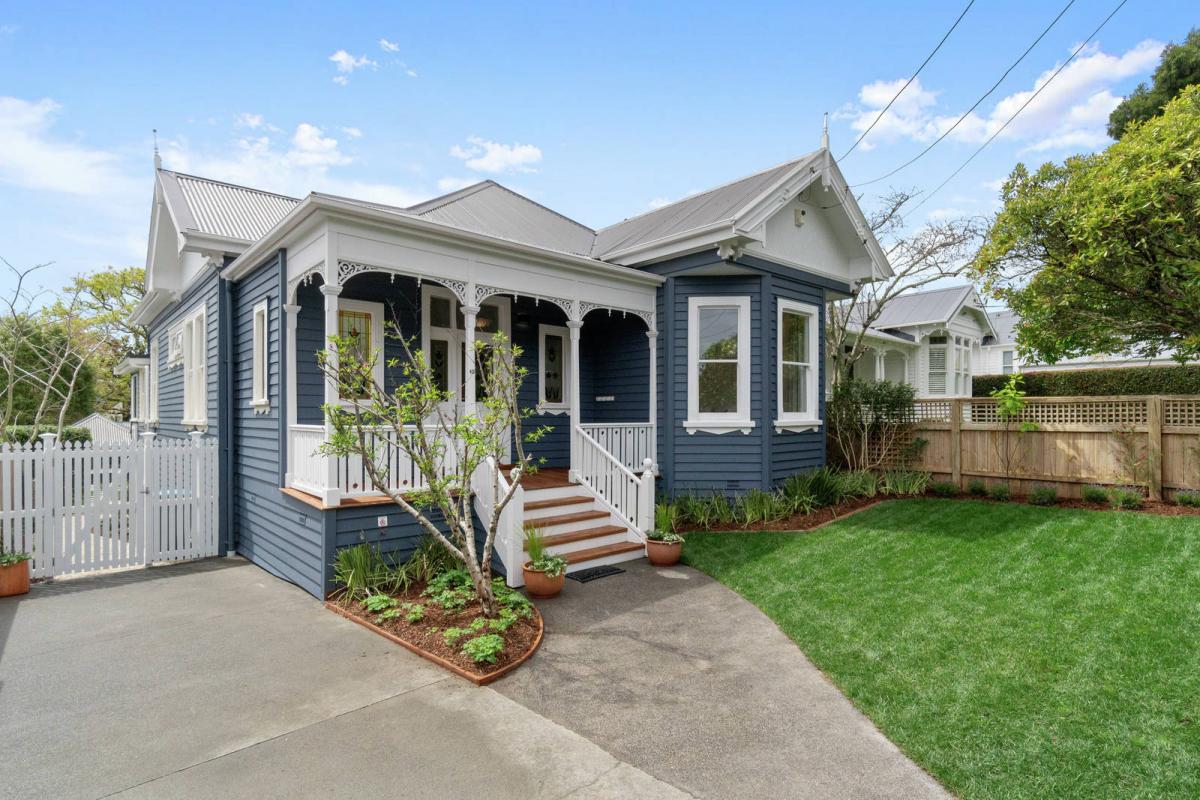
Take the blanketing of much of the city with higher-rise buildings and intensity regardless of its built character. Under the new plan, “residual” residential areas – those outside walkable catchments and town centres – have mostly Mixed House Urban (MHU, three storeys permitted) and token Mixed Housing Suburban (two storeys), zoning blanketed like Caulerpa over them. It’s a modelling trick based on the idea that three storeys delivers greater floor area and more potential units per site, and it’s only because our planners are bending backwards to meet an irrational two-million threshold.
Government assumptions that large-scale development of apartment buildings is a feasible way to provide for affordable housing are unsubstantiated.
Not every site will suit, nor will a developer want three storeys on a site or 15 storeys on a site within 800m of a train station. The indiscriminate, blanket MHU zoning in residual residential areas means we will see sporadic three-storey buildings amongst existing villas or one- and two-storey houses, with some sites filled with far more than three units and some perhaps with three or less: net result, an incohesive tossed salad.
So, minister, rejecting the medium density rules of the last plan and replacing them with far worse does not deliver Auckland “what it asked for”.
Recognising the outcry of supporting Labour’s 2021 housing enabling bill and the Medium Density Residential Standards (MDRS) that eventuated under PC78, National then campaigned on the basis that it would make the MDRS “optional”. National did not disclose that it planned to require any replacement to Plan Change 78 to provide for the same excessive number of dwellings in any proposed replacement.
The current operative plan, the Auckland Unitary Plan, provides for approximately 900,000 new dwellings, including significant provision for terraced housing and apartment buildings on main traffic corridors.
Many developers and interest groups agree that the real constraint is infrastructure, not opportunity. If a first-home buyer wants to try to purchase a unit near a train station or a bus route, the Auckland Unitary Plan enables that sort of development to happen now.
Watercare Services Ltd, for instance, lacks working capital to build new infrastructure, which will only be paid for by developers when it has been completed – a complete disincentive to development anyway. The infrastructure constraint is not satisfactorily dealt with either under Plan Change 120.
Technical reports from planning staff outline the significant departures PC120 represents from previous plans. Bishop and his Government need to have the leadership to concede that fast-tracking a two-million, capacity-based plan change is the wrong approach to enabling quality, affordable housing for the generations to come.
Each desirable major city in the world has its own special appeal, which is carefully conserved by governments in harmony with provision for density. With PC120, we’re failing to even recognise our own appeal, let alone conserve it.
We urge you to make a submission by December 19. It is a busy time and the plan is complex, but you need only make a brief submission now to ensure you are part of the process moving forward. Some residents associations have templates to assist and the council has a Friends of Submitter service you may access.

Today’s Mind-Bender is the Last of the Year! Can You Guess It Before Everyone Else? 🌟🎁🌲
I dance in the sky with green and gold, a spectacle few are lucky to behold; I’m best seen in the south, a celestial sight—what am I, lighting up the New Zealand night?
Do you think you know the answer? Simply 'Like' this post and we'll post the answer in the comments below at 2pm on the day!
Want to stop seeing these in your newsfeed? No worries! Simply head here and click once on the Following button.


Poll: 🗑️ Would you be keen to switch to a fortnightly rubbish collection, or do you prefer things as they are?
Aucklanders, our weekly rubbish collections are staying after councillors voted to scrap a proposed trial of fortnightly pick-ups.
We want to hear from you: would you be keen to switch to a fortnightly rubbish collection, or do you prefer things as they are?
Keen for the details? Read up about the scrapped collection trial here.

-
83.9% Same!
-
16.1% Would have liked to try something different
Poll: Is it ok to regift something that you have been given?
🎁 Holiday Gift Chat!
Do you ever regift?
What’s your take on asking for a receipt if a gift doesn’t fit?

-
78.8% Yes! It's better to regift what I don't need
-
21.2% No. It's the thought and effort that matters
 Loading…