





Luxurious Lotus Silk
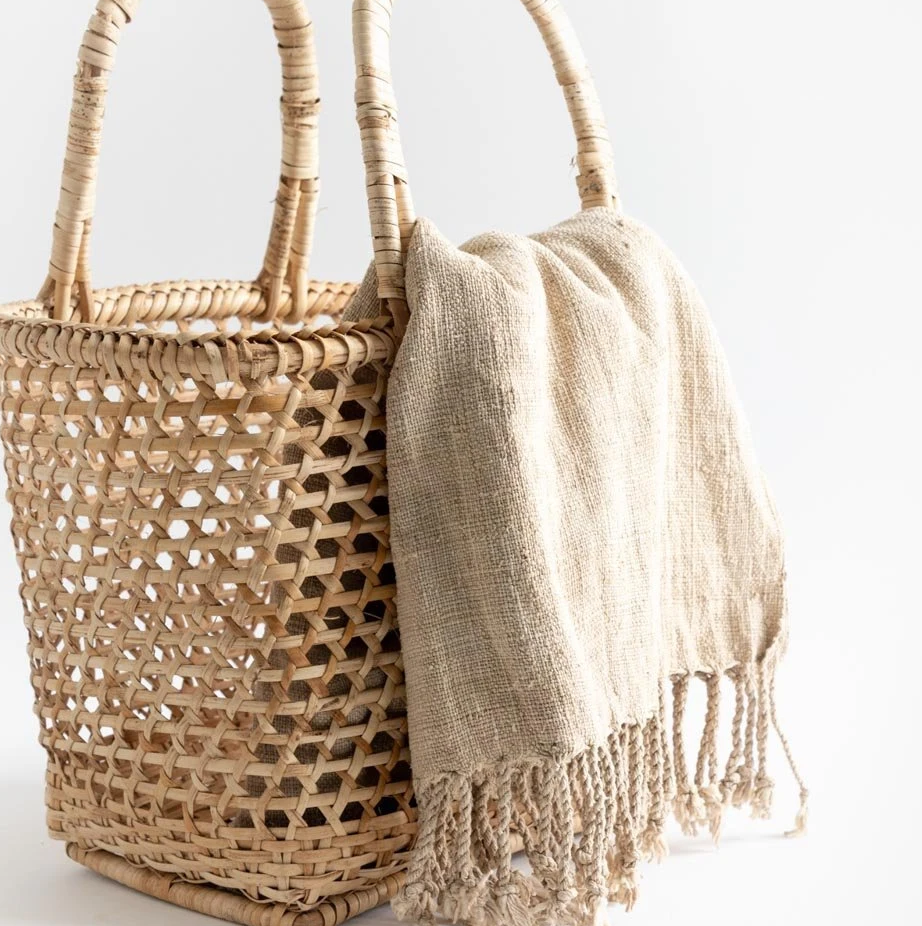
Lotus fibre or lotus silk is a rather rare and exclusive fibre. The silk comes from the stem of the lotus flower which is made up of microfibres.
The stems are snapped off, the fibres are teased out before being rolled into thread. Once the threads are dry, they are weighed down and carefully wound by hand. Then they’re put onto the loom. These fibres are fragile, but once woven, can be as durable as traditional silk.
The entire process of fibre extraction, weaving the fibre, and making the fabric is completely handmade, making the process time-consuming. This also limits the quantity of the fabric produced. A large scarf requires the thread of around 9,200 stems and would take one worker around two months to complete. This is why it is considered luxurious and items made from lotus silk do not go cheap.
The resulting material resembles raw silk or an aged linen, naturally beige in colour and possesses unique qualities. It is waterproof, practically wrinkle proof, washable, lightweight, sweatproof and is soft to the touch.
Most importantly, its key quality is that it is one of the most eco-friendly materials on the planet. The lotus is a water plant. It preserves the eco-system in which it grows including the water as much as the surrounding wildlife.
Not only is it created from waste (lotus stems), but it also leaves little waste behind. In fact, lotus silk been identified as potentially the most ecological fabric in the world, and it is the first natural microfibre in the world. Being a natural fibre, it is biodegradable after its useful life.


Poll: Are our Kiwi summer holidays helping us recharge, or holding the economy back? ☀️🥝
There’s growing debate about whether New Zealand’s extended Christmas break (and the slowdown that comes with it) affects productivity.
Tracy Watkins has weighed in ... now it’s your turn. What’s your take? 🤔
-
72.3% We work hard, we deserve a break!
-
16.1% Hmm, maybe?
-
11.6% Yes!
Read if you are in need of work to be done or looking to do work
Palmerston North people 👋
It seems like nearly every second day we are hearing about someone who has been scammed or messed around when they’re just trying to organise simple help. That's why I'm testing an idea for a local odd-jobs platform to help people get small household tasks done without the stress of trying to find someone reliable.
The goal is to build something that feels safe, local, and fair for everyone.
clear job descriptions
transparent pricing/bids
real profiles + ratings
We’ll start small with non-licensed jobs like:
🌿yard tidy-ups
🚮 rubbish removal
🚐 small moving help
🪣cleaning
🏠 minor repairs & maintenance (non-licensed)
The pilot won’t include electrical, gas, or certified plumbing.
With the cost of living right now, if you want to jump onboard as a customer or worker i’ve made an early access waitlist:
Join the early access list here: forms.gle...
I’ve also got a fully anonymous survey up that takes less than two minutes. This will help me tailor the categories, pricing expectations and see what people want most:
Quick survey here: forms.gle...
If you’ve ever struggled to get a small job done because it’s “too small” for tradies, or if you’re someone who wants to earn extra money doing honest work - I’d really love your input.
👉You can also book on behalf of a family member who needs a bit of extra help.
Thanks heaps 🙌

Some Choice News!
Many New Zealand gardens aren’t seeing as many monarch butterflies fluttering around their swan plants and flower beds these days — the hungry Asian paper wasp has been taking its toll.
Thanks to people like Alan Baldick, who’s made it his mission to protect the monarch, his neighbours still get to enjoy these beautiful butterflies in their own backyards.
Thinking about planting something to invite more butterflies, bees, and birds into your garden?
Thanks for your mahi, Alan! We hope this brings a smile!

 Loading…