






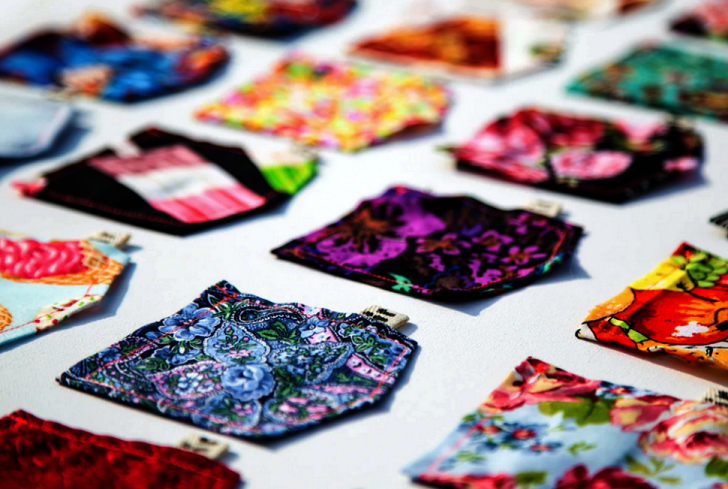
Facts About Fabric
• The average lifetime of a piece of clothing is approximately 3 years.
• Flax is the earliest known natural textile fabric seen used in about 5000 BC. Flax is the material used to make linen which is seeing a huge come back today in drapery and upholstery.
• Nike (with subsidiary Converse) is the largest fashion company in the world, with a market value of $105 billion.
• There is evidence that cotton and wool were used to create natural fabrics in about 3000 BC and evidence of silk use in 2500 BC in China.
• China is the largest maker and exporter of silk in the world and has been for 100’s of years.
• The average person buys 60 percent more items of clothing every year and keeps them for about half as long as 15 years ago, generating a huge amount of waste.
• The earliest evidence of fabric textiles has been found in Turkey, Egypt, and Israel.
• The creation of man-made fibres has only been within the last 100 years. Rayon was the first man-made fibre created in 1910 and it was called ‘artificial silk’. Viscose is the most common form of Rayon.
• More than 70 percent of the world's population uses second-hand clothing. About 50 percent of collected shoes and clothing is used as second-hand products. Meanwhile, 20 percent is used to produce polishing and cleaning cloths for various industrial purposes, and 26 percent is recycled for applications such as fibre for insulation products, upholstery, fibreboard, and mattresses.
• Microfibre or Ultrasuede was invented over 20 years ago in Japan. Microfibre is the thinnest of all man-made fibres, even finer than silk. it is 100 times finer than a human hair.
• Acrylic is a man-made fibre that has a soft, wool-like hand, is machine washable and has excellent colour retention. It is often an additive to textiles to take advantage of these properties.
• Nearly 100 percent of textiles and clothing are recyclable.
• Nylon is also man-made and was first produced in 1938. It has high strength, excellent resilience, and superior abrasion resistance. Nylon replaced silk stockings for women in the early part of the 20th century.
• The highest quality cotton comes from Egypt.
• Textiles and shoes make up 12% of landfill sites.
• Bamboo is a grass that has been used to create a fabric that hangs much like a heavy linen. It has natural wicking ability that pulls moisture away from the skin so it can be useful in reducing moisture related odour. It also has natural anti-bacterial qualities. Bamboo grows quickly and does not need pesticides to thrive, making it one of the more sustainable textile sources.

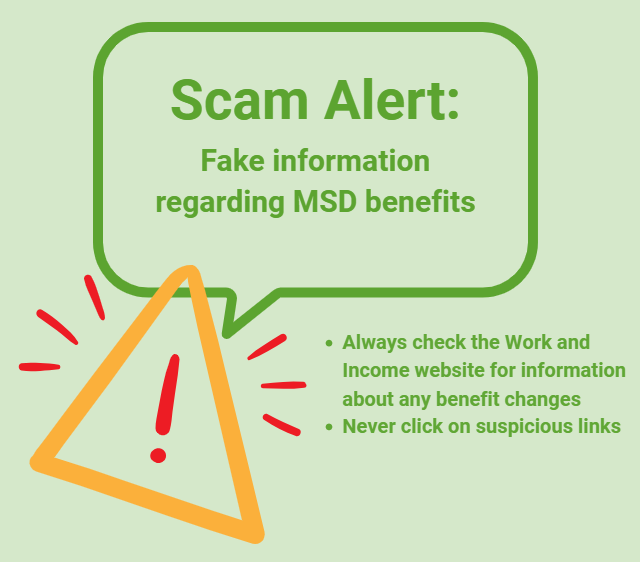
Scam Alert: Fake information regarding December Bonuses from MSD
The Ministry of Social Development is reporting that fake information is circulating about new ‘December bonuses’ or ‘benefit increases’
If you get suspicious communication, please contact Netsafe.
Poll: Do you set New Year’s resolutions?
🎉 2026 is almost here!
We’re curious ... how do you welcome it?
Do you set resolutions, follow special traditions, or just go with the flow?

-
10% Yes! New Year, New Me
-
16.9% Yes - but I rarely stick to them
-
73.2% Nah - not for me
Update to Neighbourly members on data breach 06/01/2025 8am
Yesterday in the High Court at Auckland, Neighbourly was successful in being granted an injunction against any unauthorised use of the data taken in a recent breach.
As we alerted you on January 1 and confirmed on January 3, our systems were accessed illegally and members’ information, including names, email addresses, GPS coordinates from the address you provided to us, forum posts and direct member communications were among the data that was accessed.
We acted immediately upon hearing of a potential breach: we temporarily disabled the site, notified members and authorities and worked with our external security consultants to understand if and how it had occurred. We then confirmed the breach with members, safely restored the site to service and began the process of seeking the injunction. Yesterday’s decision by Justice Johnstone prohibits the use of the data by any unauthorised person, and requires them to permanently delete it, or any information obtained from it.
This does not mean that vigilance against scammers is not still required: there is a large industry globally that seeks to use stolen information for identity fraud or to dupe people into providing details of their financial affairs for theft. Again, to keep yourself safe from scammers it is critical that you:
- Don’t click links in emails. Instead, type the web address directly into your browser. This helps ensure you’re visiting a real site, not a fake one
- Enable two-factor authentication where available as this adds an extra layer of security to your data
- Stay alert for phishing emails. Be cautious of unexpected emails asking for personal information, especially ones that create a sense of urgency.
Again, we want to apologise to you for this illegal access to the Neighbourly database and to assure you that we have carefully worked through how this occurred. We have safely secured the site and its services for use and ensured we have robust processes in place so this cannot happen again.
We are continuing to work with the relevant authorities, including the National Cyber Security Centre, on any further steps we need to take.
If you have any further questions please contact us via our customer support team at helpdesk@neighbourly.co.nz.
 Loading…