






Poor sight leaving kids vulnerable
Detecting vision problems in New Zealand children can be difficult because often kids – and their parents – are unaware they’re even having trouble with their eyesight, according to a leading optometrist.
“Especially in the younger years, children simply adapt to the world they can see,” says Arshad Hoosen, Optometrist Director at Specsavers Sylvia Park in Auckland.
“This makes them very vulnerable to eyesight problems, and my tip for parents, if they’re worried, is not to leave it too late for their children to be tested. Because vision loss can often be prevented or treated if detected early.”
Hoosen says that while issues are frequently picked up through routine school health checks, Specsavers offers free comprehensive eye checks every year to all children under the age of 16*.
Vision problems are relatively widespread among young Kiwis. According to the University of Auckland’s Vision Research, between 5% and 10% of New Zealand children have some form of vision problem which, if left untreated, could affect their literacy and academic performance.
Globally, the International Agency for the Prevention of Blindness (IAPB) reports an estimated 450 million children have a sight problem needing treatment, while 90 million are living with some form of vision loss – with many suffering from preventable conditions.
Hoosen says there are a number of signs of potential vision problems that parents and caregivers can look out for.
Among these: a child might blink more often, move close to the TV, or put their head at an unusual angle when viewing a device or reading a book. They may also squint their eyes to see, complain of headaches, have constantly watering eyes, say they can’t see clearly, or experience difficulty learning or reading.
Vision difficulties can affect a child’s learning and development and because so much learning is done visually, reading, writing, board work and computer use are all much harder if they can’t see properly.
Hoosen says children with eye problems may not be aware that what they are seeing isn’t normal, and therefore won’t speak up about their difficulties. Without early screening, kids can miss out on vital learning years before anyone realises there’s a problem.
“In saying that, I’ve had parents bring their child in for a check because they’ve had a sixth sense something is wrong – and parents who wear glasses themselves are usually more aware of problems,” he says.
“But it is often a teacher at school who will pick up on issues before a parent, especially if a child is reluctant to read because words are out of focus and blurry, or they won’t do their homework.”
He says if problems are suspected or picked up during school screening, it’s important to follow up with a full check by an optometrist.
Specsavers includes an advanced 3D eye scan (OCT, or Optical Coherence Tomography) as part of every standard comprehensive eye test to help detect conditions in their earliest stages.
The OCT takes a series of high-definition non-invasive 3D scans of the back of the eye. These scans help optometrists detect eye conditions sooner, sometimes before any symptoms appear.
“It’s like the difference between getting a warrant of fitness for your car, or taking it in for a full service,” he says. “That’s why we offer the free annual checks – and affordable glasses – so we can detect eye conditions early.”
Hoosen says it’s important for parents to understand that eye conditions can change. “Short-sightedness can develop quickly, and a child who doesn’t need glasses at age four may do so at eight, for example.”
Hoosen says there are several ways children can look after their eye health, including limiting long periods of near work – such as reading or using screens – which can help slow the progression of short-sightedness.
“It’s a good idea for children to take regular breaks from their screens and spend time outside every day,” he says, adding that vision problems are not socio-economically based, occurring across a wide cross-section of society.
======================================================

Poll: 🗑️ Would you be keen to switch to a fortnightly rubbish collection, or do you prefer things as they are?
Aucklanders, our weekly rubbish collections are staying after councillors voted to scrap a proposed trial of fortnightly pick-ups.
We want to hear from you: would you be keen to switch to a fortnightly rubbish collection, or do you prefer things as they are?
Keen for the details? Read up about the scrapped collection trial here.
-
0% Same!
-
0% Would have liked to try something different

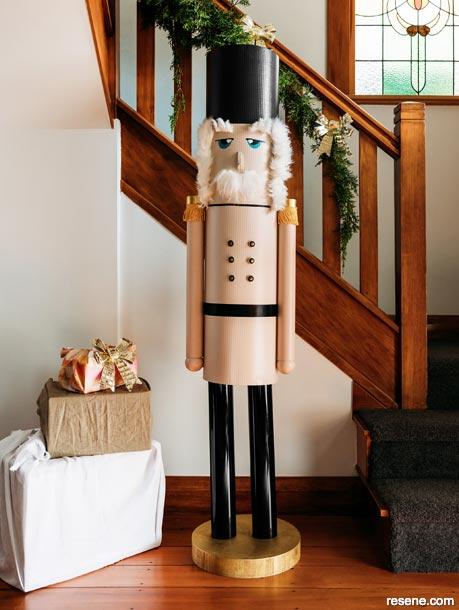
Stand-Out Festive Decor: Build a Big DIY Nutcracker
Whip up a larger-than-life nutcracker and have it standing guard to greet guests this Christmas. This is an ideal opportunity to repurpose last year’s baubles, leftover Resene paint testpots and leftover materials from previous projects. You could use an old cardboard box for the body and cover it in fabric scraps. Find out how to make your own nutcracker with these easy step by step instructions.

Get painting and wallpapering - Sale now on at Resene ColorShops!
For a limited time only save the GST value on Resene premium paints, wood stains, wallpaper and decorating accessories at Resene ColorShops.

 Loading…