






Which sectors pay more than a median $100,000 salary?
It used to be that once someone's salary hit six digits, they would be considered highly paid.
But there are now about a dozen sectors paying at least a median $100,000.
Over the past 10 years, the median wage across New Zealand has risen from about $67,000 - depending how you measure it - to nearly $80,000.
Infometrics principal economist Nick Brunsdon compiled LEED data from Stats NZ which showed the break down of mean and median income by industry.
It showed workers in mining, manufacturing, electricity and gas supply, rail, water, air and space transport, telecommunications, finance and insurance, computer system design, and hospitals all had median and mean incomes above $100,000.
The data reports on PAYE earners so will not capture self employed people who do not pay PAYE, or anyone who is not in paid work.
Coal, oil, gas and metal ore mining was top, with a median income of $136,770 and a mean of $144,450.
Computer systems design and related services was second, with a median income of $125,630.
It was followed by exploration and other mining support services on a median $124,960 and auxiliary finance and insurance services on $124,390.
At the other end of the table was food and beverage services, with a median $40,170, and food retailing on a median $45,030.
"The big caveat is that it doesn't include hours worked, and there will be differences in the prevalence of part time workers across industries," Brunsdon said.
He said it seemed overall that it was private sectors that were paying the highest salaries, with the exception of hospital staff. But he said hospital wages were likely to be being pulled up by highly paid surgeons and other specialists.
"Generally the private sector has greater ability to pay."
He said qualifications were also a factor, although mining roles were not necessarily those requiring degrees.
He said manufacturing salaries could be being pushed up by shift work loadings that could bring people over the $100,000 salary level "quite easily".
There had been a couple of years of quite aggressive minimum wage increases, he said. "That's going to have an effect at the bottom end and it's going to have that knock-on effect to anyone - or should have a knock-on effect to anyone - who's near the minimum wage to maintain relativity.
"But I guess it depends on what's going on. When you've got particular pressures in particular areas, that's going to push up wages. A couple of years ago there was a lot of pressure in the public sector and professional services wages during that period. Not so much now."
He said there was not much impetus for wage growth in the current environment.
"People are generally pretty grateful to keep the job they've got rather than push the boat out and try to get paid more... the job hopping that can push things up is not going on as well."
He said the economy might be at a turning point for recovery but Infometrics was not expecting it to tick over into strong growth.
"It's sort of expected to be a prolonged recovery, which means that it could be some years until we start to get that sort of heat back in the economy that contributes to strong wage growth."
Top five
=======
Coal, oil gas and metal ore mining
Mean $144,450 median $136,770
Mining is the highest paid sector in New Zealand.
A report in the middle of this year said that 7470 people were employed in the sector.
Computer systems design and related services
Mean $128,690, median $125,630
These sorts of roles are often among the most highly paid in things like Trade Me's reports of advertised salaries.
They include things like planning, integrating and managing computer hardware and software, as well as communication technologies.
Exploration and other mining support services
Mean $129,940, median $124,960
That same mining report said the biggest job creation and economic impact was in Buller, Hauraki and Waitaki.
Earlier in the year, RNZ reported that forest and mining roles had the second-biggest pay increases last year at 6.2 percent.
Auxiliary finance and insurance services
Mean $134,480, median $124,390
This category captures people whose work is related to financial transactions and insurance but who work in businesses that don't own the financial assets themselves.
Finance
Mean $126,220, median $122,020
General finance jobs were also paying well.
=======================================================

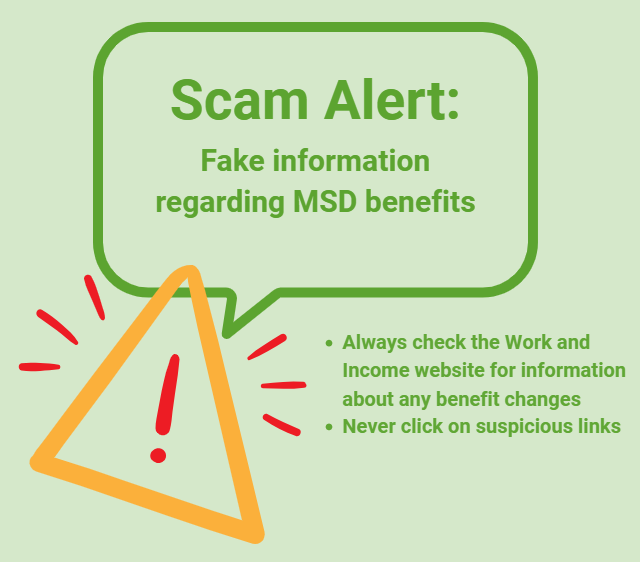
Scam Alert: Fake information regarding December Bonuses from MSD
The Ministry of Social Development is reporting that fake information is circulating about new ‘December bonuses’ or ‘benefit increases’
If you get suspicious communication, please contact Netsafe.
Tips and advice to stay street smart this summer
Summer is finally here!
Time for BBQs, holidays, Christmas, travelling and events galore.
We've put together a whole range of tips and advice so you can put your feet up and relax this summer, knowing that it's all good in your hood.
Our first piece of advice to make your neighbourhood safer this summer, is to get to know the people who live around you! People who know each other are more likely to offer, accept, and ask for help when needed.
Shop Safe - Preventing Fraud & Scams
You might find yourself making more purchases than usual at this time of year, and many of those might be online, so here's a set of tips and advice to make sure you stay safe and secure whilst doing your Christmas shopping this year. And remember to think about the security of your online shopping when it gets delivered!
Heading away this summer?
It's a busy time of year on new Zealand roads and everyone wants to get from A to B safely. It's also important that your home stays safe while you're away enjoying your 'home away from home'. We have put together a set of tips and advice to help make that happen!
Keeping your car, home and belongings safe
From recording valuable possessions to securing locks, keeping valuables hidden and informing trusted neighbours that you will be away, there are many things you can do to keep your car, home, and belongings safe. Here's a bunch of handy tips!
Party planning checklist and fire-wise tips
Whether it’s a small backyard gathering, or a big celebration for a special occasion, a little extra planning and consideration will go a long way in keeping you, your guests, and your neighbours happy. We also have some tips to make sure you and your families stay fire-wise during summer.
Get to know your neighbours - look out, reach out, help out
The most important action you can take to make your community safer is get to know the people who live around you. People who know each other are more likely to offer, accept, and ask for help when needed.
It is also important to know who to contact in an emergency and when to use the non-emergency contact for NZ Police. Learn more about Neighbourhood Support, get tips on getting to know your neighbours and the best way to contact the police below.
Strong communities start with small hellos
In terms of crime prevention, your neighbours are the best and cheapest security system you can have. You don't have to love your neighbour, but at least get their number just in case!
===================================
Have a happy, safe and connected summer!
===================================

Some Choice News!
Many New Zealand gardens aren’t seeing as many monarch butterflies fluttering around their swan plants and flower beds these days — the hungry Asian paper wasp has been taking its toll.
Thanks to people like Alan Baldick, who’s made it his mission to protect the monarch, his neighbours still get to enjoy these beautiful butterflies in their own backyards.
Thinking about planting something to invite more butterflies, bees, and birds into your garden?
Thanks for your mahi, Alan! We hope this brings a smile!

 Loading…