






What do you really have to do for a rental inspection?
Routine rental inspections can seem like an inconvenience. Every three months or so, tenants will need to worry about how clean the place they're renting needs to be to pass the grade. Is the landlord or property manager going to open the wardrobes and cupboards? Will I be forced to pay for that worn-out carpet which was old anyway?
While these check-ups may feel annoying, they can help protect the tenant from unfair claims at the end of a tenancy, said Ray White business development manager Jessica Currie, who has 15 years of experience in Auckland property management.
On the other hand, Renters United spokesperson Zanian Steele said some landlords do not understand the laws and obligations, in particular "mum and dad landlords", or those renting out a granny flat.
Here's what you need to know about what the landlord or property manager can and can't ask of you:
What is expected at a rental inspection?
=================================
At a property inspection, the landlord or property manager is checking if the place is reasonably clean and tidy, that there is no damage to the property, and any appliances and furnishings that come with the rental are working.
Property management company Crockers' senior team leader Renita Singh said ensuring the property is in a "good, tidy, clean" condition is enough.
Steele said a house doesn't need to be "hotel tidy" during routine inspections, because property managers need to have a realistic and reasonable expectation of someone living and using the house. For example, complaints about a few charred bits of pastry lying at the bottom of your oven or slightly dusty tabletops are not reasonable complaints, he said.
But the standards of being clean and tidy can be higher when leaving a property, he said.
Other unrealistic expectations would be to wash and iron curtains, for example, the Citizen's Advice Bureau said.
Landlords may photograph the property and refer to an inspection report they conducted at the start of a tenancy agreement to discuss any damage or issues that have come up. While they can photograph the rooms, they should not be taking photos of the tenants or personal items, where possible, unless those items are a breach of the tenancy agreement, the CAB said.
"When we take photos we try and avoid taking photos of personal belongings," Singh said. "But we do ask our tenants, 'we'll be coming there such and such day... we'll be taking photos of the interior of the property, if you want to remove anything, please do before we come'... but we do try and avoid taking photos of family photos and things like that."
A rental inspection is also a chance for the tenant to raise any issues or maintenance problems with the property manager.
How much notice should they be giving?
=================================
Tenancy Services, which provides information to tenants and landlords on their rights and responsibilities, said inspections can happen between 8am and 7pm for rental properties, and between 8am and 6pm for boarding houses.
The maximum frequency for inspections is once every four weeks.
A tenant must be given at least 48 hours' notice before the inspection. With the appropriate notice given, the landlord is entitled to inspect the property when the tenant isn't at home.
Who is responsible for the gardens and the exterior?
==========================================
Ray White's Jessica Currie said gutter cleaning, exterior house washes and roof cleaning or maintenance are expected to be carried out at the cost of the landlord.
"In relation to the gardens, it depends on the tenancy, but generally speaking, tenants are responsible for lawns and gardens, but it's gardens within reason.
"If you've got substantial gardens... if there's a lot of hedges at a rental property, the tenants are not expected to trim those. It actually comes down to a landlord to maintain trees and hedging."
Crocker's Renita Singh agrees exterior cleaning, including decks, is generally the responsibility of the landlord.
"However, for example, tenants would be asked to clean the balconies or deck if it was caused by the tenant, so for example, if they had a barbecue out on the deck and the oil and grease has led to that, they will be asked to clean that."
Can they open cupboards and wardrobes? And why would they?
====================================================
Currie said they do open cupboards and wardrobes to check, for example, there are no leaks under kitchen sink or in bathroom cupboards.
"And same as like a wardrobe backed onto like a bathroom or something, you'd quite often open that door just to check there's no leaking through the wall or there's no dampness or any issues you need to be aware of. So that's the only reason why we do that. It's not to breach anyone's privacy. It's just to check that you know there's no issues with any leaking or any problems."
The CAB said it is reasonable for property managers or landlords to check the backs of cupboards or wardrobes for dampness, leaks or mould.
"It is less likely to be reasonable if they are just wanting to see what's in the cupboards.
"If it is a cupboard or wardrobe that contains the tenant's personal belongings it would be important to let them know in advance so they can choose whether to remove items or cover them up. This is about respecting the fact that while it may be the landlord's property, it is the tenant's home."
Do I have to get a professional clean done?
====================================
The CAB said tenants do not have to do professional cleaning for a property inspection, even when their lease ends. But a landlord can deduct bond money for cleaning costs if, at the end of a lease, tenants don't leave it in a "reasonably clean" and tidy state and remove any rubbish.
Tenancy agreements may include a clause to say a tenant must pay for professional cleaning when they leave the property or that bond will be deducted for professional cleaning, but the CAB notes tenants do not have to pay this and the Tenancy Tribunal would not enforce it.
Importantly, this only applies if the tenancy agreement is under the Residential Tenancies Act. It could be void if you are flatting, in a private board or living in the same house as the landlord.
What is considered 'wear and tear'? Who should pay to repair?
==================================================
A tenant is not responsible for "fair wear and tear" to the property or any chattels provided by the landlord when they use them normally, Tenancy Services said.
Examples of what is usually considered fair wear and tear include a stove element wearing out from cooking, flooring getting worn, taps and washers wearing out or leaking, minor stains on carpets from you walking on it, and door handles and window latches breaking after normal use.
However, the tenant is responsible for any intentional or careless damage. Cases where the tenant may be held liable include abnormal use of the cooktop, such as for heating the kitchen, burn marks or stains on carpet, and drawings on wallpaper.
For more details on the cost of repairs, see the Tenancy Service's website.
My landlord and I can't agree on 'fair wear and tear' or cleanliness - what do I do?
=============================================================
Renters United's Zanian Steele said understanding your rights, the law and having conversations with your property manager or landlord are important.
In addition, tenants should take note of the age of the chattels provided by landlords when they move into a house, so they can raise their concerns if they appear to need replacement, he said.
Currie said it is important for tenants to email the landlord or property manager as soon as they notice any issues about the property, with photos, instead of waiting for months between inspections.
"If nothing is actioned and further damage occurs, like you just keep noting it down with photos and continue to send it through, because at the end of the day, as a tenant, you need to provide evidence that when you noticed the damage you've actually reported it.
"If they [landlord] don't choose to action it immediately, and then it gets worse, well then the tenant can say, 'well, I told you three months ago on this day and time, here's the photos, here's an email of what was happening'."
If talking to your property manager and landlord does not resolve any dispute you have, you can try seeking advice from the Citizens Advice Bureau or apply to the Tenancy Tribunal.
My landlord never does inspections, should I be worried?
==============================================
Yes, it does raise risks, Currie said. As annoying as routine rental inspections can be, they can also protect tenants from any unfair claims.
"If the tenant has been living there for three years and the owner hasn't been through during that time then he comes back three years and said 'well, now this is a problem', you know, it's not fair on the tenant.
"Over a period of time, like fair wear and tear does happen, depreciation on chattels and things occurs, and we have seen instances where private landlords have gone through after a tenancy and tried to claim everything back off the tenants, which is actually not things that they'd be liable for at all."
Routine inspections also fulfil a requirement of most house insurance policies, she said.
"Most insurance policies state you have to do routine inspections every three months. There are a couple of insurance policies that state once every six months but majority, it's every three months you should be going to your property to do an inspection and taking photos as well."
The CAB agrees that regular inspections allow landlords to see the realities of wear and tear over time, so that there are no surprises at the end of the tenancy.
Singh said routine inspections can also pick up on issues that the tenants might have missed, too.
=================================================
www.1news.co.nz...
==================================================

Neighbourhood Challenge: Who Can Crack This One? ⛓️💥❔
What has a head but no brain?
Do you think you know the answer? Simply 'Like' this post if you know the answer and the big reveal will be posted in the comments at 2pm on the day!
Want to stop seeing these in your newsfeed?
Head here and hover on the Following button on the top right of the page (and it will show Unfollow) and then click it. If it is giving you the option to Follow, then you've successfully unfollowed the Riddles page.


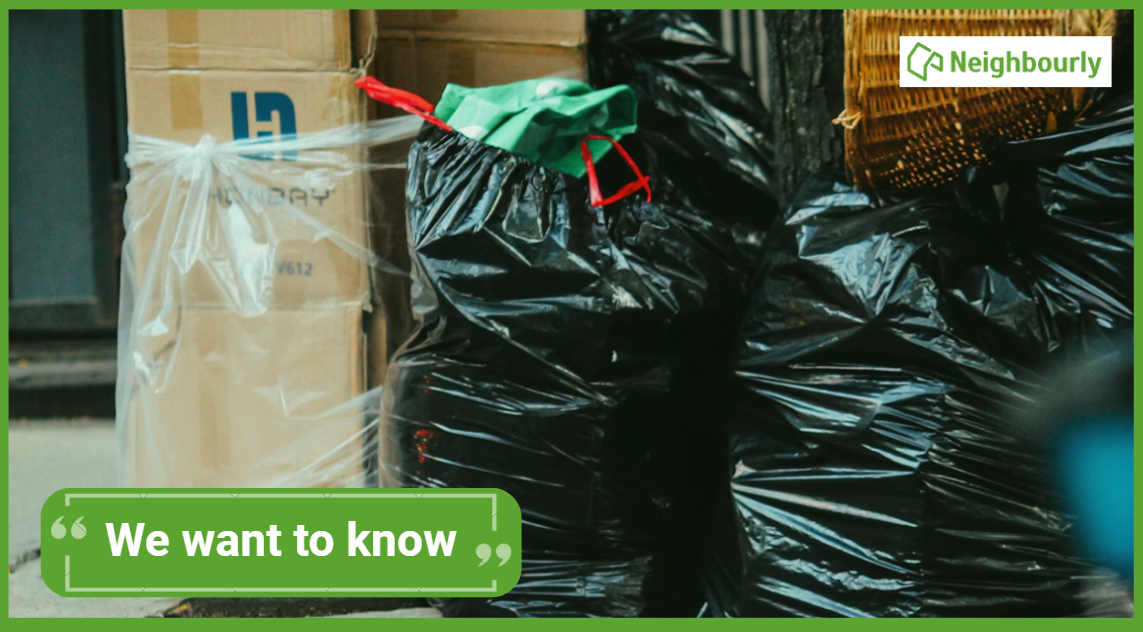
Poll: 🗑️ Would you be keen to switch to a fortnightly rubbish collection, or do you prefer things as they are?
Aucklanders, our weekly rubbish collections are staying after councillors voted to scrap a proposed trial of fortnightly pick-ups.
We want to hear from you: would you be keen to switch to a fortnightly rubbish collection, or do you prefer things as they are?
Keen for the details? Read up about the scrapped collection trial here.
-
83.9% Same!
-
16.1% Would have liked to try something different
7 tips for buying your Christmas ham
It’s the centerpiece of the Christmas table, so when you’re peering into the supermarket chiller or ordering from the butcher, choosing the perfect ham can feel like a daunting task.
Here are some things to keep in mind when choosing one to bring home with you.
1. What type of ham to buy
You’ve got some decisions to make when it comes to the type of Christmas ham you’re going to buy.
Cooked on the bone (COB) ham is the traditional Christmas ham. If you’re buying a half ham, you’ll have the choice of the shank or fillet end. The shank is the part with the bone sticking out that gives the ham that traditional look. The fillet end is the round part that gives more meat. If you’re deciding whether to get a whole ham or half, consider how quickly you’ll be able to eat it all. You only have about a week to eat an opened ham before it will go off, so it can be a good idea to get two halves. That way you can eat one half during the week of Christmas and save the other for January.
Champagne ham has had the bone removed and only has the hock left on, so it’s easier to carve.
Pressed ham – also known as continental ham – has had the bones removed and has been pressed, so it’s also easy to carve.
2. Check the pork percentage
The label on a packaged ham will say what percentage is actually meat. Hams are injected with brine, to keep them moist, and additives. The brine injection level for manufactured hams is usually between 10% and 35% of the ham's weight. A manufacturer that wants to produce a cheap ham will add more water to bump up the weight.
3. Know how to tell if it’s New Zealand pork
By far, most of the hams bought in New Zealand this Christmas will be from pigs reared overseas. New Zealand imports pork from about 25 countries. It’s frustrating for New Zealand pig farmers because this ham can come from farms that don’t have to meet the same animal welfare standards as we have in this country. As a result, overseas meat is often cheaper.
If buying New Zealand pork is important to you, look for:
words on the packaging like ‘New Zealand pork’ or ‘born and raised in New Zealand’
4. Have a good look at the ham
If you’re going to be glazing your ham, look for one that is covered in a finger-thick layer of fat. This will give you the thickness you need to make good score lines.
New Zealand Pork’s website also advises looking for a ham that has a meaty texture rather than one that looks wet or rubbery. It says the ham’s skin should be smooth with even colouring. “If the knuckle is sunken, it may be overcooked. If the rind is buckled or uneven, it may be a sign of dryness.”
5. Ask a lot of questions
If you’re ordering your pork from a butcher, you probably won’t be able to compare hams like you would at the supermarket. So, make sure you ask lots of questions, now that you know what you’re looking for.
You could ask:
Is the ham made from New Zealand born and farmed pork?
What will be its injection percentage?
What flavours will it have?
You could even ask if there’s a glaze the butcher thinks would work particularly well with those flavours.
6. Know what size you’ll need
If the ham is the only meat on your Christmas menu, New Zealand Pork advises allowing 1kg of ham for five people. Or if you’ve got other meat options, 1kg will feed about six to eight people.
7. Know the best hams in New Zealand
The best hams of the year were awarded at the 100% New Zealand Bacon & Ham Awards earlier in the year so you can check out which ones got medals. Some of them are only available in the city the butcher is based, but a Farmland boneless ham available nationwide won a gold award and Woolworths bone-in and boneless hams picked up bronze.
====================================================
 Loading…