






How to Get an Extra-Clean House for Allergy Sufferers
If you live with someone allergic to dust mites, mould, pollen, pet hair or any one of the hundreds of allergens in household products, clean is not enough. A house needs to be extra-clean and allergen-proof to help make allergy sufferers as comfortable as possible. The alternative is sneezing, wheezing, coughing and watery eyes, all brought on by the presence of irritants that you can keep at bay with some extra attention.
Here’s how to get on top of some common irritants at your place:
1. Use allergy-friendly products
• Avoid using aerosol sprays as they are a common trigger for asthma sufferers. Even if you’re not standing near anyone, the high-pressure mist that the aerosol omits means the contents can spread a long way.
• Try to use environmentally-friendly products – what’s good for the environment is often better for us too.
• Avoid using products that contain harsh chemicals like ammonia, formaldehyde and sodium lauryl sulphate. Hunt out products that are free from these irritants or make your own natural cleaning products.
2. Keep a dust-free bedroom
It’s the dust mite droppings that many people react to (and news that there is dust mite poo in our bedding causes a reaction in the rest of us!). To keep bedding really clean, you will need to wash all bed linen regularly, preferably weekly. A man-made fibre like polyester is less likely to trap dust than natural fibres like cotton or linen.
Use a hypoallergenic mattress topper, duvet inner-cover and pillow protector and wash these at least monthly and replace them annually.
Keep stuffed animals to a minimum and wash those that remain regularly. Pull the bed out and vacuum underneath at least once a week, preferably daily. Don’t forget to dust side tables and vacuum underneath those as well.
3. Vacuum daily
Wooden or tiled floors are much easier to keep dust-free, but if you have carpet, a daily vacuum, especially in bedrooms, is a must. Use a vacuum cleaner made especially for allergy-sufferers – most will be fitted with HEPA filtration and powerhead.
Make sure you vacuum around the skirting boards and in crevices and vacuum around all beds at least twice. Empty canisters or vacuum bags regularly, sealing the bag well before disposal.
4. Use an air purifier
Even if you are taking the precautions outlined above, there will still be plenty of dust in your house – in fact some studies show that air pollution such as allergens and pollutants can be present in higher levels inside the home than outside! Air purifiers work to filter the allergens and pollutants from the air and improve the air quality.
5. Empty bins daily
The rubbish bin can omit toxins without you even realising, and they are a breeding ground for mould and germs. Empty bins every evening and disinfect with a hospital grade solution before lining with a plastic bag.
6. Beat doormats every day
Pollen and dust are tracked into our home constantly. Make sure you have a doormat on the outside and inside at every entry point to your home and shake these out regularly. Vacuum each indoor mat when you do your daily vacuum run. It’s a good idea to place a mat in the doorway of an allergy-sufferers bedroom for extra protection. Better yet, leave shoes outside.
7. Inspect for mould weekly
Mould is a common allergy trigger and its present absolutely everywhere. Don’t give it a chance to breed – wipe away small mould patches as soon as you find them with a paper towel and throw the paper towel in an outside bin. You can use a solution of three cups of water to five drops of Oil of Cloves (find it at your pharmacy) in a spray bottle to kill mould spores and prevent mould from growing. Make sure you test for an allergy to Oil of Cloves first, of course! Tea tree oil is also a good antiseptic against mould – a teaspoon of oil to a cup of water wiped over mould-prone surfaces should do the trick.
Keep reading: www.curtainclean.co.nz...


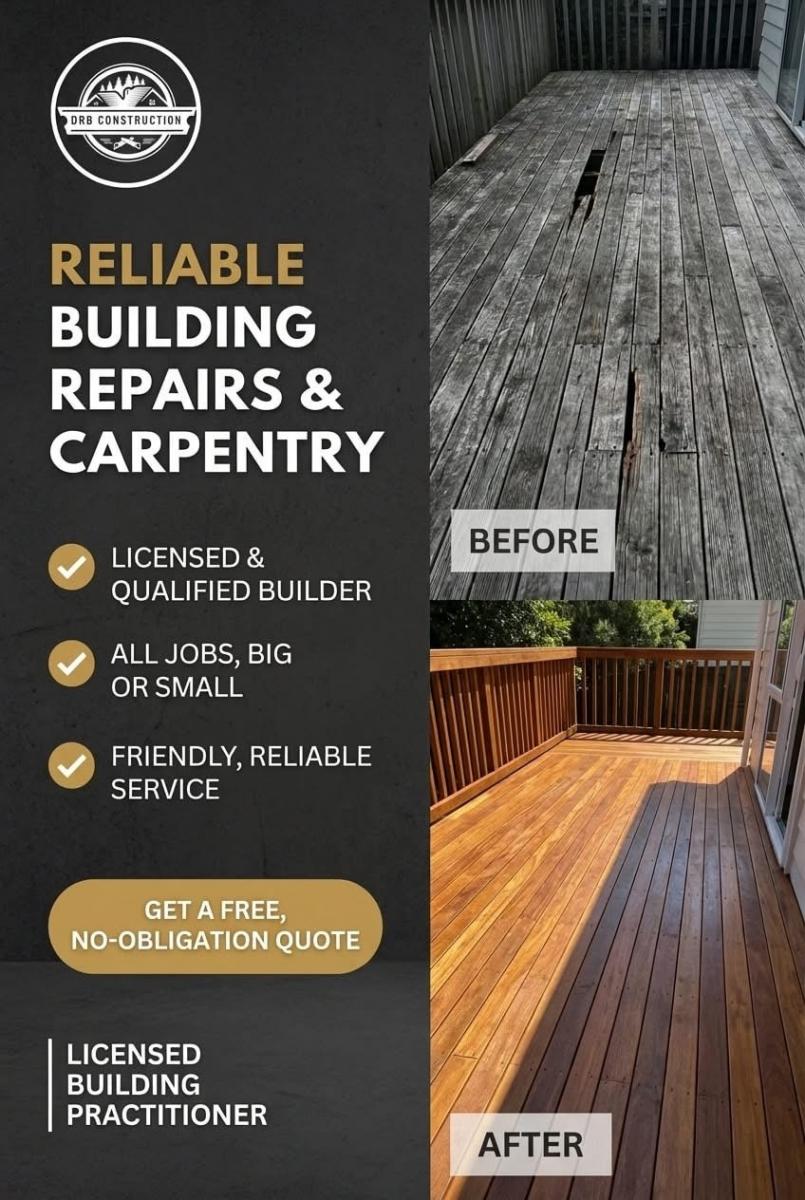
Looking for a builder?
At DRB Construction, we specialise in quality home renovations, new builds, and reliable maintenance services. Whether you’re updating an existing space, building from the ground up, or keeping your property in top condition, we’re committed to craftsmanship, clear communication, and results you can trust. From concept to completion, we’re here to bring your vision to life.
Contact us today!
Email: drbconstruction.nz@gmail.com
Phone: 02041569479

Today’s Mind-Bender is the Last of the Year! Can You Guess It Before Everyone Else? 🌟🎁🌲
I dance in the sky with green and gold, a spectacle few are lucky to behold; I’m best seen in the south, a celestial sight—what am I, lighting up the New Zealand night?
Do you think you know the answer? Simply 'Like' this post and we'll post the answer in the comments below at 2pm on the day!
Want to stop seeing these in your newsfeed? No worries! Simply head here and click once on the Following button.


Scamwatch: How to recognise, avoid and act against scams.
A scam or a fraud is any scheme designed to con you out of money or steal your personal information. If someone contacts you unexpectedly – whether over the phone, through the post, by email, on a website, in person or on social media – always consider the possibility that it may be a scam.
Scammers target lots of people, often for small amounts of money. They constantly evolve their approach making scams harder to spot. Most scams come from overseas, but they may pretend to be locally based — from a reputable company, bank, or government agency, or even from your friends on social media if your account has been hacked. It is very difficult to get your money back once it is sent overseas.
Scams hurt us all. You can protect yourself and others by learning how to spot scams, share what you see and report them.
Figure out if you are being scammed: Use these questions to help figure out if you have been targeted by a scammer.
Article compiled from information kindly supplied by ConsumerProtection.govt.nz
Q&A regarding Neighbourly data breach
 Loading…