





DIY SEO
Search Engine Optimisation (SEO) sounds complex, but with a few simple tricks, you’ll find yourself climbing the search results.
Here are just a few of the best ways to get that boost for free.
Watch Your Words
One of the most overlooked problems are the keywords themselves. Don’t try to be the number one hit for “socks” because there is no way. You could be high on the list for “men’s business socks” or something more specific. Once you have a few phrases that work, try a combination that represents the strongest part of your business.
Be Consistent
The best keywords aren’t going to get you very far if you aren’t updating the site. Chances are, you can’t redesign your site regularly. You aren’t making new products every week. Having promotions year in and out is ridiculous.
You can, however, blog. Your webhost probably has one and you can generate some interesting content on your own. At first, blog weekly. If you are successful, try it daily. The activity on your site helps Google and similar search engines rank you higher.
Keep It Pithy
When it comes to item descriptions and URLs, the shorter the better. For item descriptions and comments, try to keep it under 50 words with all the pertinent details.
This can be especially hard for some products, but you may be able to find a different header for special information or specific dimensions.
Likewise, you don’t want to have every step of the site in your URL. For example me.com/clothing/mens/underwears/socks/business/search.aspx is not as good as me.com/socks. Google and other engines can really penalise you for a long URL.
Stick to these 3 simple rules and you can get yourself to the top of the search results by the end of the week. Just remember this is a journey, not a destination.


Today’s Mind-Bender is the Last of the Year! Can You Guess It Before Everyone Else? 🌟🎁🌲
I dance in the sky with green and gold, a spectacle few are lucky to behold; I’m best seen in the south, a celestial sight—what am I, lighting up the New Zealand night?
Do you think you know the answer? Simply 'Like' this post and we'll post the answer in the comments below at 2pm on the day!
Want to stop seeing these in your newsfeed? No worries! Simply head here and click once on the Following button.


Scamwatch: How to recognise, avoid and act against scams.
A scam or a fraud is any scheme designed to con you out of money or steal your personal information. If someone contacts you unexpectedly – whether over the phone, through the post, by email, on a website, in person or on social media – always consider the possibility that it may be a scam.
Scammers target lots of people, often for small amounts of money. They constantly evolve their approach making scams harder to spot. Most scams come from overseas, but they may pretend to be locally based — from a reputable company, bank, or government agency, or even from your friends on social media if your account has been hacked. It is very difficult to get your money back once it is sent overseas.
Scams hurt us all. You can protect yourself and others by learning how to spot scams, share what you see and report them.
Figure out if you are being scammed: Use these questions to help figure out if you have been targeted by a scammer.
Article compiled from information kindly supplied by ConsumerProtection.govt.nz
Q&A regarding Neighbourly data breach
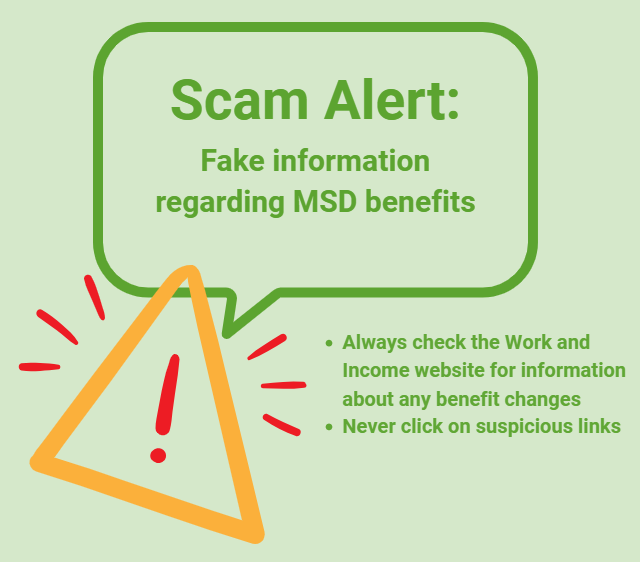
Scam Alert: Fake information regarding December Bonuses from MSD
The Ministry of Social Development is reporting that fake information is circulating about new ‘December bonuses’ or ‘benefit increases’
If you get suspicious communication, please contact Netsafe.
 Loading…