






We Say/You Say: How can Wellington's bike routes be improved?
Kia ora neighbours,
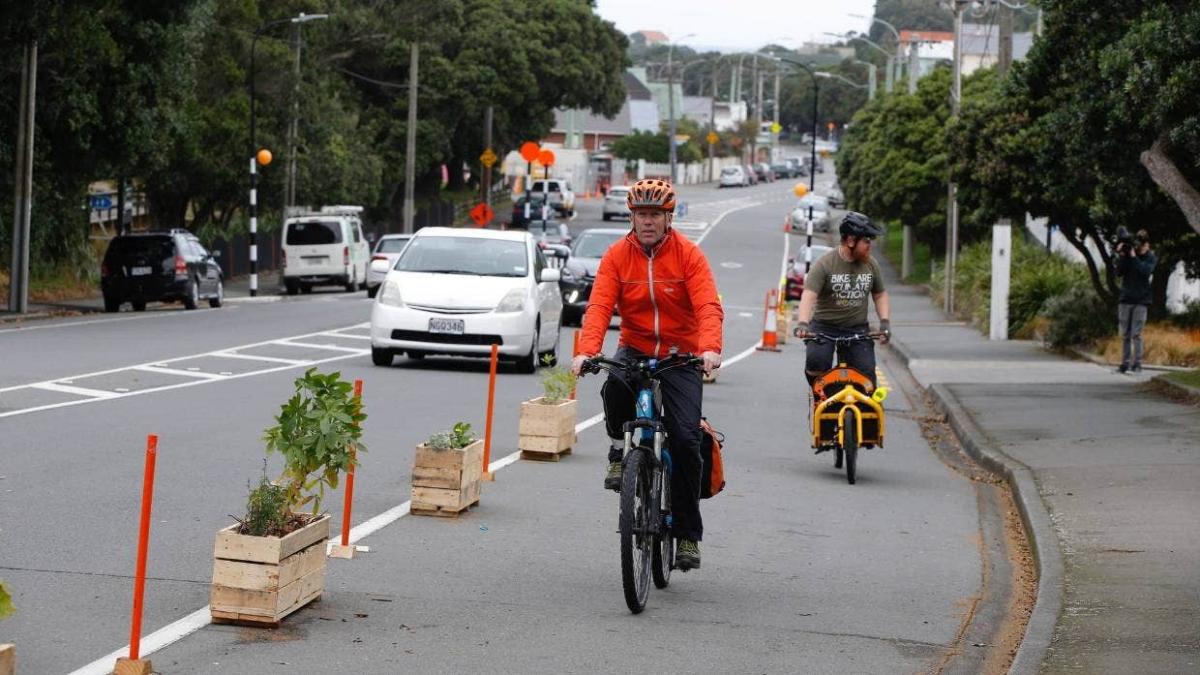
Wellington City Council is seeking feedback until December 14 on its bike network plan.
The plan includes finishing Tahitai, the route around Evans Bay, and The Parade upgrade in Island Bay.
They are particularly looking for opinions of young Wellingtonians to be shared in the Tamariki Zone - the Council's online space for kids under 14 to have their say on developing safe and connected biking and scooting routes around the city.
Do you or your kids love biking and know how Wellington can be improved? Share your thoughts below and don't forget to type NFP if you don't want your comment featured in the conversations section of the Upper Hutt Leader.

Scamwatch: How to recognise, avoid and act against scams.
A scam or a fraud is any scheme designed to con you out of money or steal your personal information. If someone contacts you unexpectedly – whether over the phone, through the post, by email, on a website, in person or on social media – always consider the possibility that it may be a scam.
Scammers target lots of people, often for small amounts of money. They constantly evolve their approach making scams harder to spot. Most scams come from overseas, but they may pretend to be locally based — from a reputable company, bank, or government agency, or even from your friends on social media if your account has been hacked. It is very difficult to get your money back once it is sent overseas.
Scams hurt us all. You can protect yourself and others by learning how to spot scams, share what you see and report them.
Figure out if you are being scammed: Use these questions to help figure out if you have been targeted by a scammer.
Article compiled from information kindly supplied by ConsumerProtection.govt.nz
Q&A regarding Neighbourly data breach
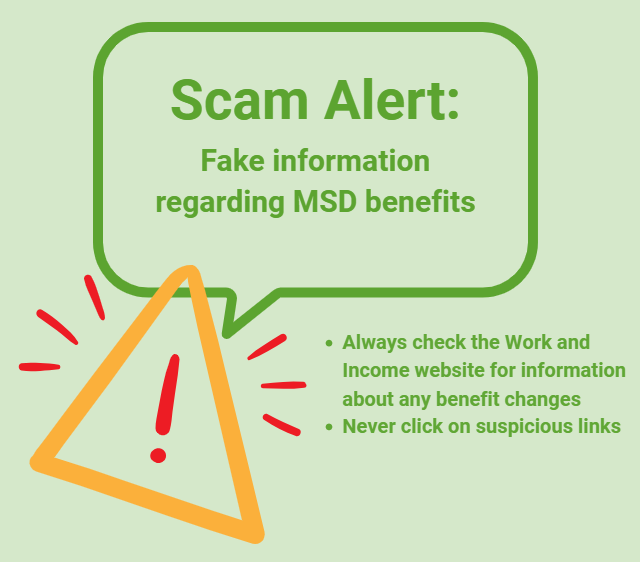
Scam Alert: Fake information regarding December Bonuses from MSD
The Ministry of Social Development is reporting that fake information is circulating about new ‘December bonuses’ or ‘benefit increases’
If you get suspicious communication, please contact Netsafe.
Poll: Do you set New Year’s resolutions?
🎉 2026 is almost here!
We’re curious ... how do you welcome it?
Do you set resolutions, follow special traditions, or just go with the flow?

-
9.9% Yes! New Year, New Me
-
16.9% Yes - but I rarely stick to them
-
73.2% Nah - not for me
 Loading…