





Textile Fibres and Their Characteristics
We are passionate about fabrics and finding the right solutions for our customers. With over 110 years of experience in the textile industry we have compiled some of this knowledge and look forward to sharing it with you over the next year through our blog series – An Educational Yarn. Our first topic explores the different characteristics of textile fibres.
Textile fibres are natural or synthetic structures that can be spun into yarn. Yarns are then woven, knitted or bonded into fabric. The inherent characteristics of fibre properties directly relate to the performance and required care and maintenance of the finished fabric, therefore understanding fibres and yarns will in turn help you to understand the how to apply specific fabrics within your interior schemes.
Natural Fibres: Occurring in nature; which are of animal, vegetable/plant or mineral origin.
COTTON (Plant Origin)
• A strong fibre, even stronger when wet, cotton has good natural durability.
• Can be affected by mildew however a mildew resistant finish can be applied to reduce this issue.
• Generally has reasonable sunlight resistance but should be protected with a quality lining when used as a drapery and protected from direct sunlight when used as an upholstery.
• It is an absorbent fibre which means it can move with changing humidity levels.
• May shrink with laundering but this can be reduced through a finishing process on the fabric known as sanforising.
Sunlight resistance can be greatly reduced in acidic polluted conditions.
SILK (Animal origin; an animal fibre that comes from the silkworm. The silkworm creates its cocoon from very long silk fibres which are harvested from mulberry trees.)
• It is naturally fine in texture, and colours beautifully.
• Its biggest disadvantage in furnishing is its sensitivity to UV light degradation (direct and reflected). Due to its sensitivity, it should not be used in direct sunlight or even bright light.
• An absorbent fibre, it has the potential to move in humid environments.
• Silk is a relatively strong fibre and can withstand a certain amount of abrasion, particularly when used in conjunction with
• a backing fabric.
• Unrivalled in splendour and smoothness, silk is regarded the most exclusive of all natural fibres.
LINEN
Plant origin; derived from cellulose fibres that grow inside the stalks of the flax plant.
• As with cotton it is affected by acidic pollution.
• Can be affected by mildew which will likely cause the fibre to deteriorate over time.
• Considered to be the strongest of the natural fibres; if constructed for upholstery it is very durable, particularly when blended with up to 10% nylon.
• Is regarded as a luxury fibre because of its lustre and texture.
• It is an absorbent fibre which means it can move with changing humidity levels
• Linen has moderate sunlight resistance and should be protected by a quality lining when used as a drapery and protected from direct sunlight when used as an upholstery.
Keep reading: www.curtainclean.co.nz...


Poll: Is it ok to regift something that you have been given?
🎁 Holiday Gift Chat!
Do you ever regift?
What’s your take on asking for a receipt if a gift doesn’t fit?

-
79.2% Yes! It's better to regift what I don't need
-
20.8% No. It's the thought and effort that matters

Some Choice News!
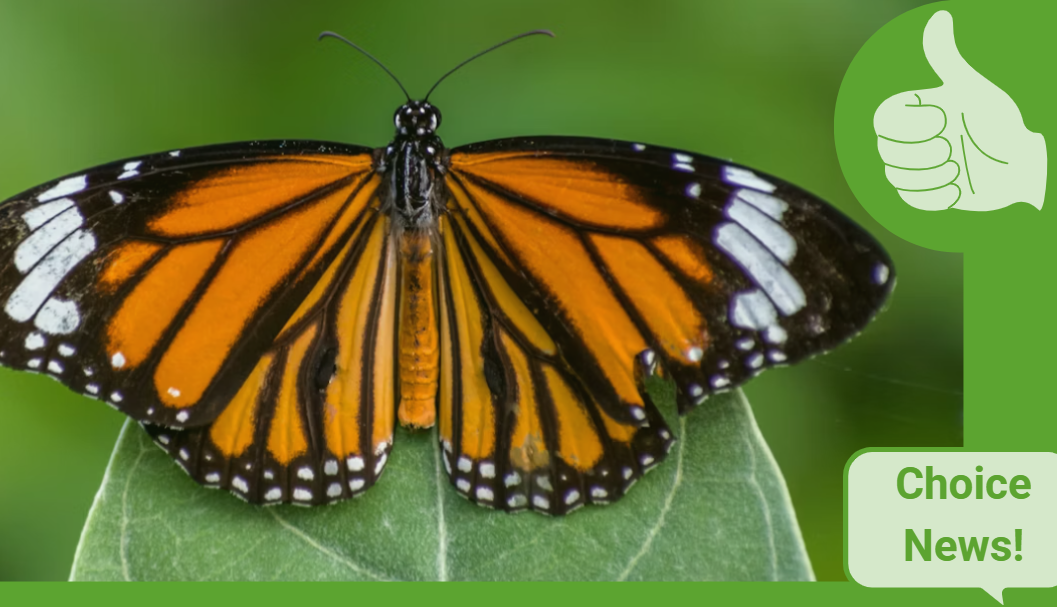
Many New Zealand gardens aren’t seeing as many monarch butterflies fluttering around their swan plants and flower beds these days — the hungry Asian paper wasp has been taking its toll.
Thanks to people like Alan Baldick, who’s made it his mission to protect the monarch, his neighbours still get to enjoy these beautiful butterflies in their own backyards.
Thinking about planting something to invite more butterflies, bees, and birds into your garden?
Thanks for your mahi, Alan! We hope this brings a smile!

Watercolour Art Class
Discover watercolour painting in a relaxed, supportive watercolour class designed for beginners and returning artists. These sessions will guide you through paint and watercolour control, colour mixing, washes, composition and perspective.
Each watercolour class will help you to develop new technical skills, become more confident in this medium, and increase your understanding of paint, walking away with a toolbox of new skills by the end of the term. This is a small class of 8 people only to allow plenty of tutor access.
Tuesdays - 3rd February - 24th March or
Fridays - 30th January - 27th March
Book now at - www.artsforhealth.co.nz...

 Loading…