






Here's How to Choose the Perfect Headboard for Your Queen Bed in NZ
A good night's sleep starts with the right environment, and a stylish headboard can transform your bedroom into a cozy retreat.
In New Zealand, the quest for the perfect headboard blends aesthetics with functionality, offering various options to suit any taste.
This blog will assist you in enhancing your sleep space: stylish headboard options for queen beds in NZ.
Headboard Options: A Touch of Personality
Selecting a headboard with personality for your queen bed means considering style, material, and colour to reflect your unique taste.
This choice not only impacts the look of your bedroom but also expresses your style.
Whether you're drawn to the classic elegance of a wooden headboard, the sleek appeal of a metal frame, or the cozy comfort of an upholstered design, the right headboard acts as a bedroom centrepiece.
Style Variety. Choose from traditional, contemporary, or avant-garde designs to match your bedroom’s theme.
Material Matters. Wood, metal, fabric, and leather options offer different textures and vibes.
Colour Choices. Select from a broad palette to complement or contrast with your bedroom decor.
Custom Designs. Tailor-made headboards allow for a personalised touch, fitting your aesthetic and functional requirements.
Functional Features. Consider headboards with built-in shelves or lighting to combine style with practicality.
When selecting a headboard, consider the size of your room, the height of your ceiling, and the colour scheme of your space.
A large, bold headboard can make a statement in a spacious room, while a simpler design might be better for a compact space.
Installing a new headboard can be a straightforward DIY project. Most designs easily attach to the bed frame or wall.
Regular maintenance will keep your headboard looking fresh; fabric options may require occasional cleaning, while wood and metal might need dusting or polishing.
Design Trends in Queen Beds
For those seeking headboard options for queen beds in NZ, current trends lean towards statement pieces that act as the bedroom's focal point.
Bold colours, intricate patterns, or extended heights can create a dramatic effect, while simpler designs in neutral tones complement a minimalist décor.
Don't be afraid to mix and match styles and materials.
A rustic wooden headboard can look surprisingly chic against a modern interior, and a vintage metal design can add character to a contemporary room.
The key is to find a balance that speaks to your aesthetic and complements the overall design of your bedroom.
Function Meets Style
Finding a design that offers both functionality and style is essential when choosing a headboard for your queen bed.
A well-chosen headboard can provide support for reading or watching TV in bed while also enhancing the room's décor.
Look for headboards with features that meet your lifestyle needs without compromising aesthetics.
Supportive Structure. Ideal for comfortable reading and lounging in bed.
Aesthetic Appeal. Complements the bedroom's design and atmosphere.
Storage Solutions. Some headboards include built-in storage for convenience.
Sound Insulation. Upholstered options can help to reduce noise.
Versatility. Choose a headboard that can adapt to changing decor styles and needs.
Where to Find the Best Headboard Options
Exploring local furniture stores and online marketplaces can reveal many headboard options.
Custom furniture makers in New Zealand also offer bespoke designs, providing a unique solution that can perfectly match your space and style.
Transforming Your Sleep Space with the Right Headboard
Upgrading your queen bed with a stylish headboard from Beds4U will enhance the aesthetic of your bedroom and promise a comfort upgrade. This ensures that your bedroom is not just a place to sleep but a stylish retreat tailored to your taste.
Visit Beds4U to discover the perfect headboard that complements your style and meets your needs.
With our diverse headboard options, you can transform your sleep space into a luxurious haven.

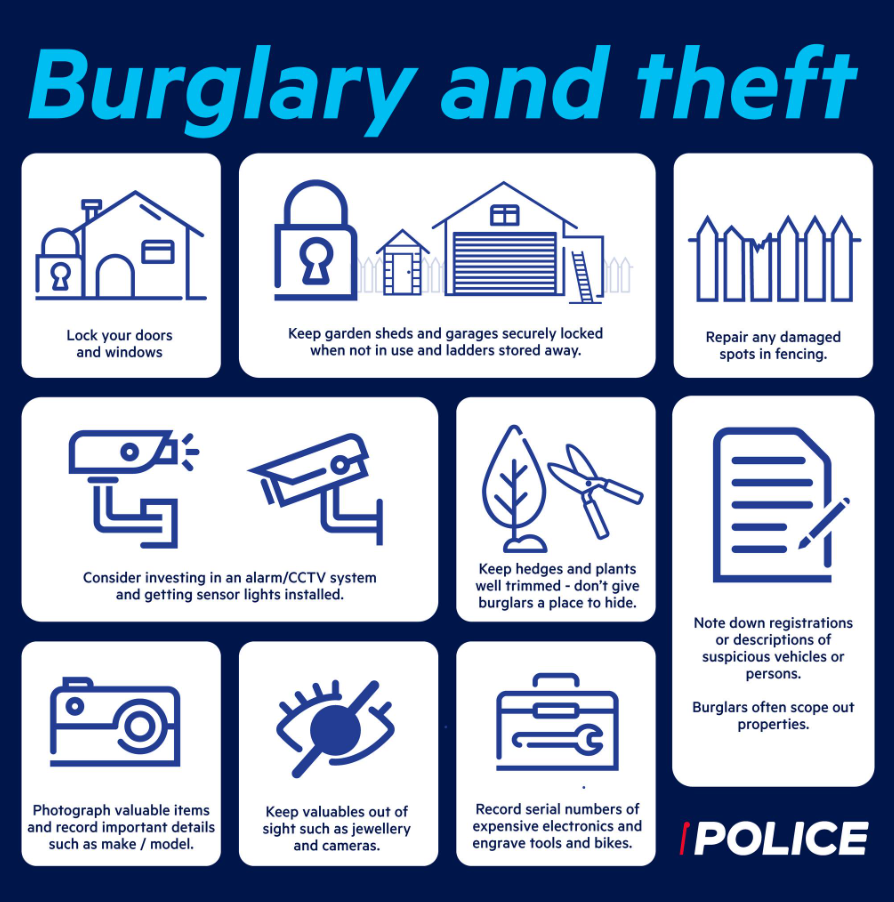
Secure your homes over summer
Police are reminding people to keep their homes secure during the summer months.
Inspector Glenda Barnaby, Christchurch Area Prevention manager, says daytime burglaries are just as common as nightime burglaries.
“Burglaries can be committed at any time of the day, and coming into warmer months there is more opportunity for thieves."
"Although a majority of burglaries involve forced entry through windows and doors, we are starting to see more incidents at insecure premises. Police deal with cases where burglaries are committed in broad daylight, sometimes even while the victim is at home. Good weather means open doors and windows, which makes homes more vulnerable to burglars.”
Inspector Barnaby says there’s a few things people can do to reduce their changes of a burglary being committed.
⚠️ If you’re going outside for gardening, relaxing in the sun, or working in the garage, take a moment to lock your doors and secure your windows first.
⚠️ Do the same at night when you go to bed - keep your doors and windows secure and close your curtains. Fitting window stays means you can get a breeze coming through, while keeping your windows secure.
⚠️ Get to know your neighbours - let them know if you’re going away and look out for one another.”
If you see any suspicious activity, people or vehicles in your neighbourhood, don't hesitate to contact Police.
If you witness or suspect any illegal activity, please call 111 if it is happening now, or make a report through 105 either online or over the phone, if it is after the fact.

Poll: Are our Kiwi summer holidays helping us recharge, or holding the economy back? ☀️🥝
There’s growing debate about whether New Zealand’s extended Christmas break (and the slowdown that comes with it) affects productivity.
Tracy Watkins has weighed in ... now it’s your turn. What’s your take? 🤔

-
72.7% We work hard, we deserve a break!
-
16.3% Hmm, maybe?
-
11% Yes!

What sectors are barely paying more than minimum wage?
While New Zealand might have about a dozen sectors paying at least a median $100,000 a year, there are almost as many paying barely more than the minimum wage.
Data compiled by Infometrics showed the median and mean salaries across industries throughout the country.
The data does not adjust for hours worked, and some of the workers may not be working a 40-hour week.
But it shows that on an annual basis, many sectors were not delivering incomes that were equal to the minimum wage.
The minimum wage of $23.50 an hour works out to just under $49,000 a year for a full-time, 40-hour a week worker.
Fuel retailing was paying a median of almost exactly the same amount.
Food retailing was paying less, at $45,030. Accommodation was slightly more, at $49,240, and food and beverage services was significantly less at $40,170.
Also within $10,000 of minimum wage were "other store-based retailing" at $53,220, sport and recreation services at $53,350 and personal and other services at $54,170.
Ministry of Business, Innovation and Employment data last year showed that about 141,900 people would be directly affected by the minimum wage rising to $23.50, indicating they were at that point being paid less than that amount per hour.
Infometrics principal economist Nick Brunsdon said skills and experience explained a lot of the variation in incomes.
"Industries that need a more skilled workforce generally pay more - because they can get a lot of value out of their workers, and workers need a good incentive to gain those skills - for example, medicine. Industries that take in a lot of lower qualified staff, like hospitality, can get away with paying a lot less, and still get plenty of job applicants.
"There are other factors like desirability - some jobs might not have a high skill requirement but are somewhat undesirable - say underground coal mining - so higher pay is necessary to find workers."
CTU policy director and economist Craig Enney said "hours adequacy" was a big problem in many sectors.
"You've got someone who's working 20 hours a week or 25 hours, on $25 an hour, so you're earning $500 a week. Is that enough? No.
"The challenge is often about the structure of employment in some of those sectors…In hospo, in retail, in catering, in a range of other sort of service-based industries, it's wanting more hours and not getting it."
The latest labour market statistics showed the the number of underutilised people in the country had risen to 403,000.
"These are people who want more hours, want more work and can't get it. And that may be a key reason why, you know, total incomes are so inadequate for some people. And that's also partially helping to explain why the headline unemployment rate is not rising as quickly as some people had predicted."
Jake Lilley, a spokesperson for financial mentor network Fincap, said it was something mentors dealt with.
"They also help people work out what is realistic in terms of taking on hours while balancing additional childcare costs. Our latest Voices reporting recorded 31 percent of those supported by a financial mentor as having a mix of income from salary or wages as well as income support.
"It is a real juggle to navigate finances when unpredictable sporadic hours of work need reporting to Work and Income in what can be impractical timeframes. An example might be someone being asked to stay on for a longer shift by their manager and being unable to contact Work and Income when that day is the deadline to report other income.
"Someone might also not know exactly what their pay will be until a payslip is provided after the reporting date. Such situations can often result in overpayment debts from Work and Income compounding the difficulty of administering already tight finances."
=======================================================
 Loading…