
Know what’s happening
Access the private noticeboard for verified neighbours near you. Keep informed about any suspicious activity, send urgent updates to your neighbours when required and discuss emergency planning.
Get to know your neighbours
Browse the directory and start getting to know your neighbours. Don’t want to post to the whole neighbourhood? Send a private message.
Buy, sell and give away
Want to declutter your garage? Buy some used household items? Give away some garden stuff? Become a verified neighbour to browse and post items for sale. Trading is simple when everyone lives nearby.


New Windsor news is brought to you by the team at Central Leader
Recent posts







Got some bits to give away?
Clear out that garage and pop it on Neighbourly Market for free.


Thank you for using Neighbourly
You may receive an email confirmation for any offer you selected. The associated companies will contact you directly to activate your requests.

Brian from Mount Roskill
Jetstar said it would add "close to" 500,000 seats across five of its most popular domestic and trans-Tasman routes, and was adding two new services - one domestic and one to Australia.
Around 135,000 seats would be created with new daily flights from Hamilton to Christchurch, and 17,000… View moreJetstar said it would add "close to" 500,000 seats across five of its most popular domestic and trans-Tasman routes, and was adding two new services - one domestic and one to Australia.
Around 135,000 seats would be created with new daily flights from Hamilton to Christchurch, and 17,000 would be added with flights three times a week from Queenstown to Brisbane between June and October 2026.
To support the changes, it said an additional A320 aircraft would be based in Auckland, which would bring its fleet in Aotearoa to nine.
The airline called the changes its "single-biggest expansion ever" of its New Zealand and trans-Tasman network.
It also noted increased services to Australia would allow many more one-stop routes for Kiwis visiting major cities in Asia.
Jetstar capacity increase:
=====================
Auckland and Christchurch: increasing from up to eight daily to up to 11 daily (290,000 additional seats per year)
Auckland and Brisbane: increasing from up to ten per week to twice daily (99,000 additional seats per year)
Auckland and Sydney: increasing from up to eight per week to up to 12 per week (79,000 additional seats per year)
Christchurch and Melbourne: increasing to daily year-round (26,000 additional seats per year)
Auckland and Dunedin: increasing from seven per week to up to 10 per week (From 26 October – 17 May 2026. 24,000 additional seats per year.
Qantas, which is owned by the same parent company as Jetstar, said it would begin flying its A220 aircraft between Wellington and Brisbane up to three times per week.
The Australian national carrier is also set to increase its capacity between Christchurch and Sydney, with up to two additional flights per week during February and March, adding more than 5000 seats to the route.
Key airline announces record NZ expansion, will cheaper flights follow? - Watch on TVNZ+
Jetstar Group chief executive officer Stephanie Tully said the changes will ensure Kiwis have enhanced connectivity to Asia and beyond.
"These changes will give a much-needed boost to inbound tourism while offering Kiwis even more low-fares and choice in how they travel."
Tourism and Hospitality Minister Louise Upston said: "These new services will strengthen airline connectivity for both tourism and business within New Zealand and on the Trans-Tasman routes.
"Improved aviation connectivity is an important component in our Tourism Growth Roadmap and I congratulate Jetstar and Qantas for making these connections happen."
Air New Zealand recruits charter airline
================================
Earlier today, Air New Zealand announced it would welcome back Spanish charter airline Wamos Air during peak summer travel, as it navigates "ongoing global engine supply challenges with Rolls-Royce and Pratt & Whitney".
Wamos Air would operate selected services between Auckland and Samoa, Fiji, Tahiti, Tokyo and Bali between October 30 2025 to April 30, 2026.
Air New Zealand said the Wamos-operated Airbus A330-300, which was previously flown by Virgin Atlantic, offers a cabin experience closely aligned with Air New Zealand's Boeing 787-9.
Last month, Air New Zealand signalled passengers should expect a 5% increase for all airfares amid rising operating costs.
======================================================

Kia pai from Sharing the Good Stuff
Spring’s here, and with it comes warmer weather and lots of activity from our birds. It’s a great time to get outside—many birds are easier to spot as they build nests, raise their chicks, or return from their Arctic adventures 👀
Keen to do some backyard birdwatching? The Department of … View moreSpring’s here, and with it comes warmer weather and lots of activity from our birds. It’s a great time to get outside—many birds are easier to spot as they build nests, raise their chicks, or return from their Arctic adventures 👀
Keen to do some backyard birdwatching? The Department of Conservation have put together a nifty guide on how to plan and plant a garden that attracts native birds.
We hope this brings a smile!

56 replies (Members only)
Brian from Mount Roskill
Police are excited to invite media to the launch of the Henderson Beat Team, which began patrolling this week.
A launch event will be held in Henderson on Friday morning.
Waitematā West Area Commander Inspector Simon Walker and Minister of Police Mark Mitchell will launch the team.
Please … View morePolice are excited to invite media to the launch of the Henderson Beat Team, which began patrolling this week.
A launch event will be held in Henderson on Friday morning.
Waitematā West Area Commander Inspector Simon Walker and Minister of Police Mark Mitchell will launch the team.
Please arrive before the start time to allow time to set up.
WHERE:
======
Meet at Waitākere Chambers
6 Henderson Valley Road, Henderson.
Entrance is accessed via Te Ara Pūheke or via Railside Avenue, using the rail overbridge.
WHEN
======
Friday 12 September from 11am-12.30pm
WHAT
=====
The Henderson Beat Team will be launched to community guests and media.
After the launch there will be further opportunities for media with a walkalong through part of Henderson CBD, followed by a media stand up.
======================================================
Brian from Mount Roskill
Homework in primary school has an effect of around zero”.
===============================================
We’ve all been there – sitting at the kitchen table, feverishly finishing our spelling while an anxious parent coaxes us along. For generations, homework at an early age has been part … View moreHomework in primary school has an effect of around zero”.
===============================================
We’ve all been there – sitting at the kitchen table, feverishly finishing our spelling while an anxious parent coaxes us along. For generations, homework at an early age has been part of everyday life. But now many experts are questioning its value for primary-aged children, with some calling for it to end altogether.
Currently, in New Zealand, there are no specific Ministry of Education laws mandating or regulating homework. Some schools choose to adopt guidelines like “the 10-minute rule” (10 minutes of homework per school level), others choose to have none.
For Kiwi parents, this can mean drastically different workloads for kids. One Auckland-based parent tells the Herald that her two children, 5 and 8, are often too tired to focus on homework, and it takes away from quality time.
“My 5-year-old is so exhausted when he comes home, and I dread sitting him down and forcing him to do homework - it just feels too much for him after a long day and always ends in a tantrum.”
The mother said her 5-year-old gets spelling words to revise, as well as a book to read with parents, while her 8-year-old comes home with “basic revision, chapter books, maths and some projects”.
“After I empty school bags, get through all that homework and make dinner, do the bath, there’s barely any time for anything else before bed,” she shares.
In recent years, the role of homework has come under critical review globally, with public attitudes to the practice changing.
Countries like Poland and Denmark have gone as far as introducing legislation to ban or limit homework in the first 2-3 years of primary school, and opt for reading revision only up until year 6.
With our own government looking to overhaul the education system, citing poor literacy data and putting a “writing action plan in place”, many have been left wondering exactly what that plan entails, and what role homework plays in it.
Does homework help create more intelligent children? Or does it simply overwhelm their exhausted brains, desperate for rest and play?
Psychologist Nigel Latta has publicly criticised homework in primary schools, suggesting it has no use.
He says most teachers agreed and assigned homework only to appease parents, which made children resent learning.
Child neuroscientist and early childhood expert Nathan Wallis agrees, stating that a child’s behaviour is a reflection of the amount of anxiety they have, and this can directly relate to their feelings about learning.
“Te Whariki, the New Zealand Early Childhood Curriculum, doesn’t talk so much about literacy and numeracy; it talks about wellbeing, belonging and connection. If the 5-year-old does not feel these things, their behaviour will go out the window. The evidence shows that whether you teach a child to read at age 5 or age 7, by the time the child is 8, there is no difference in their abilities.”
According to Professor of Education John Hattie, ONZM, homework at primary school makes a negligible difference to student learning and achievement and a very small positive difference in high school.
“Homework in primary school has an effect of around zero”, he told the BBC.
Hattie suggests it’s better to focus on revising things that have already been taught, rather than new material, which is best handled by a teacher.
“Five to 10 minutes has the same effect as one hour to two hours. The worst thing you can do with homework is give kids projects. The best thing you can do is to reinforce something you’ve already learnt.”
Wallis agrees, stating that at ages 5 and 6 in particular, play is much more critical to a child’s development, and at those ages, children shouldn’t be receiving any homework at all.
“There is no evidence that homework is beneficial - teachers do it because parents expect it, and kids do it because teachers expect it. I would argue that it’s not important.”
With primary school children already spending six hours in structured education, five days a week, and having limited time to experience a parent’s influence, Wallis says the focus needs to shift to creativity, imagination, and play.
“It would be more beneficial to talk to a family member about their day at school for five minutes a day, so there is a connection happening between home and school. You don’t get a better 5-year-old by getting them ready to be a 15-year-old. You get a better 5-year-old by meeting the needs of a 5-year-old.”
So why shouldn’t they be getting homework? Isn’t it important for parents to get involved in their kids’ learning? Wallis says that the answer comes back to what is happening within a child’s brain developmentally at that time.
“Creativity and imagination are the things that underpin human intelligence, not literacy and numeracy. AI is capable of literacy, numeracy and computation, but can’t do creativity and imagination. Children need time to develop that; 5-year-olds should be playing.
“They are developing dispositions that will underpin their learning for the rest of their lives and will basically determine in many ways how intelligent they are. Dispositions are things like persevering through failure, do you give up after one go or persevere, knowing when to ask for help and when to persevere.”
And it seems parents agree with that sentiment, with the Auckland-based mum of two noting, “I genuinely feel my kids get more out of sitting at the kitchen bench, maybe helping me with dinner and chatting about their day, what went right and wrong with it, disagreements with their friends and how I can help them figure that out.”
So why are our tamariki doing homework? And is it time for a total reform on how we view homework, and its place in our education system?
Hattie says it still has its place, but the key is getting it right, not getting rid of it entirely.
“It’s one of those lower-hanging fruit that we should be looking in our primary schools to say, ‘Is it really making a difference?’ If you try and get rid of homework in primary schools, many parents judge the quality of the school by the presence of homework. So, don’t get rid of it. Treat the zero as saying, ‘It’s probably not making much of a difference, but let’s improve it’.”
Wallis agrees, adding that in later years of primary school, it can help prepare children for what’s ahead. But he notes that building a sense of connection is the most important thing in fostering a well-rounded, critically thinking child.
“In the last year of primary school, formal homework could be introduced to prepare the children for high school. Prior to this, homework should just be tasks such as reading with parents or asking your grandparents what their earliest memory is, things that are building connection.”
====================================================
Sunita from Mount Roskill
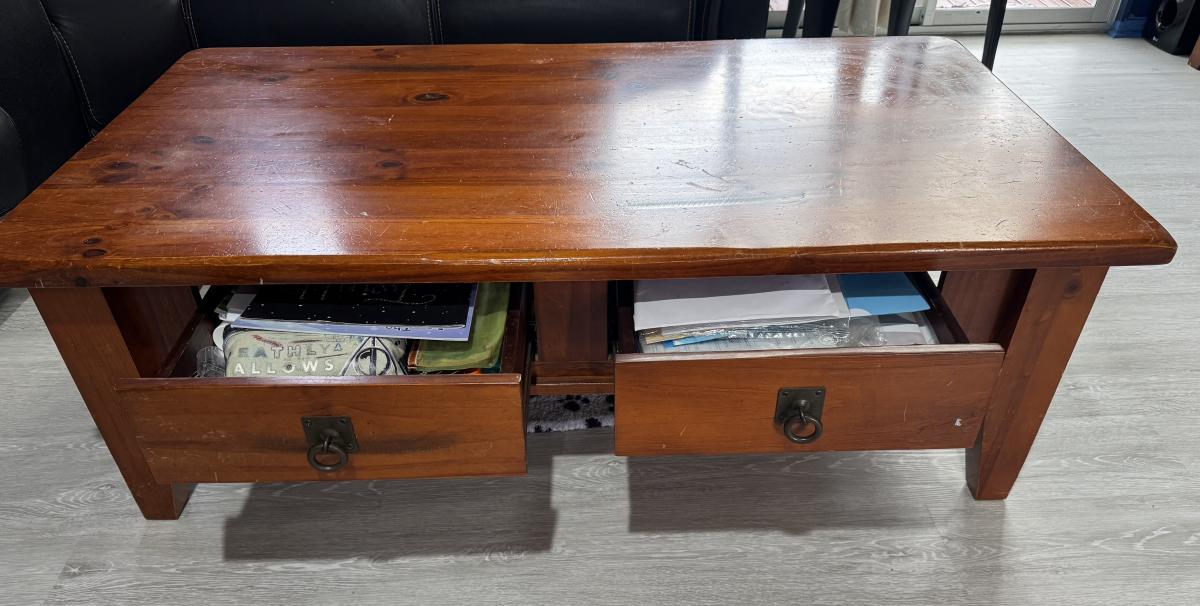
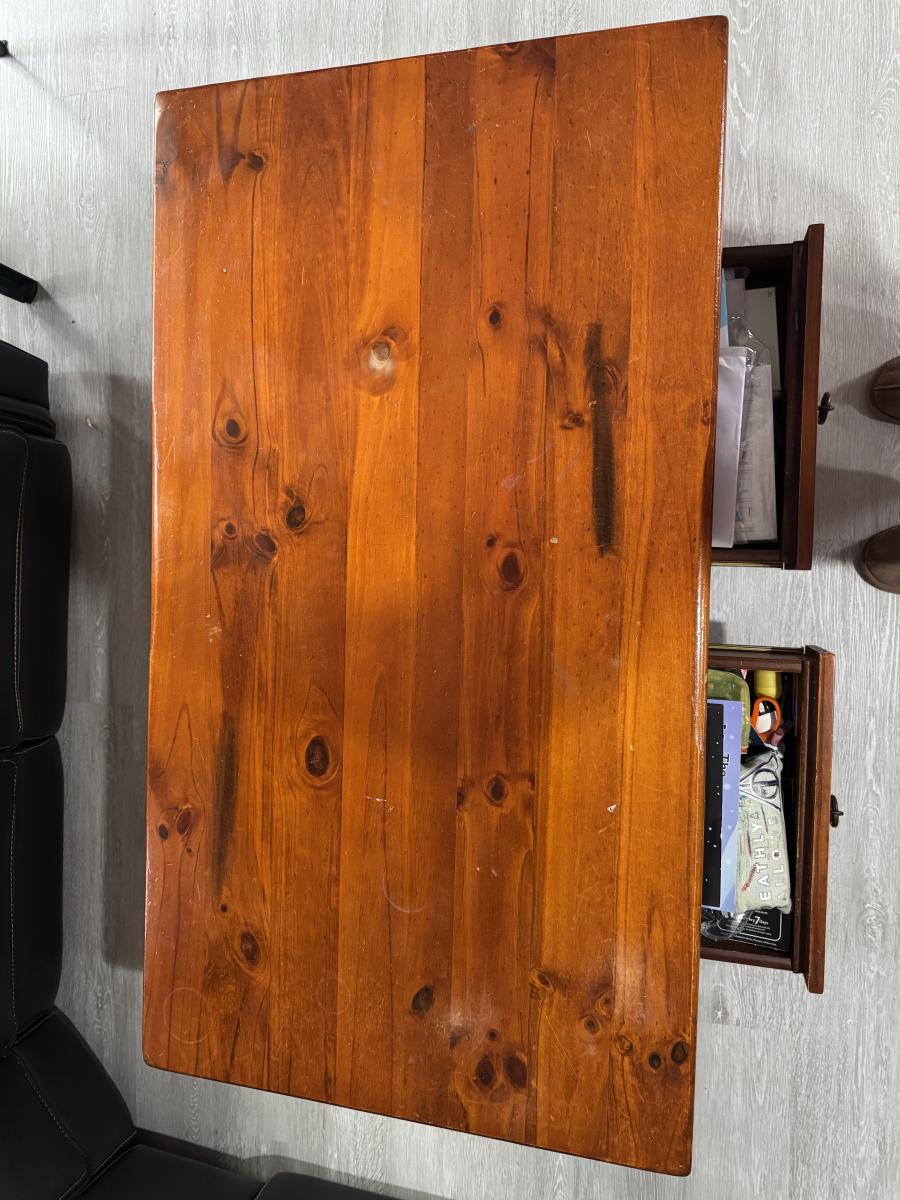
Solid wood coffee table features 53inches length, 29inches width and 17.5inches height.
Price: $250
Sunita from Mount Roskill
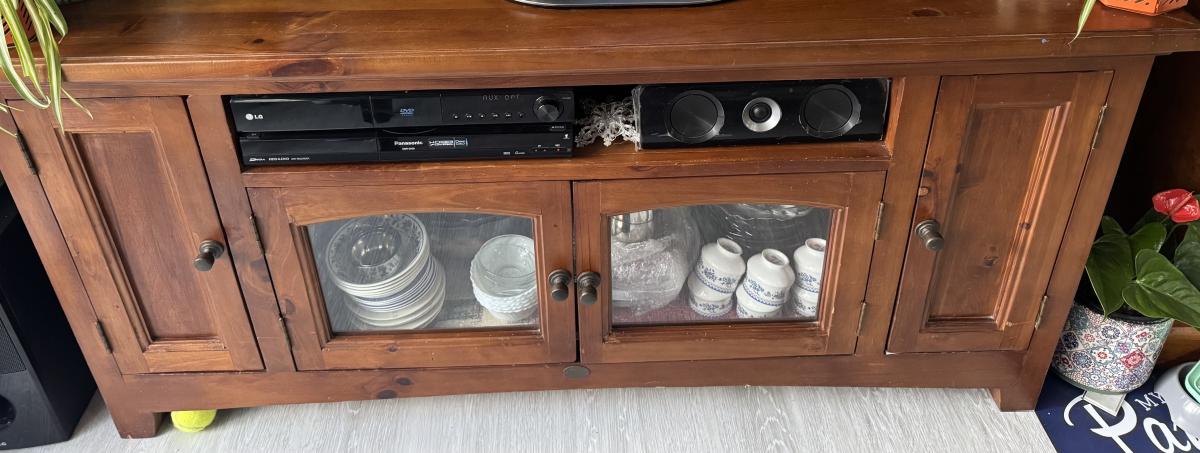
Solid rustic pine wood entertainment unit. Nearly new with features, length is 61inches, the width is 20inches, and the height is 28 inches.
Price: $350


Murray Halberg Retirement Village
Friday 12 & Saturday 13 September, 10am - 2pm.
Experience the award-winning lifestyle at a Ryman village.
Join us at our open days and explore our lifestyle and care options, tour our show homes and see the premium amenities on offer.
We look forward to seeing you.


The Team from Ryman Healthcare
Friday 12 & Saturday 13 September, 10am - 2pm.
Experience the award-winning lifestyle at a Ryman village.
Join us at our open days and explore our lifestyle and care options, tour our show homes and see the premium amenities on offer.
We look forward to seeing you.
Find out more

Brian from Mount Roskill
A repair culture
============
Our landfills are overflowing with items that could be repaired and reused. Through showcasing a variety of projects, initiatives, and solutions, we cultivate repair skills and knowledge sharing, fostering a culture of responsible consumption. The Repair Festival is … View moreA repair culture
============
Our landfills are overflowing with items that could be repaired and reused. Through showcasing a variety of projects, initiatives, and solutions, we cultivate repair skills and knowledge sharing, fostering a culture of responsible consumption. The Repair Festival is for Everyone!
Join us, learn to fix, and celebrate reducing waste and building community! This week-long celebration, taking place from 6 to 14 of September 2025, will be held across the country, bringing communities together to celebrate fixing, mending, and extending the life of our belongings.
Please visit: www.repairnetworkaotearoa... for more details.
=========================================================
Brian from Mount Roskill
A new survey has ranked Macpac and Stihl Shop as the best places for Kiwis to shop, while dishing out low marks to some of New Zealand’s most well-known retailers.
Consumer NZ spoke to more than 3,200 people over June and July for its latest retailer survey to better understand how satisfied … View moreA new survey has ranked Macpac and Stihl Shop as the best places for Kiwis to shop, while dishing out low marks to some of New Zealand’s most well-known retailers.
Consumer NZ spoke to more than 3,200 people over June and July for its latest retailer survey to better understand how satisfied Kiwis are with their shopping experiences.
It found five stores going above and beyond for their customers, along with five others that performed poorly after failing to satisfy buyers.
Consumer NZ’s Kate Harvey said two stores across the entire survey had tied with the highest satisfaction rating of 94% - Stihl Shop and Macpac.
Stihl Shop - a specialist hardware and power equipment store - won praise “for its customer service and staff members’ product knowledge”, Harvey said, while outdoor clothing and equipment company Macpac topped its competitors “in all the categories we ask about, including perceived value and range of products available”.
Mitre 10 also performed strongly in the survey, but was edged out of first place in the hardware category by Stihl Shop.
In the appliances sector, 100% Home Appliances continued to excel, winning both the large and small appliances categories for the 11th year in a row.
Harvey said the company’s satisfaction score “was well above the next highest scoring store” in both cases.
Smiths City, which recently entered voluntary administration, came second in the large appliance category, while Briscoes was rated second place for small appliances.
Leading technology retailer PB Tech also outperformed competitors in two categories, home tech and mobile tech, with customers valuing its prices and product range especially highly.
All five retailers have been named winners of Consumer NZ’s People’s Choice award.
But among those surveyed were also several household-name stores that flunked the test.
Rebel Sport received the lowest satisfaction rating in the sports and outdoor category, with customers alleging poor service and a lack of staff product knowledge.
New Zealand’s two largest telecommunications companies - Spark and One NZ - also failed to win over consumers, both receiving low marks for value for money and their product ranges.
The Warehouse underwhelmed in the home tech category, with Harvey noting only 63% of shoppers felt “very satisfied” with their purchases of items such as TVs and gaming consoles.
OPSM also received a humbling review, lagging behind all other eyewear providers.
While Consumer NZ found people had a better shopping experience at Specsavers, Harvey said “those who shopped at an independent optometrist” were the most content with their experience.
Shopping experiences are ultimately subjective and difficult to quantify, but Consumer NZ’s findings suggest that across the board, there are four key drivers of customer satisfaction in New Zealand stores.
These are strong service, perceived value for money, a wide product range, and knowledgeable staff.
“The survey also showed shoppers are highly price-sensitive at the moment and have become increasingly motivated by discounts,” Harvey said.
“A store having a promotion is now the main reason for shoppers to choose to make their purchase there.
“It has surpassed loyalty and the convenience of the location.”
=====================================================

The Team from SPCA Auckland - Centres & Op Shops
From Sat 6 – Sun 21 September, all long-stay animals at SPCA will be available for adoption by donation/koha - for the right home.*
They might be older, shy, have only three legs or just need that extra bit of attention and care – but they all deserve a loving home. And they have been … View moreFrom Sat 6 – Sun 21 September, all long-stay animals at SPCA will be available for adoption by donation/koha - for the right home.*
They might be older, shy, have only three legs or just need that extra bit of attention and care – but they all deserve a loving home. And they have been waiting for a long time for that Special Love!
Look for the ‘Long-stay resident’ tag on our adoption profiles, check you can provide what they need to flourish & apply online at www.spca.nz...
*animals looking for their forever family for more than 42 days; our usual adoption criteria and processes apply.

Brian from Mount Roskill
Let's honour and show our gratitude and appreciation for Fathers and Father figures like Stepfathers, Fathers-in-Law, Guardians, Foster Parents and family friends.
========================================================
Murray Halberg Retirement Village
At Ryman you'll find a perfect blend of independence and community. To learn more, read our guides to introduce you to life at Ryman, showcase our independent and assisted living options, and give clarity around the costs.
Click below to access your free guides to retirement living.


Markus from Green Bay
Australia: A$ 3.90 / kg = NZ$ 4.34 / kg
NZ: NZ$ 21.98 / kg
That's over 5x the price in Australia.
Any question?
P.S. I don't think I'm allowed to write what I think of the NZ Commission "looking into" supermarket pricing …
P.P.S. Odd Bunch tomatoes at $12.25/kg … View moreAustralia: A$ 3.90 / kg = NZ$ 4.34 / kg
NZ: NZ$ 21.98 / kg
That's over 5x the price in Australia.
Any question?
P.S. I don't think I'm allowed to write what I think of the NZ Commission "looking into" supermarket pricing …
P.P.S. Odd Bunch tomatoes at $12.25/kg are "only" 2.8 times as expensive as the Australian ones, but then they are of course 'out of stock'


Brian from Mount Roskill
Midway through a difficult discussion in her performance review, an employee named Jane finally cracks, and the tears start. Her boss doesn’t know what to do and handles the situation awkwardly.
Ask yourself: how would you react in this situation? And would you have the same reaction if it were … View moreMidway through a difficult discussion in her performance review, an employee named Jane finally cracks, and the tears start. Her boss doesn’t know what to do and handles the situation awkwardly.
Ask yourself: how would you react in this situation? And would you have the same reaction if it were not Jane who was crying but a different employee, Mike?
It can feel like the consensus is that crying should not take place at work. But crying at work is not unusual.
A lot of crying at work happens in the restrooms.
According to a recent survey by mental health app company Headspace, 48% of in-person workers and 44% of hybrid workers have cried due to work. Among fully remote workers, the figure was 70%.
So, do we need to rethink our attitude towards it? And what can you do if you or somebody you know cries at work?
It’s OK to cry
==========
There are many different reasons people cry at work. Difficulties meeting workload demands, interpersonal conflict and major workplace change are all examples of stressors that can contribute to poor mental health and crying.
If it looks like a colleague is crying, it can be hard to know what to say.
But people may also be distressed at work for personal reasons completely unrelated to their work. Whatever the reason, crying is a normal healthy response that should not be suppressed.
Why does crying at work feel different? Crying outside of work is not uncommon – it’s normal at weddings, funerals and other life events. But in the workplace, it can feel unexpected, intense and out of character, making the crier and those around them uncomfortable.
The resulting awkwardness may lead to questions about the motives of the crier. Is this person crying because they are genuinely upset, or are they trying to manipulate the situation?
If a colleague or manager sees the crying as insincere, they will react differently than if they think it’s a display of real emotion. If the crying is believed to relate to an acceptable reason, such as passion or care for the work or significant personal circumstances, the crier is more likely to be excused.
Crying at work may negatively impact career progression, particularly if it is a regular occurrence and distracting from performance.
Gendered norms
==============
Gender norms can also be a factor in crying and how others react to it. Women are more likely to cry and suffer from the consequences of negative stereotypes, including being viewed as emotional, weak or unprofessional. For men, crying is regarded as less acceptable and in violation of male stereotypes.
Regardless of gender, the fear of being seen as unprofessional or insincere can discourage people from crying at work. An organisation’s unique social norms and culture may also influence the way tears are interpreted.
In some workplaces, employees may feel pressured to regulate their emotions, while in more supportive workplaces, emotions are regarded as being part of the human experience.
How to respond
=============
When someone is crying at work, keeping a few important things in mind can help everyone involved feel seen and supported. Here are some tips.
For the person crying:
==================
Shift your focus. Take a deep breath and redirect your thoughts. This will allow you to focus on the matter at hand rather than the tears.
Take a break. Ask for time out to compose yourself. This demonstrates emotional maturity and acknowledges your crying may cause others discomfort.
Reframe the emotion. Help others understand that your response comes from a place of care and deep passion. Clarify if the tears are work or non-work-related to give perspective and understanding.
Seek help if you need it. Consider sources of additional support, such as a doctor or a counsellor.
For a manager or colleague:
=======================
Be prepared. Workers are human, and sometimes they cry. Having an appropriate location for people to take some time out – and small touches like offering a box of tissues – can make a big difference.
Show empathy. Listen actively, don’t jump to conclusions and respect boundaries. Your reaction and behaviours can have a big influence on what happens next.
Challenge your bias. One crying episode does not necessarily demonstrate weakness or a lack of professionalism.
Understand your zone of influence. Is the crying a result of something you, as a manager, have control over? Know your responsibilities and obligations.
Seek help. Unless you are a trained counsellor, you are not a trained counsellor. Know when to seek professional support for yourself or others.
With the intensity and uncertainty of life, it is not surprising that workers may become overwhelmed at times. Crying is a natural part of human behaviour, and it should not come as a surprise in the workplace.
=====================================================
 Loading…
Are you sure? Deleting this message permanently removes it from the Neighbourly website.
Loading…




© Neighbourly 2025
