







Embodying Justice, Mercy, and Humility in Today’s Church and Society!
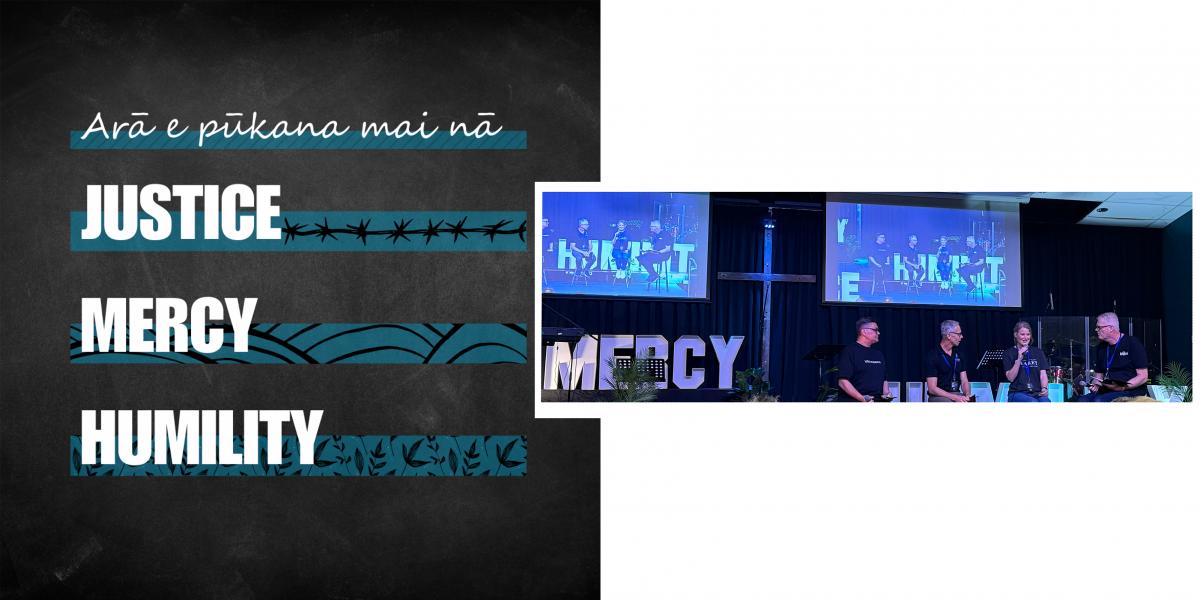
First and foremost, at the 2024 New Zealand Baptist National Hui, through the reflections from one of the Keynote’s on God of Justice, Mercy and Humility, from the three keynote speakers, challenges us to consider how justice, mercy, and humility can shape our church communities and every sphere of engagement in our everyday lifestyle today, where it extends beyond denominational lines and faith traditions, calling all individuals, whether in or out of leadership roles, and regardless of their Christian faith, to embody these values actively, not merely listen to them, but to put them into practice across all areas of life.
Henceforth, acting justly requires that we examine our decisions, influence, and actions across workplaces, communities, and homes. Therein, every interaction becomes an opportunity to uphold fairness, equity, and integrity, ensuring that others experience respect and encouragement. Not least, mercy calls us to attend to the needs of those who are vulnerable, marginalised, or struggling, responding with compassion that restores dignity and fosters hope. By contrast, humility compels us to acknowledge our limitations, listen attentively, and create spaces where others feel safe and valued.
In essence, it is imperative to communicate effectively with one another while living out justice, mercy, and humility. In light of this, preventing misunderstandings enables us to navigate differences in opinion, culture, and belief with greater understanding and grace. Thereafter, by listening deeply and speaking wisely, we facilitate meaningful engagement, empower others, and cultivate environments in which everyone can flourish, whether in leadership or non-leadership roles.
Notwithstanding, leadership is never demonstrated by asserting superiority but by fostering trust, modelling integrity, and creating spaces where justice, mercy, and humility thrive. Herein, we are challenged to integrate these principles into all aspects of life. Fundamentally, justice requires evaluating systems, structures, and practices for fairness and equity. What is more, mercy requires extending kindness to those in need, taking into account their unique lived experiences and vulnerabilities. Moreso, humility requires acting with selflessness, acknowledging that the well-being of others is a reflection of our obedience to God’s guidance and our participation in the Missio Dei, as we seek to extend God’s redemptive mission in every sphere of life.
In consequence, human brokenness underscores the dependence on God’s wisdom, whilst in Christ we find hope, healing, and restoration, grounded in God’s faithful care for the oppressed and marginalised within the transformative work of God revealed in Christ. Crucially, effective communication is vital in preventing misunderstandings and fostering understanding across social, psychological, and cultural contexts. Above all, every individual on this earth ought to avoid stereotyping by understanding others before making assumptions and creating space for individuals to share their hurts while adapting to their needs. Equally, it is highly vital to recognise both sides of a situation, enabling individuals to tolerate opposing feelings without becoming overwhelmed. In reflection, hurt is an inherent part of human existence, as well as living in a fallen world, which means accepting it as a regular aspect of life. Our hope is not in escaping suffering, but in knowing that Christ meets us in it, perfecting us through grace so that our hurts may be transformed and our attitude renewed.
Consequently, it is imperative to address inappropriate behaviour in public domains, such as the recent Public Service Association protest, where actions were clearly unacceptable from the opposite gender. Notably, it is extremely necessary to remain mindful of behaviour, set good role models, embrace male employees in sectors where they are under-represented, and ensure that pay equity is pursued respectfully, fully adhering to workplace policies, the Privacy Act, and Human Rights Commission legislation. Moreover, everyone needs to be up to play with the changes of these two vital legislations at all times, all while discouraging negative attitudes such as paper chasing, which are detrimental to healthy workplace cultures and environments.
By contrast, during my high school years, an English teacher threatened to escalate my complaint to the Ministry of Education rather than showing understanding of my learning needs. As such, with the kind assistance and support of the Deputy Headmaster and Head of Learning Support, it was decided that I should leave the school with a leaver’s certificate at sixth form, as my dignity and different ability had not been respected or upheld. At the same time, such experiences underscore the devastating consequences of withholding empathy, a lack of respect, and silencing vulnerability.
In reflection, this is precisely why the Baptist Hui’s call that mercy is a verb resonates so deeply; as mercy is not a passive act, but requires active compassion, empathy, and solidarity with those whose systems, prejudices, or failures of care have wounded them. As referenced in Matthew 5:7, blessed are the merciful, for they will receive mercy, as it clearly reminds us that mercy is never abstract but a lived practice that restores and heals. In saying that, when mercy is withheld, people like myself, who have endured bullying, racism, and disrespect, including from dominant voices of the opposite gender of the older generation in professional and educational spaces, can carry deep and ongoing traumatic scars to date.
Not least, mercy as a verb challenges us to go beyond words, policies, or sermons, to genuinely stand alongside those who have been marginalised, ensuring that their dignity is restored and their humanity affirmed. Thus, the call of Micah 6:8 becomes not only a theological statement but a living summons to action for church and society alike.
In relation to this, scripture clearly instructs us on God’s order for respect and humility in teaching and leadership. As referenced in 1 Timothy 2: 8 – 12, men are called to pray with holy hands, without anger or argument. At the same time, women are instructed to learn in silence with full submission, as they are not permitted to teach or hold authority over men, which underscores the seriousness with which God calls His people to model reverence, order, and integrity.
Hence, the call to inter-generational care, as referenced in Titus 2: 2 – 4 and reaffirmed in Ephesians 6:4, reminds older believers to teach younger generations soundly, and parents are urged not to provoke their children to anger, but to bring them up in the discipline and instruction of the Lord. These timeless charges set the framework for leadership that embraces inclusivity for today’s leaders and future generations to come, ensuring that respect, guidance, and love remain at the forefront of all teaching and mentoring relationships.
Herein, in relation to leadership and mentoring, do we honestly and sincerely respect our Senior Pastor and Leadership Team which consists of Elders, Ministry Leaders, and Deacons that conform our church in how we operate effectively and efficiently, when they are doing their utmost best of their ability by embodying good leadership accountability of our church congregation members, by putting into practice as to what they have been taught from leadership conferences like the National Baptist Hui, Global Leadership Summit, and as well their theological training where they ought to be grounded in spirit and in truth, and from scriptures that call all believers to embrace inter-generational principles, as in Titus 2: 2 – 4, Proverbs 22: 6, and in 1 Timothy 2: 11 – 12. In saying that, the above passages within the scriptures it stipulates as a reminder for all us across all genders from the older generation are called to model dignity, self - control, and depth of faith and knowledge, whilst women in particular are clearly instructed to guide with wisdom and in clear reverence in showing respect for others, especially young adults in leadership, as they are not to correct them harshly, undermine their calling and instead to nurture, encourage, and build them up within their roles, ensuring that their household of the church reflects harmony, love, and order.
Thereafter, it is vital to stop and ponder whether we are living in a society that is permissive in not closing off the inter-generational gap issues of concern, issues caused by the older generation’s mindset that assumed it was permissible to hold onto roles indefinitely. Without delay, we ought to close this gap before it is too late, for the Lord calls us to embody His image through diversity, inclusivity, and multiculturalism in schools and government departments tied to the public service, whilst ensuring respect is upheld. Neglect in this regard has already caused former male employees to suffer mental health crises and lose opportunities for employment and restoration.
In light of the above, we must ask whether we are addressing the generational gap or slipping back into patterns that silence younger voices at the table, failing to consider the other perspectives, which they are coming from.
In consequence, failing to empower them risks not only mental strain and the loss of hope but also tragically leads to suicide, as today’s youth and young adults feel overlooked and undervalued. Even though when considering the inclusion of Chinese teachers in our national curriculum, it is imperative first to acknowledge New Zealand’s enduring partnership with Singapore, a nation once under British colonial rule and now an English-speaking and multicultural society. In contrast, the National University of Singapore is one of the world’s most prestigious universities, ranking among the top twenty-five globally, renowned for its state-of-the-art lecturers and world-class training. Notably, Singaporean government scholars, rigorously formed under global standards, ought to be regarded as a blessing rather than dismissed. Ultimately, New Zealand must create spaces where such talent is recognised, included, and enabled to contribute with dignity and respect, especially given our historic ties with Singapore as a globally respected nation, and for the sake of our own people, who must not be lost to other countries through neglect.
Above all, as individuals residing within our respective communities, we all need to embody justice, mercy, and humility in our daily interactions, creating environments that honour others and reflect the character of God by embracing His image. Hereafter, this call is not only for those within the household of faith but also extends as a challenge for non-believers, urging them to recognise the worth of every person and to embrace values that cultivate compassion, equity, and respect in society. Whether in management or non-management roles, and across both men’s and women’s spheres of influence, the responsibility to embody these virtues remains the same, shaping both workplaces and communities alike. On that note, I would like to sincerely challenge everyone in the older generations to foster a culture that mentors young adults, promotes inter-generational diversity, and models integrity and inclusivity for future leaders.
In conclusion, we must ask whether the church of today’s society will be known as a wellspring of compassion or a place where no one truly cares. Regardless, history reveals that the compassion of the early church transformed empires, and Christ still longs to touch a suffering world through His people. Undoubtedly, we are challenged to recognise pain in the eyes of others, resist the cruelty of careless generalisations, and demonstrate love through tangible action, lest we fail to embody the image of God and instead reflect the brokenness of a self-centred society in which we reside today. Finally, let us walk together in trusting commitment toward His triumphant glory, ensuring that our actions, in every sphere of engagement, foster flourishing, dignity, and hope for all people. Nevertheless, it is exceptionally vital and clear to all of us that we ought to embody the clear image of God, in which we are uniquely created, for the sake of His kingdom and His glory in all circumstances.
In light of the above, you can refer to the full written article published on Substack: substack.com....

We are open NEW YEARS EVE AND NEW YEARS DAY!!!
Hello Neighbours,
Yes, you read that right, we are open on New Year’s Eve, Wednesday 31st December 2025. And New Year’s Day Thursday 1st January 2026at our normal trading hours of 9am to 5pm.
Hope to see you all then.


NZ FAMILY SUMMER 👒
Hello Neighbours,
From beachy summer outfits, to holiday must haves like bags, sunglasses, jewellery. Come on by and see what we have in store.
See you all then, and have great day.
Panmure team.





Poll: Do you set New Year’s resolutions?
🎉 2026 is almost here!
We’re curious ... how do you welcome it?
Do you set resolutions, follow special traditions, or just go with the flow?

-
9% Yes! New Year, New Me
-
21.7% Yes - but I rarely stick to them
-
69.3% Nah - not for me
 Loading…