






Poor sight leaving kids vulnerable
Detecting vision problems in New Zealand children can be difficult because often kids – and their parents – are unaware they’re even having trouble with their eyesight, according to a leading optometrist.
“Especially in the younger years, children simply adapt to the world they can see,” says Arshad Hoosen, Optometrist Director at Specsavers Sylvia Park in Auckland.
“This makes them very vulnerable to eyesight problems, and my tip for parents, if they’re worried, is not to leave it too late for their children to be tested. Because vision loss can often be prevented or treated if detected early.”
Hoosen says that while issues are frequently picked up through routine school health checks, Specsavers offers free comprehensive eye checks every year to all children under the age of 16*.
Vision problems are relatively widespread among young Kiwis. According to the University of Auckland’s Vision Research, between 5% and 10% of New Zealand children have some form of vision problem which, if left untreated, could affect their literacy and academic performance.
Globally, the International Agency for the Prevention of Blindness (IAPB) reports an estimated 450 million children have a sight problem needing treatment, while 90 million are living with some form of vision loss – with many suffering from preventable conditions.
Hoosen says there are a number of signs of potential vision problems that parents and caregivers can look out for.
Among these: a child might blink more often, move close to the TV, or put their head at an unusual angle when viewing a device or reading a book. They may also squint their eyes to see, complain of headaches, have constantly watering eyes, say they can’t see clearly, or experience difficulty learning or reading.
Vision difficulties can affect a child’s learning and development and because so much learning is done visually, reading, writing, board work and computer use are all much harder if they can’t see properly.
Hoosen says children with eye problems may not be aware that what they are seeing isn’t normal, and therefore won’t speak up about their difficulties. Without early screening, kids can miss out on vital learning years before anyone realises there’s a problem.
“In saying that, I’ve had parents bring their child in for a check because they’ve had a sixth sense something is wrong – and parents who wear glasses themselves are usually more aware of problems,” he says.
“But it is often a teacher at school who will pick up on issues before a parent, especially if a child is reluctant to read because words are out of focus and blurry, or they won’t do their homework.”
He says if problems are suspected or picked up during school screening, it’s important to follow up with a full check by an optometrist.
Specsavers includes an advanced 3D eye scan (OCT, or Optical Coherence Tomography) as part of every standard comprehensive eye test to help detect conditions in their earliest stages.
The OCT takes a series of high-definition non-invasive 3D scans of the back of the eye. These scans help optometrists detect eye conditions sooner, sometimes before any symptoms appear.
“It’s like the difference between getting a warrant of fitness for your car, or taking it in for a full service,” he says. “That’s why we offer the free annual checks – and affordable glasses – so we can detect eye conditions early.”
Hoosen says it’s important for parents to understand that eye conditions can change. “Short-sightedness can develop quickly, and a child who doesn’t need glasses at age four may do so at eight, for example.”
Hoosen says there are several ways children can look after their eye health, including limiting long periods of near work – such as reading or using screens – which can help slow the progression of short-sightedness.
“It’s a good idea for children to take regular breaks from their screens and spend time outside every day,” he says, adding that vision problems are not socio-economically based, occurring across a wide cross-section of society.
======================================================

Neighbourhood Challenge: Who Can Crack This One? ⛓️💥❔
What has a head but no brain?
Do you think you know the answer? Simply 'Like' this post if you know the answer and the big reveal will be posted in the comments at 2pm on the day!
Want to stop seeing these in your newsfeed?
Head here and hover on the Following button on the top right of the page (and it will show Unfollow) and then click it. If it is giving you the option to Follow, then you've successfully unfollowed the Riddles page.

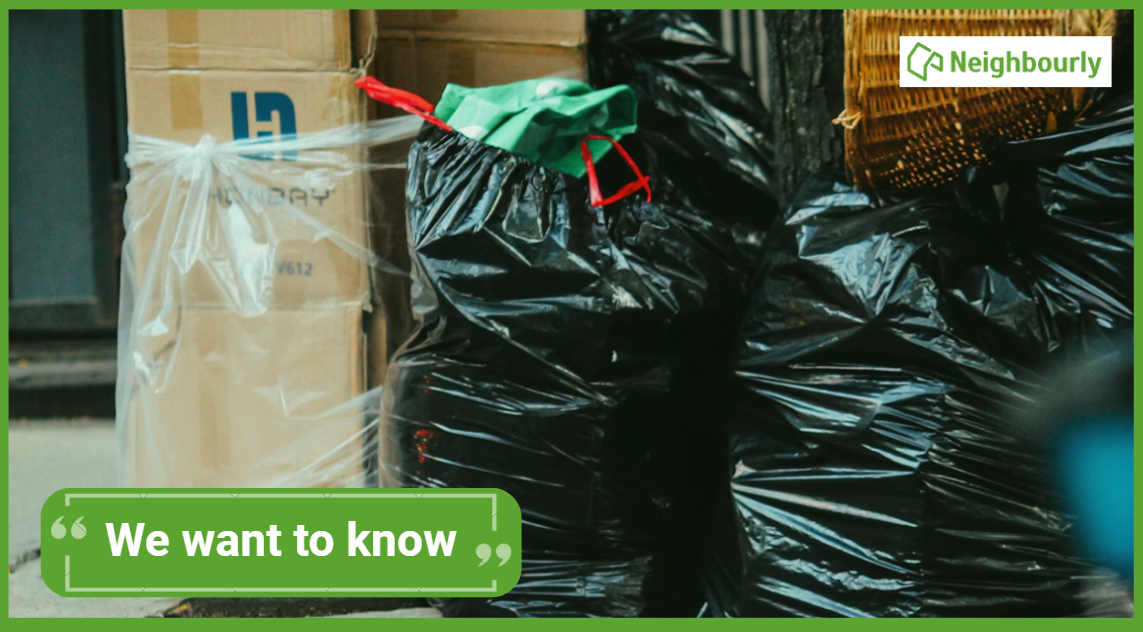
Poll: 🗑️ Would you be keen to switch to a fortnightly rubbish collection, or do you prefer things as they are?
Aucklanders, our weekly rubbish collections are staying after councillors voted to scrap a proposed trial of fortnightly pick-ups.
We want to hear from you: would you be keen to switch to a fortnightly rubbish collection, or do you prefer things as they are?
Keen for the details? Read up about the scrapped collection trial here.
-
83.9% Same!
-
16.1% Would have liked to try something different
7 tips for buying your Christmas ham
It’s the centerpiece of the Christmas table, so when you’re peering into the supermarket chiller or ordering from the butcher, choosing the perfect ham can feel like a daunting task.
Here are some things to keep in mind when choosing one to bring home with you.
1. What type of ham to buy
You’ve got some decisions to make when it comes to the type of Christmas ham you’re going to buy.
Cooked on the bone (COB) ham is the traditional Christmas ham. If you’re buying a half ham, you’ll have the choice of the shank or fillet end. The shank is the part with the bone sticking out that gives the ham that traditional look. The fillet end is the round part that gives more meat. If you’re deciding whether to get a whole ham or half, consider how quickly you’ll be able to eat it all. You only have about a week to eat an opened ham before it will go off, so it can be a good idea to get two halves. That way you can eat one half during the week of Christmas and save the other for January.
Champagne ham has had the bone removed and only has the hock left on, so it’s easier to carve.
Pressed ham – also known as continental ham – has had the bones removed and has been pressed, so it’s also easy to carve.
2. Check the pork percentage
The label on a packaged ham will say what percentage is actually meat. Hams are injected with brine, to keep them moist, and additives. The brine injection level for manufactured hams is usually between 10% and 35% of the ham's weight. A manufacturer that wants to produce a cheap ham will add more water to bump up the weight.
3. Know how to tell if it’s New Zealand pork
By far, most of the hams bought in New Zealand this Christmas will be from pigs reared overseas. New Zealand imports pork from about 25 countries. It’s frustrating for New Zealand pig farmers because this ham can come from farms that don’t have to meet the same animal welfare standards as we have in this country. As a result, overseas meat is often cheaper.
If buying New Zealand pork is important to you, look for:
words on the packaging like ‘New Zealand pork’ or ‘born and raised in New Zealand’
4. Have a good look at the ham
If you’re going to be glazing your ham, look for one that is covered in a finger-thick layer of fat. This will give you the thickness you need to make good score lines.
New Zealand Pork’s website also advises looking for a ham that has a meaty texture rather than one that looks wet or rubbery. It says the ham’s skin should be smooth with even colouring. “If the knuckle is sunken, it may be overcooked. If the rind is buckled or uneven, it may be a sign of dryness.”
5. Ask a lot of questions
If you’re ordering your pork from a butcher, you probably won’t be able to compare hams like you would at the supermarket. So, make sure you ask lots of questions, now that you know what you’re looking for.
You could ask:
Is the ham made from New Zealand born and farmed pork?
What will be its injection percentage?
What flavours will it have?
You could even ask if there’s a glaze the butcher thinks would work particularly well with those flavours.
6. Know what size you’ll need
If the ham is the only meat on your Christmas menu, New Zealand Pork advises allowing 1kg of ham for five people. Or if you’ve got other meat options, 1kg will feed about six to eight people.
7. Know the best hams in New Zealand
The best hams of the year were awarded at the 100% New Zealand Bacon & Ham Awards earlier in the year so you can check out which ones got medals. Some of them are only available in the city the butcher is based, but a Farmland boneless ham available nationwide won a gold award and Woolworths bone-in and boneless hams picked up bronze.
====================================================
 Loading…