





JULY--1st----Today's changes that could affect your bank account
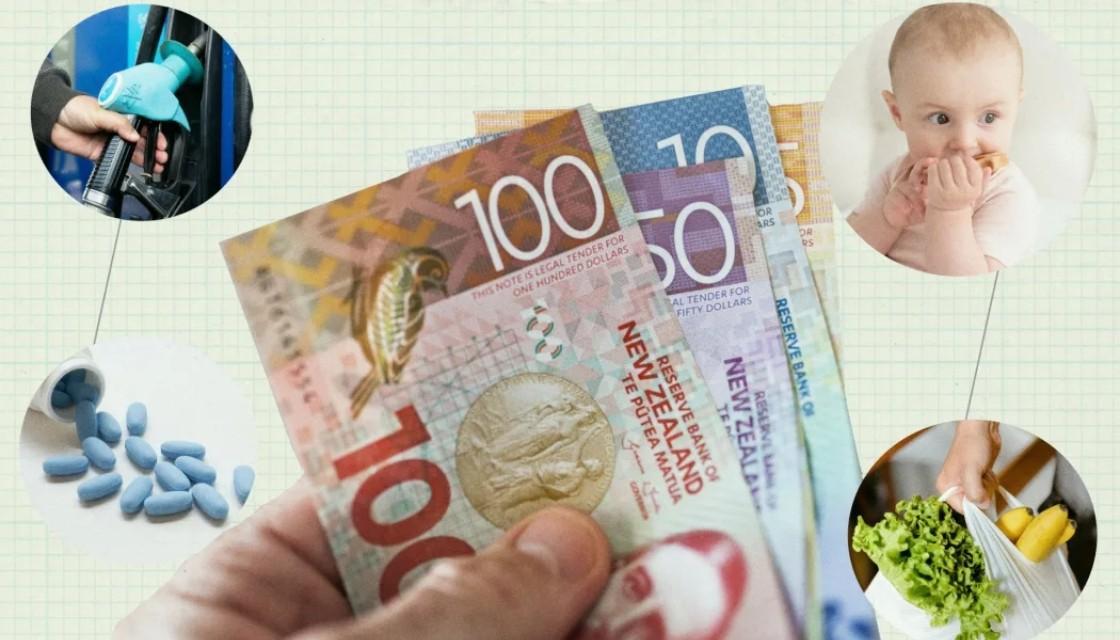
The start of July brings a raft of changes that will affect households across the country.
From prescription changes to mortgage tweaks, the rules, fees and taxes will affect the way that many people spend and borrow money.
Here are a few of them.
===================
Debt-to-income ratios and loan-to-value restriction tweaks
==============================================
New debt-to-income rules will limit how much banks can lend to borrowers, compared to their household income.
Only 20 percent of lending can go to owner-occupier buyers with a debt-to-income ratio of six, and only 20 percent of investors loans will be able to be at a debt-to-income ratio of more than seven.
The debt-to-income calculation takes into account other debt, such as student loans.
These rules are not expected to make a big difference initially, because not much lending is currently being done above those levels. However, they are likely to limit the extent of future house price growth.
At the same time, loan-to-value rules will be eased slightly to allow banks to give 20 percent of lending to owner-occupier borrowers with a deposit or equity of less than 20 percent, and 5 percent of lending to investors with a deposit or equity of less than 30 per cent.
Previously, they could only lend 15 percent to owner-occupiers with less than 20 percent deposit and 5 percent of lending to investors with less than 35 percent.
Prescription charges
=================
A $5 charge is coming back on for prescriptions.
This does not apply to people who are over 65, Community Services Card holders, people who are under 14 or people ages 14 to 17 who are dependent on a Community Services Cardholder.
Auckland regional fuel tax abolished
==============================
The Auckland Regional Fuel Tax scheme ended on 30 June.
This is worth 11.5c per litre on petrol, diesel and their biovariants.
FamilyBoost introduced
===================
The FamilyBoost policy takes effect from 1 July, offering a payment of 25 percent of early childhood education fees for households up to $75 a week.
This is available in full to households earning up to $140,000 and reduces for those earning up to $170,000.
Households should start saving their invoices from 1 July as either PDF or JPG files, Inland Revenue says.
Payments will be made in three-monthly blocks, starting in October.
Bright-line test reduced
===================
From 1 July, the bright-line test will reduce to two years, from the current 10 years, or five for new builds.
The bright-line test sets a limit on how long properties, apart from someone's main home, have to be held to avoid tax on capital gains when they are sold.
That means that properties sold on or after Monday now need to have been held for at least two years to avoid the automatic tax.
Chartered Accountants Australia and New Zealand is warning there could be some confusion, though, because the new rules focus on the "disposal" date of a property rather than the acquisition date.
"Care needs to be taken as the dates are determined differently. The bright-line end date is determined by when the seller first enters a contract for sale, whereas the start, or acquisition date is typically determined when title transfers."
He said that could mean that anyone who had entered negotiations before 1 July could still be captured under the old rule.
Paid parental leave increases
========================
Each year, the maximum amount of paid parental leave available increases.
How much you get is determined by how much you were earning before you went on leave.
From 1 July, the maximum is $754.87 a week before tax, compared to $712.17 previously.
Gaming duty for offshore operators
=============================
From 1 July, a 12 percent offshore gambling duty applies operators who are taking bets from New Zealand residents.
Offshore gambling operators have to register for GST if they make more than $60,000 in a 120-month period. Those that are registered for GST must also now register for the duty.
Excise tax on alcohol increases
The annual adjustment of excise tax on alcohol takes place on 1 July. This is based on movements in the consumer price index in the year to March.
=================================================
www.newshub.co.nz....
==================================================

Poll: Are our Kiwi summer holidays helping us recharge, or holding the economy back? ☀️🥝
There’s growing debate about whether New Zealand’s extended Christmas break (and the slowdown that comes with it) affects productivity.
Tracy Watkins has weighed in ... now it’s your turn. What’s your take? 🤔
-
73.1% We work hard, we deserve a break!
-
16.2% Hmm, maybe?
-
10.7% Yes!

Brain Teaser of the Day 🧠✨ Can You Solve It? 🤔💬
How many balls of string does it take to reach the moon?
(Peter from Carterton kindly provided this head-scratcher ... thanks, Peter!)
Do you think you know the answer? Simply 'Like' this post and we'll post the answer in the comments below at 2pm on the day!
Want to stop seeing these in your newsfeed? No worries! Simply head here and click once on the Following button.

Minimum wage to increase from April next year, Govt commits to bigger rise than last year
The Government will increase the minimum wage by 2% from April next year.
Workplace Relations Minister Brooke Van Velden announced the hourly wage would move from the current $23.50 to $23.95 in line with advice from the Ministry of Business, Innovation and Employment.
“Moderate” increases of the minimum wage formed part of NZ First’s coalition agreement with National.
Van Velden says the new rate, which would impact around 122,500 New Zealand workers, strikes a right balance between keeping up with the cost of living – the Reserve Bank expects inflation to fall to around 2% by mid-2026 – and no adding more pressure to the costs of running a business.
The starting out and training minimum wage would be move to $19.16 to remain at 80% of the adult minimum wage.
The minimum wage was last increased on April 1 this year. That 1.5% increased to $23.50, affecting between 80,000 and 145,000 workers, was not at the time in line with inflation which sat around 2.5% in March.
“I know those pressures have made it a tough time to do business, which is why we have taken this balanced approach. With responsible economic management, recovery and relief is coming,” Van Velden said.
“I am pleased to deliver this moderate increase to the minimum wage that reflects this Government’s commitment to growing the economy, boosting incomes and supporting Kiwis in jobs throughout New Zealand.”
Official documents from the Ministry of Business, Innovation and Employment (MBIE) show the department provided the Minister with seven options for the minimum wage, ranging from maintaining the current rate or increasing by 3% up to $24.20 per hour.
A 2% increase was recommended, the Ministry said, as this was ”considered to best balance the two limbs of the objective - protecting the real income of low-paid workers and minimising job losses."
“CPI inflation forecasts suggest annual inflation will ease to be within the 2–2.5% range in the first half of 2026 and remain relatively stable at around 2% from June 2026 through to 2028.
“These forecasts indicate that a 2% increase would largely maintain the real income of minimum wage workers relative to the level of the minimum wage when it last increased on 1 April 2025.”
Officials said a 2% increase wouldn’t have significant employment restraint effects.
But given recent economic data, including a Gross Domestic Product (GDP) contraction and elevated unemployment, MBIE said it favoured a “cautious approach”.
“A 2% increase to the adult minimum wage is expected to affect approximately 122,500 workers, including those currently earning at or below the minimum wage, or between the current rate and $23.95.”
The key groups that would be impacted include youth, part-time, female, and Māori workers, as well as sectors like tourism, horticulture, agriculture, cleaning, hospitality, and retail.
“While these workers would benefit from a wage increase, they may also be more exposed to employer responses to increased labour costs such as reduced hours or adjustments to non-wage benefits,” the ministry said
“The estimated fiscal cost to government from this increase is relatively modest, at $17.5 million annually, consistent with the small cost estimates across all rate options.”
=====================================================
 Loading…