






BUYER BEWARE---The supermarket deals that are too good to be true – and how to spot them
We’ve all felt it – that small thrill when you spot a yellow “special” tag on the shelf or see a loyalty discount appear on your receipt. But in New Zealand, not every bargain is what it seems. Watchdogs say pricing errors and misleading promotions may be costing shoppers millions each year, and some supermarkets are now facing criminal charges for alleged breaches of the Fair Trading Act.
What the law says
===============
Under the Fair Trading Act 1986, retailers must not mislead or deceive consumers about prices or promotions. Advertising a discount that is not genuine, or charging more at the checkout than the shelf price, can breach the act.
The Commerce Commission has warned that supermarket pricing inaccuracies “can lead to consumers paying more than they should”. Grocery Commissioner Pierre van Heerden said in May 2024 that if even a small percentage of transactions are wrong, “New Zealanders could be losing tens of millions of dollars a year from supermarket pricing errors”.
In December 2024, the Commission announced it had filed criminal charges under the Fair Trading Act against Woolworths New Zealand Ltd and the operators of Pak’nSave Silverdale and Pak’nSave Mill Street for alleged inaccurate pricing and misleading “specials”. The companies have said they are cooperating fully and the proceedings are ongoing.
The consumer push-back
====================
Public frustration over scanning errors and endless specials led Consumer NZ to launch its Price It Right campaign in 2024. The organisation is calling for a mandatory pricing-accuracy code and automatic refunds where scanned prices exceed shelf prices. It reports receiving hundreds of examples from shoppers through its website.
Chief executive Jon Duffy said at the launch: “Shoppers deserve confidence that the price they see is the price they pay.”
Loyalty maths – small print, small returns
==================================
Supermarket loyalty schemes are legal but often over-promised. Programmes such as Onecard, Clubcard and Flybuys offer member pricing or points that typically return around 0.5–1% of spending, depending on redemption. In other words, a $100 shop may yield roughly $1 in value.
Consumer NZ’s 2024 supermarket survey found more than half of respondents don’t trust specials or loyalty discounts, and many dislike how their data is shared with partner companies. These arrangements are permitted, but the perception gap suggests loyalty perks should be viewed as modest bonuses, not game-changing savings.
Four red flags to watch for
======================
The phantom “was” price: When a product says “was $10, now $8”, the higher price must have been charged for a reasonable period. Otherwise, it may be misleading under the Fair Trading Act.
The multibuy trap: “Two for $5” isn’t always cheaper. Compare the unit price – the cost per 100g or per item printed on the shelf label.
Shelf-to-till mismatch: If an item scans higher than the displayed price, you are legally entitled to pay the lower one. Consumer NZ argues supermarkets should automatically refund the difference.
Perpetual specials: When an item is almost always “on special”, that may suggest the “regular” price is theoretical. The act requires discounts to represent genuine, time-limited reductions.
Five quick ways to check a deal
==========================
Compare unit prices. It’s the fairest way to judge value across sizes and brands.
Keep photos of regular buys. A quick snapshot shows whether a current special is truly cheaper.
Do the maths. If the saving is marginal, it may just be marketing.
Mind expiry dates. Deep discounts on near-dated stock aren’t bargains if half goes to waste.
Check your receipt before leaving. Pricing mistakes are easiest to fix on the spot.
Why it matters
============
Supermarkets process thousands of price changes every day, so occasional mistakes are inevitable. But repeated errors or perpetual specials undermine trust, especially when grocery costs are rising faster than inflation.
Stats NZ data shows food prices increased 4.6% in the year to June 2025, driven largely by higher dairy, meat and produce costs. That makes accurate pricing and transparent discounting more important than ever.
The Commerce Commission’s ongoing grocery market study aims to improve competition and clarity. Until stronger safeguards arrive, individual vigilance remains the best defence.
A genuine bargain is one you can verify, not just one wrapped in yellow signage. If the maths works, enjoy the saving. If it doesn’t, walk away.
True deals still exist – they just take sharper eyes and a little arithmetic to find them.
=====================================================
7 tips for buying your Christmas ham
It’s the centerpiece of the Christmas table, so when you’re peering into the supermarket chiller or ordering from the butcher, choosing the perfect ham can feel like a daunting task.
Here are some things to keep in mind when choosing one to bring home with you.
1. What type of ham to buy
You’ve got some decisions to make when it comes to the type of Christmas ham you’re going to buy.
Cooked on the bone (COB) ham is the traditional Christmas ham. If you’re buying a half ham, you’ll have the choice of the shank or fillet end. The shank is the part with the bone sticking out that gives the ham that traditional look. The fillet end is the round part that gives more meat. If you’re deciding whether to get a whole ham or half, consider how quickly you’ll be able to eat it all. You only have about a week to eat an opened ham before it will go off, so it can be a good idea to get two halves. That way you can eat one half during the week of Christmas and save the other for January.
Champagne ham has had the bone removed and only has the hock left on, so it’s easier to carve.
Pressed ham – also known as continental ham – has had the bones removed and has been pressed, so it’s also easy to carve.
2. Check the pork percentage
The label on a packaged ham will say what percentage is actually meat. Hams are injected with brine, to keep them moist, and additives. The brine injection level for manufactured hams is usually between 10% and 35% of the ham's weight. A manufacturer that wants to produce a cheap ham will add more water to bump up the weight.
3. Know how to tell if it’s New Zealand pork
By far, most of the hams bought in New Zealand this Christmas will be from pigs reared overseas. New Zealand imports pork from about 25 countries. It’s frustrating for New Zealand pig farmers because this ham can come from farms that don’t have to meet the same animal welfare standards as we have in this country. As a result, overseas meat is often cheaper.
If buying New Zealand pork is important to you, look for:
words on the packaging like ‘New Zealand pork’ or ‘born and raised in New Zealand’
4. Have a good look at the ham
If you’re going to be glazing your ham, look for one that is covered in a finger-thick layer of fat. This will give you the thickness you need to make good score lines.
New Zealand Pork’s website also advises looking for a ham that has a meaty texture rather than one that looks wet or rubbery. It says the ham’s skin should be smooth with even colouring. “If the knuckle is sunken, it may be overcooked. If the rind is buckled or uneven, it may be a sign of dryness.”
5. Ask a lot of questions
If you’re ordering your pork from a butcher, you probably won’t be able to compare hams like you would at the supermarket. So, make sure you ask lots of questions, now that you know what you’re looking for.
You could ask:
Is the ham made from New Zealand born and farmed pork?
What will be its injection percentage?
What flavours will it have?
You could even ask if there’s a glaze the butcher thinks would work particularly well with those flavours.
6. Know what size you’ll need
If the ham is the only meat on your Christmas menu, New Zealand Pork advises allowing 1kg of ham for five people. Or if you’ve got other meat options, 1kg will feed about six to eight people.
7. Know the best hams in New Zealand
The best hams of the year were awarded at the 100% New Zealand Bacon & Ham Awards earlier in the year so you can check out which ones got medals. Some of them are only available in the city the butcher is based, but a Farmland boneless ham available nationwide won a gold award and Woolworths bone-in and boneless hams picked up bronze.
====================================================

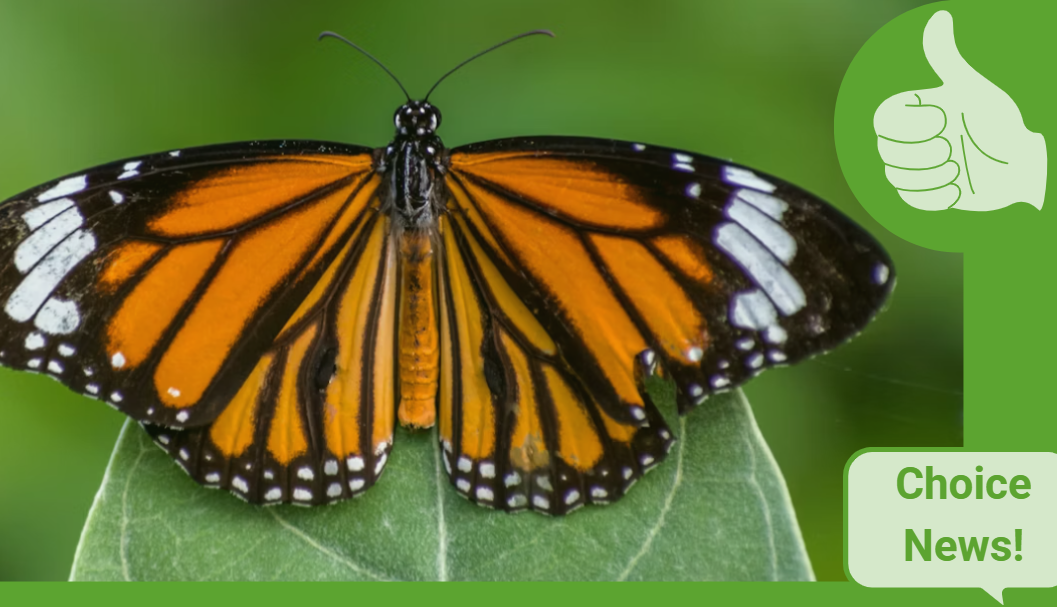
Some Choice News!
Many New Zealand gardens aren’t seeing as many monarch butterflies fluttering around their swan plants and flower beds these days — the hungry Asian paper wasp has been taking its toll.
Thanks to people like Alan Baldick, who’s made it his mission to protect the monarch, his neighbours still get to enjoy these beautiful butterflies in their own backyards.
Thinking about planting something to invite more butterflies, bees, and birds into your garden?
Thanks for your mahi, Alan! We hope this brings a smile!
From National MP--CHRIS BISHOP----'Twas the night before taxes'
’Twas the night before taxes, and all through the nation,
Hard-working Kiwis were still feeling Labour’s inflation.
While their payslips were hidden with care,
They prayed Hipkins and Chloë wouldn’t take their ‘fair’ share.
When out by the Beehive there rose such a shout,
The Greens’ TikTok was not getting enough clout.
“We need more taxes!” Chloë said with a flair,
“For justice! For progress! For… I’ll think of the rest later, I swear.”
Hipkins quickly agreed, as Chloë and the Greens held the key,
He knew he couldn’t win without their guarantee.
But before he could breathe, Te Pāti Māori came with a glare,
Holding a wishlist of taxes that reached mid-air.
And so the trio assembled, a most troublesome sight,
Ready to dream up new taxes till the early midnight.
But no need to worry, National set things right,
We delivered tax relief that finally eased the bite.
And with new roads, schools, and hospitals underway,
Our infrastructure is getting stronger everyday.
Fixing the basics and building the future, as we’ve said,
So every Kiwi family can finally get ahead.
=======================================================
 Loading…