





New late-night dining precinct plan for Auckland CBD
Auckland foodie revellers and insomniacs can look forward to a late-night food precinct right in the heart of the city.
Hospitality business owners are planning to turn Elliott St into a dining destination where eateries open late, and some operate from night to dawn.
Opening in early July, Elliott Stables will be turned into a bustling high-end street food and drinking hall reminiscent of those in the streets of Asia and Europe.
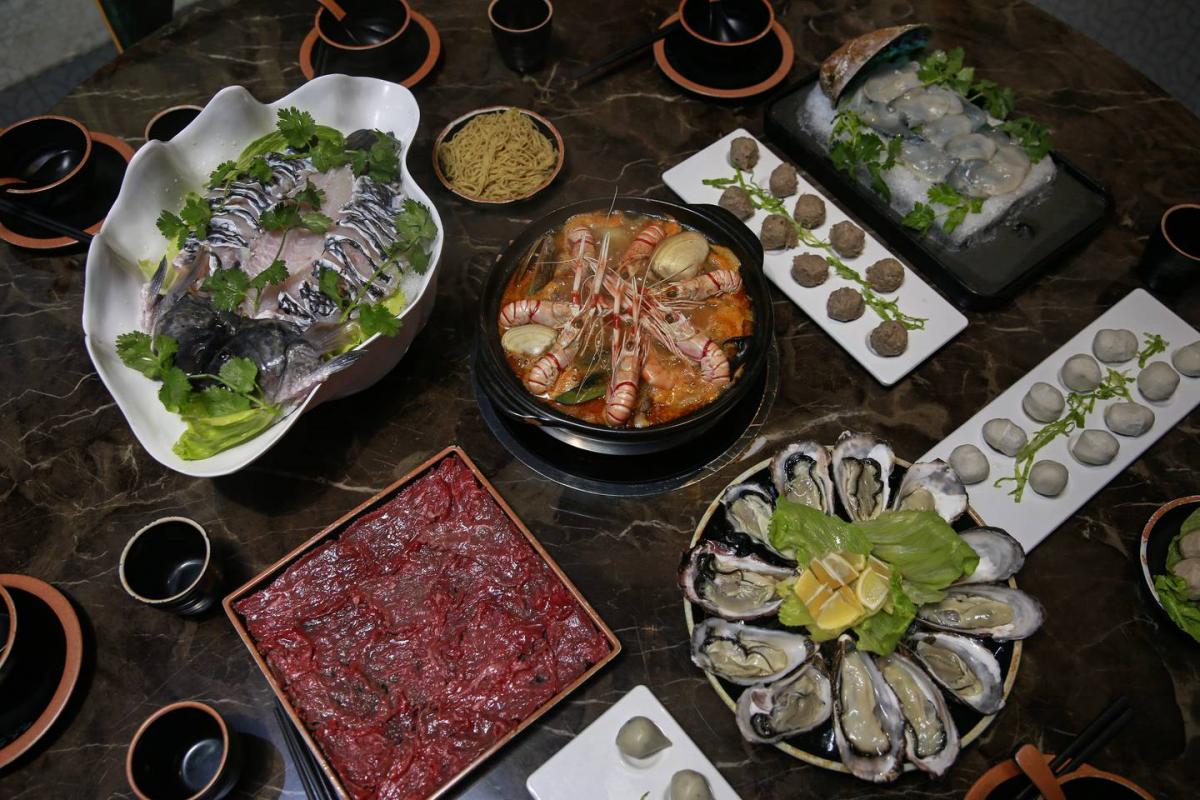
At Mid City mall, Lao Guangzhou (Guangzhou Hot Pot) opens next week as an all-night eatery in the CBD that will soon operate until 6am.
Towards the Victoria St West side of the street, there are plans for up to eight late-night “container restaurants” selling Asian street hawker-style food from Malaysia, Hong Kong, Japan, Korea and Vietnam.
Although the initiative is driven by the property and business owners, it has won the blessing of Heart of the City and the Auckland Business Chamber.
“This is exactly the sort of rejuvenation we need to see and keep seeing in the CBD,” says Auckland Business Chamber chief executive Simon Bridges.
Auckland’s city centre has been hard hit by the Covid-19 pandemic, with foot traffic falling 95 per cent at one point and consumer spending falling 35 per cent.
Stakeholders who spoke to the Herald said they knew they had to evolve in order to survive and thrive following the pandemic.
Bridges said the central city “must keep reinventing itself to stay relevant and attractive” - and the entrepreneurs behind the initiative should be congratulated.
He believed having more people out and about at night would also make the central city safer, where reports of crime have risen significantly compared with pre-pandemic levels.
“I think if anything these sorts of initiatives can improve safety as they bring more law-abiding people in to crowd out the lawbreakers,” Bridges said.
“Contrary to what some think, 24-hour cities can be the safest.”
Paul Reid, managing director of Icon Group which owns Elliott Stables, said the pandemic had been an “incredibly tough time” for tenants and private landlords.
More people worked from home, and international students and tourists vanished. On top of that, City Rail Link construction had made access to the inner city impossible at times, said Reid.
Tenants at Elliott Stables who were not able to pay their monthly rents during the early stages of the pandemic got embroiled in legal battles with the Icon Group as they sought rent relief.
“Icon Group did the best it could to support tenants during the government’s Covid-era restrictions, including writing off more than $3 million in rent owed to support our tenants through the difficult time,” Reid said.
But he admitted this wasn’t enough to save some businesses - and the new plans aimed to turn Elliott Stables back to its “rightful place as Auckland’s premier food dining hall”.
Reid will be injecting about $2m into renovations to turn Elliott Stables into what he hopes will be the “focal point for nightlife in the future”.
He would not reveal specific tenants but confirmed that Paul Wong, a restaurateur behind the popular Mr Hao eateries and Lucky 8 bar in Ponsonby, will be an anchor tenant.
The range of offerings inside the new dining hall would also include cuisine from South America and Italy.
“The new tenants coming in will be more authentic and relevant to today’s taste while keeping Elliott Stables special for so many,” he said.
Wong has just returned from a trip to Vietnam and Singapore where he went to scope for ideas and “get a better feel for Asia’s nighttime street dining scene”.
He said the aim of the new project was to have “authentic chefs bringing their traditions and skills from their homeland”.
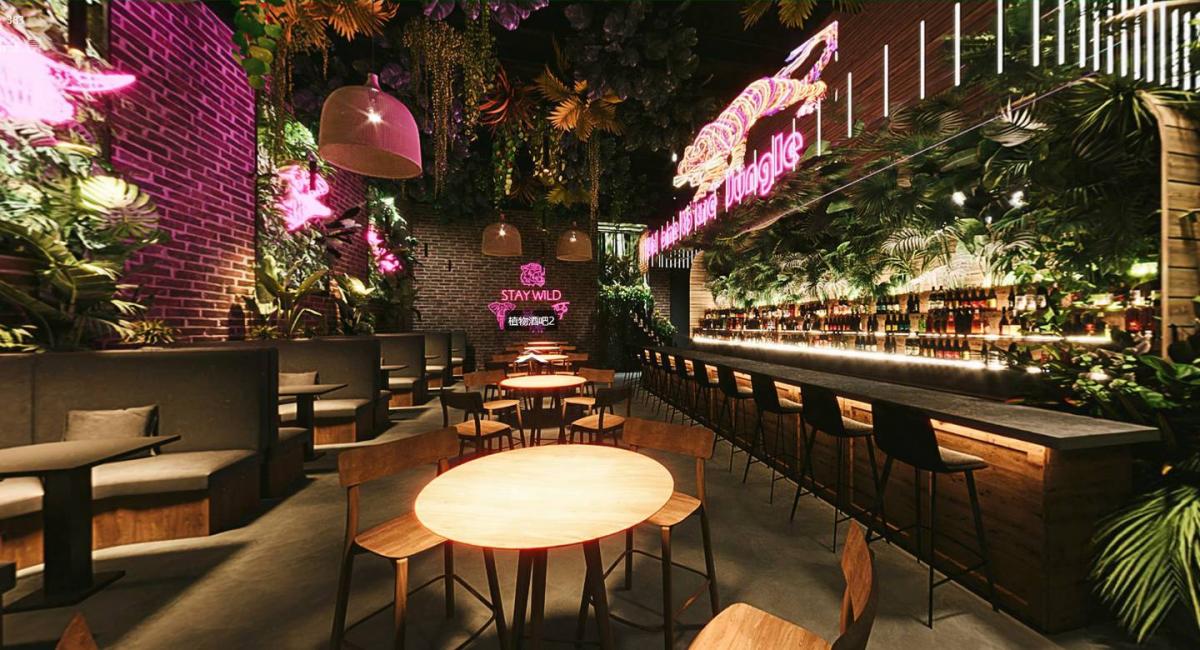
The interior decor of his Vietnamese-inspired fusion Jungle 8 bar and eatery at Elliott Stables will include hanging paper lanterns, street lights and styling that takes diners to the streets of Asia and Europe, he said.
“The 16 or so stalls will have flaming barbecues, steaming woks and the plan is also to have a DJ or live music every evening,” Wong said.
Jungle 8 will follow in the “noisy, busy and buzzy” style of Wong’s Lucky 8 bar in Ponsonby, serving Asian-style tapas food, cocktails and drinks.
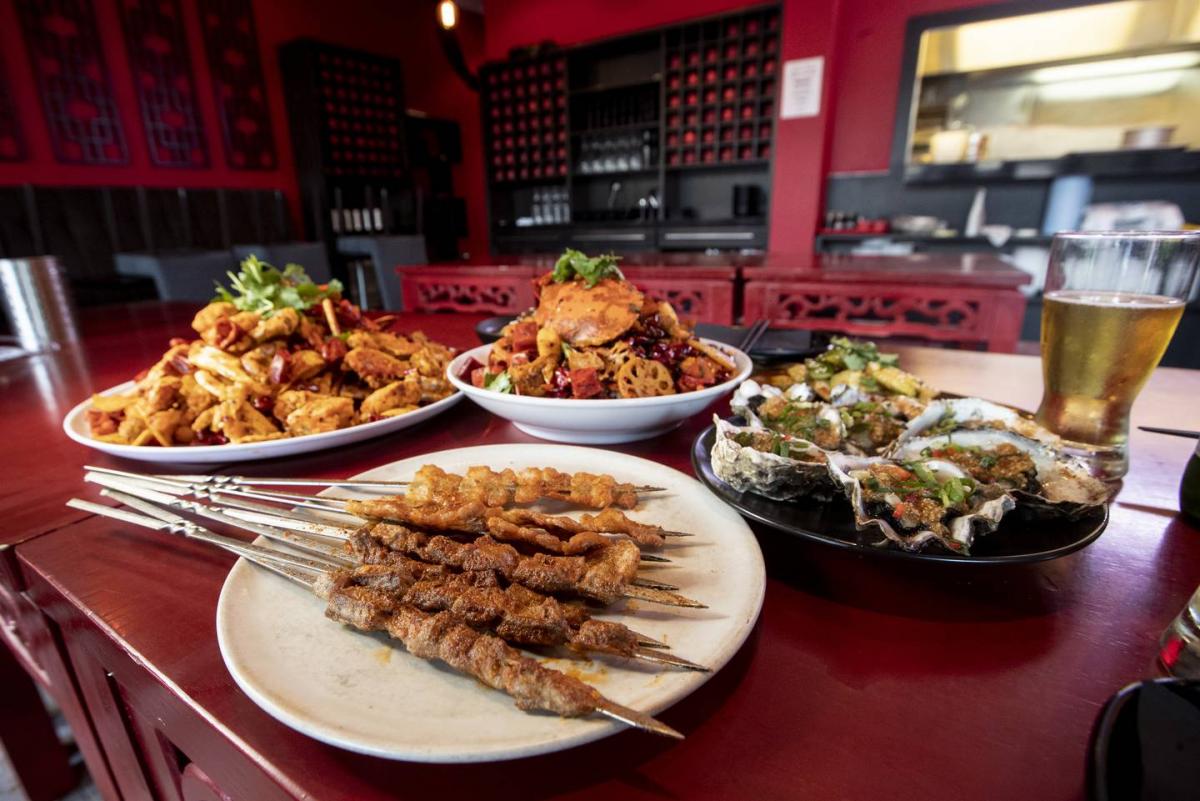
Lao Guangzhou owner Harry Cai said he was confident the Cantonese-style hot pot and street food offerings would appeal to late-night revellers.
Opening next Tuesday, Lao Guangzhou will cook until 2am but Cai plans to extend this to 6am during winter.
Cai said his flagship restaurant In Newmarket is always busiest after midnight.
“It’s what people do in Asia - many places are open until dawn and people love to eat late into the night.”
“We are really excited to bring this to Auckland, and I know it will work for the CBD because it has worked for us in Newmarket.”
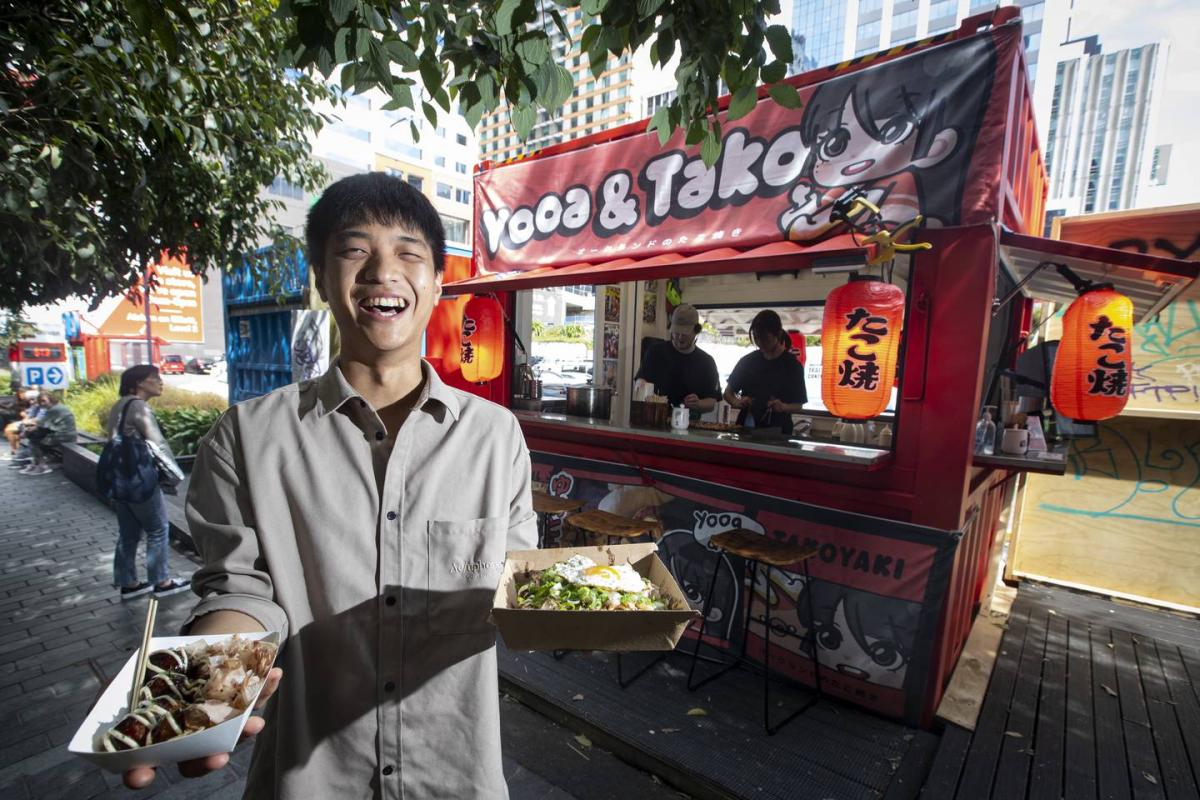
Yejun Shim owns and operates Yooa & Tako, a Japanese takeaway operating from a shipping container on Elliott St. There are plans for another six to eight containers to open.
“We will have tteokbokki, Korean fried chicken, kaya toast, dumplings, rice paper rolls, bao buns, just like the kind you find on the streets of Asia,” said Shim.
“I’m Korean and part-Japanese, and in Korea, we have a word for this late-night food culture called ‘yasik’ meaning ‘food eaten in the middle of the night after dinner’.”
He will be seeking consent for after-hours outdoor seating and heating to add to the street-dining vibe.
Heart of the City chief executive Viv Beck said it was great to see Elliott St getting an injection of new eateries.
“It’s an iconic part of the city centre and its close proximity to the arts precinct makes it an ideal place for late-night dining,” she said.
“The city centre’s hospitality offering continues to be a real drawcard and there’s been a number of new openings in recent months.”
Overall spending in the city centre in December last year was close to pre-pandemic levels in December 2019.
“There’s some great leasing occurring and later dining options will give a welcome boost to our nighttime economy, especially with more international tourists and students around,” Beck said.
Beck said Heart of the City remained “committed to supporting safety day and night” and collaborates with NZ Police beat teams that include security patrols, Māori Wardens and City Watch.
“It’s important that people feel safe when they’re having a night out,” she said.
“Having more people around does help people feel safer too.”
====================================================
www.nzherald.co.nz...
====================================================


Some Choice News!
Many New Zealand gardens aren’t seeing as many monarch butterflies fluttering around their swan plants and flower beds these days — the hungry Asian paper wasp has been taking its toll.
Thanks to people like Alan Baldick, who’s made it his mission to protect the monarch, his neighbours still get to enjoy these beautiful butterflies in their own backyards.
Thinking about planting something to invite more butterflies, bees, and birds into your garden?
Thanks for your mahi, Alan! We hope this brings a smile!


Scam Alert: Fake information regarding December Bonuses from MSD
The Ministry of Social Development is reporting that fake information is circulating about new ‘December bonuses’ or ‘benefit increases’
If you get suspicious communication, please contact Netsafe.

More than 120,000 disabled and older New Zealanders registered in the Total Mobility scheme will pay more for discounted taxi trips from next year as the Government announces a cut to trip subsidies.
Transport Minister Chris Bishop said subsidies would drop from 75% to 65% from July 1, 2026, blaming unsustainable rising costs.
Regional fare caps will also be lowered by around 10%.
Wide-ranging Ministry of Transport proposals for the scheme were released for consultation today. Suggested options included "strengthened" eligibility; periodic reassessments; caps on monthly trips; and the potential inclusion of ridesharing services.
"The Government is announcing decisions to stabilise the Total Mobility scheme so that the disability community is supported in a financially sustainable way, by all funding partners," Bishop said of the confirmed subsidy changes.
Disability Issues Minister Louise Upston said the new subsidy level would still be higher than what it was four years ago, when it was raised under the previous government.
"We appreciate these decisions will mean fares will increase for Total Mobility users.
"But they will still receive a higher subsidy level than prior to 2022. The changes also provide certainty that those who need the service will have continued access to it."
Demand for the scheme has soared since the subsidy rose from 50% in 2022. Registered users have jumped from 108,000 to 120,000, while trips have risen from 1.8 million in 2018 to three million.
Bishop said the 2022 increase had not accounted for higher demand over time.
"Increased demand now means the scheme is close to exceeding its Crown funding and is placing significant pressure on the contributions from local councils and NZTA," he said.
Costs are forecast to exceed funding by $236 million between 2025 and 2030 under current settings, according to the Government.
The Total Mobility scheme provided subsidised taxi fares for people who could not use public transport independently due to disability or age. The scheme was funded jointly by central government, NZTA's National Land Transport Fund and local councils.
The Government would also provide $10 million to NZTA to ease funding pressures on public transport authorities until the changes took effect.
Reacting to the subsidy changes, Disabled Persons Assembly chief executive Mojo Mathers told 1News that Total Mobility was an "essential service for us".
"This cut to Total Mobility on top of a cost-of-living crisis will only aggravate hardship in an already struggling population," she said in a statement.
"Total Mobility is an essential service for us. Not everyone can get on a bus or drive a car.
"Disabled people will face impossible choices when it comes to travel, when we know that over half don’t have enough to meet their everyday needs."
Labour has criticised the subsidy changes, saying the Government was "making life harder and more expensive for disabled New Zealanders".
Today's announcement came after a delayed year-long Transport Ministry review of the Total Mobility scheme, which included an earlier round of public consultation.
Further changes on the way, proposals in consultation
============================================
Alongside the subsidy cut, the Ministry of Transport has opened consultation on proposals including trip caps, stricter eligibility assessments, and expanding service providers beyond taxis to include ride-hail apps and on-demand public transport.
"Beyond ensuring the scheme’s financial viability, the Government is also taking the opportunity to consider changes to strengthen a system so that it works better for disabled people,” Upston said.
"The Ministry of Transport will be releasing a discussion document to consult on proposals to strengthen Total Mobility to ensure fairer, consistent and more sustainable access to services for people with the greatest need."
The wide-ranging proposals were not yet Government policy and were open for feedback until March 22, 2026. The 10% subsidy cut was not part of the consultation.
The proposals include trip caps, with two options. The first would give all users a flat monthly cap of 30 to 40 trips at 65% subsidy, with either no further subsidised trips or a reduced 50% subsidy once reached. The second would allocate 10 base trips, plus extras based on need – for example, for employment, health, or education.
The ministry proposed tighter eligibility requirements, including medical evidence from health practitioners, occupational therapists or psychologists when applying.
Currently, assessment standards varied, with no documentary evidence required.
Periodic reassessments would also be introduced under another proposal, requiring users to be re-evaluated after a set period to ensure they remained eligible.
The proposals also aimed to expand service providers beyond traditional taxis to include ride-hail apps, on-demand public transport services, and volunteer community transport providers. The ministry said this could increase availability and give users more options.
It was unclear whether ride-hailing apps would include popular ride-sharing apps such as Uber.
To improve wheelchair accessibility, the ministry also proposed more incentives for service providers, including higher funding for installing ramps and hoists in vehicles, and raising the $10 per wheelchair trip payment that has remained unchanged since 2005.
The ministry was also exploring a national public transport concession for people with disabilities – separate from Total Mobility and implemented through the National Ticketing Solution from 2027.
Labour critical of subsidy changes
============================
Labour disability issues spokesperson Priyanca Radhakrishnan said the Government was "making life harder and more expensive for disabled New Zealanders by slashing discounted transport fares during a cost-of-living crisis".
"Under Christopher Luxon, disabled Kiwis will now pay more just to get to work, attend health appointments, or see loved ones,” she said in a statement.
"Disability communities feel betrayed. First came the overnight cut to flexible funding; then restrictions on residential care with no warning.
"Then Whaikaha was gutted and disability support shifted to the Social Development Ministry. Now, the transport subsidy many rely on to live independently has been cut.
"For many disabled Kiwis, affordable transport isn’t a nice-to-have, it’s a lifeline. It means independence, dignity, and the ability to participate in everyday life and that’s why Labour increased the subsidy in government. This latest change is taking us backwards."
=========================================================
 Loading…