






Plan Change 120 Letter
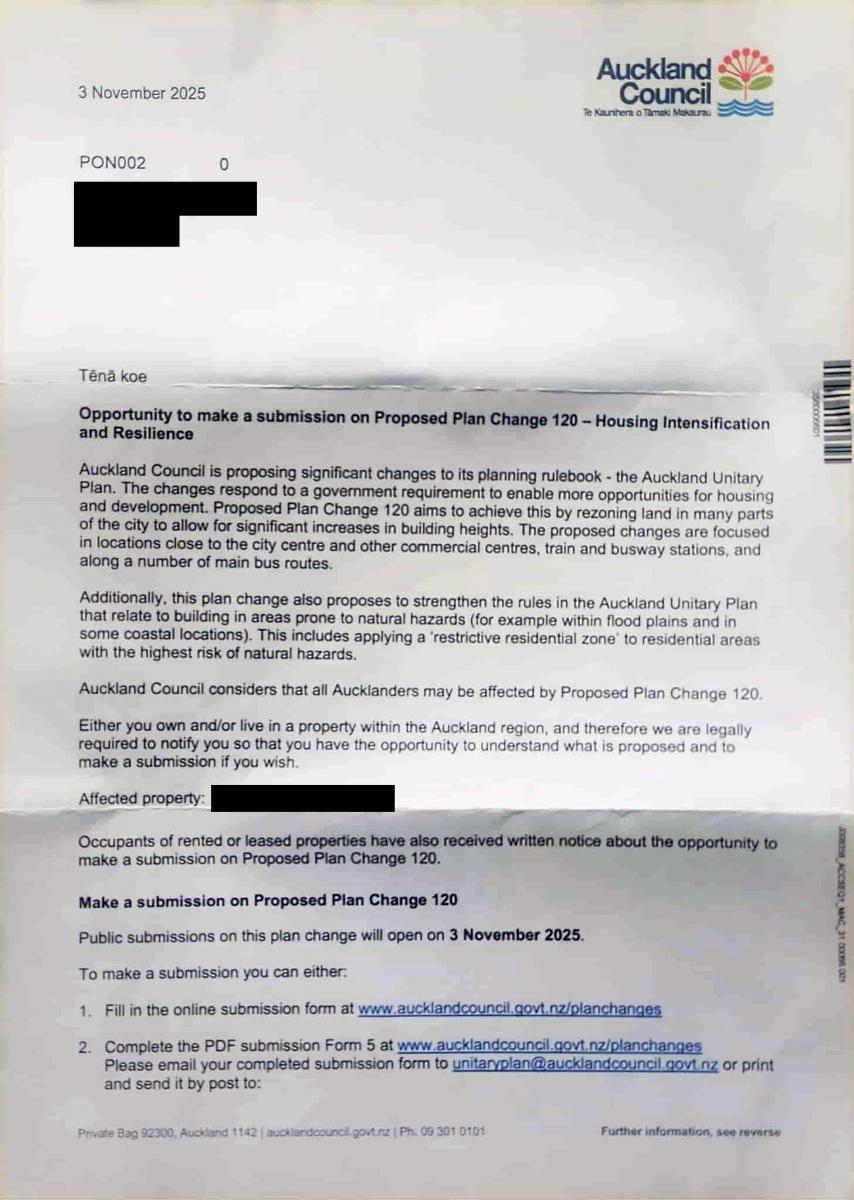
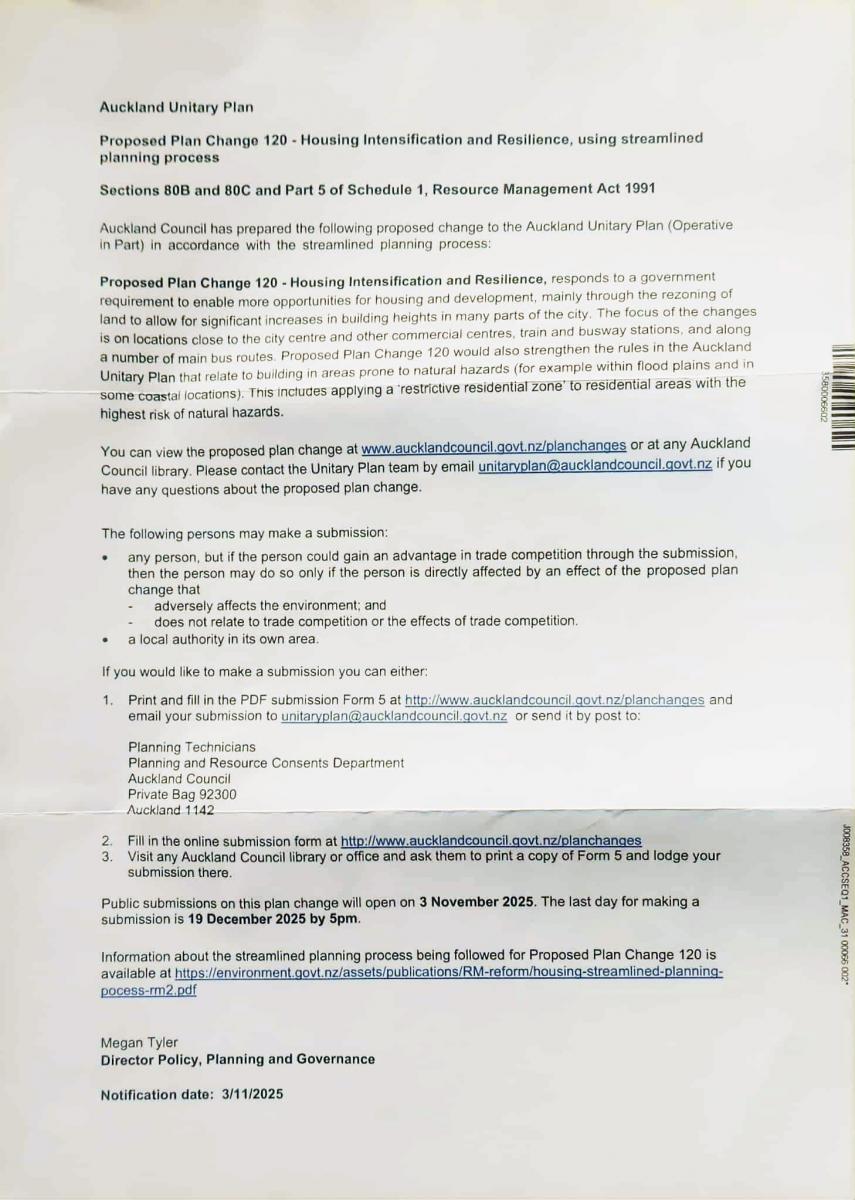
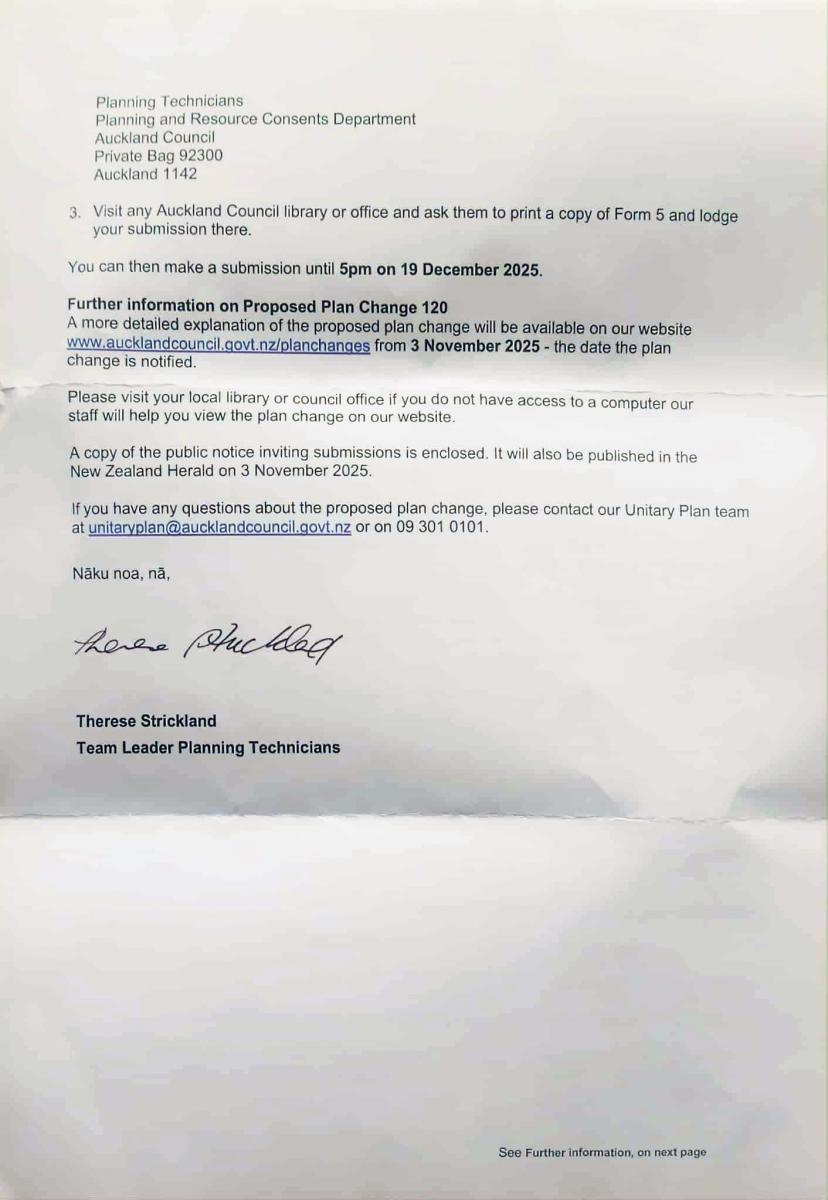
Did you receive this letter from Auckland Council? It is being delivered to every household in Auckland and is causing a bit of confusion.
Essentially, it is inviting everyone in Auckland to comment on proposed changes to the Unitary Plan from 3 November. The Unitary Plan is the set of rules that says what can and can't be built on each property. The proposed changes (Plan Change 120) are so significant and change the rules so much for most properties, that over time, most streets and neighbourhoods will likely be affected in some way. That's why all home owners and renters are being invited to submit.
The consultation will open on 3 November and more info will be available online then.
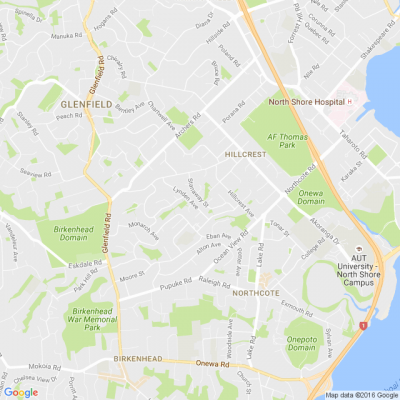
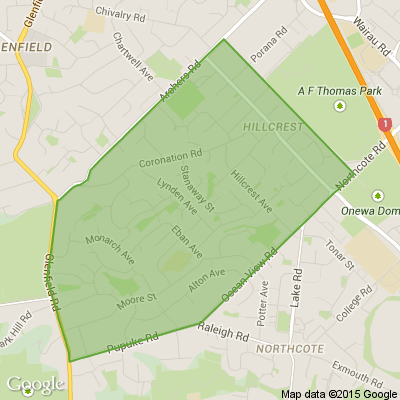
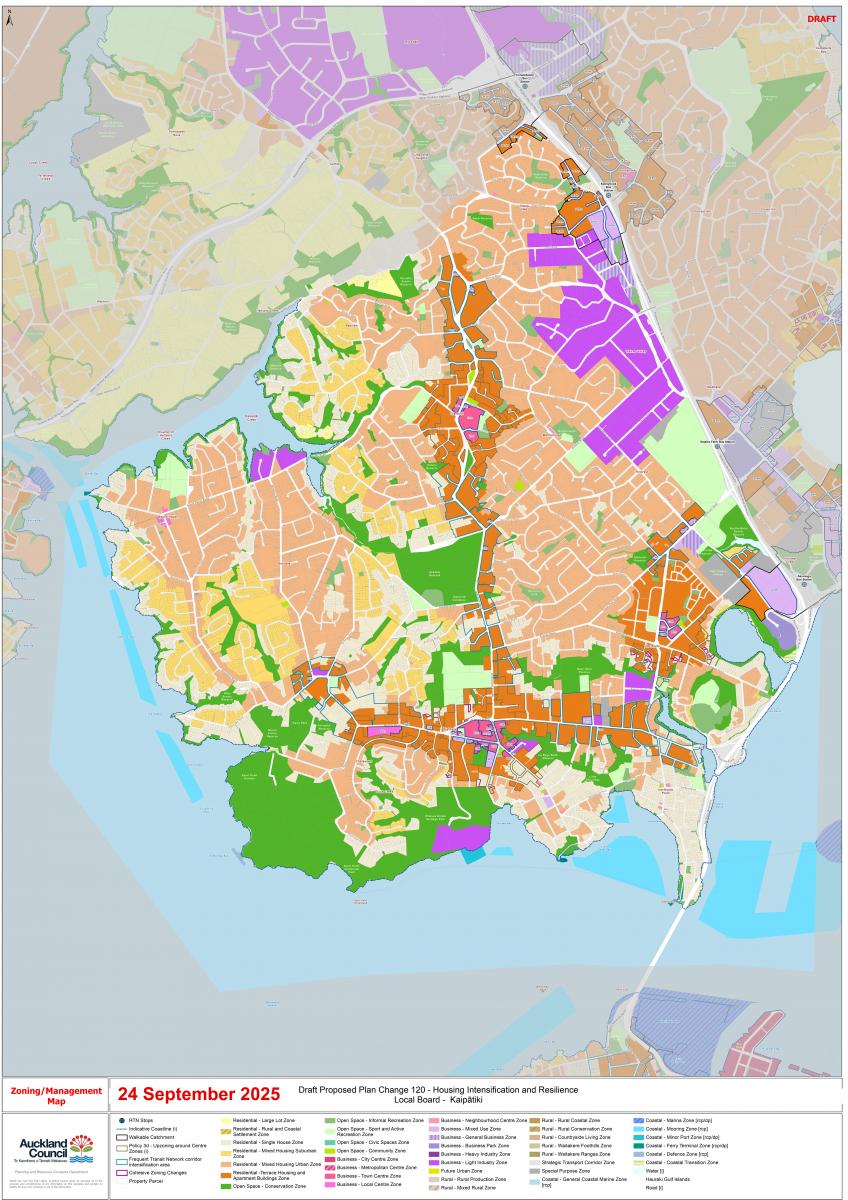
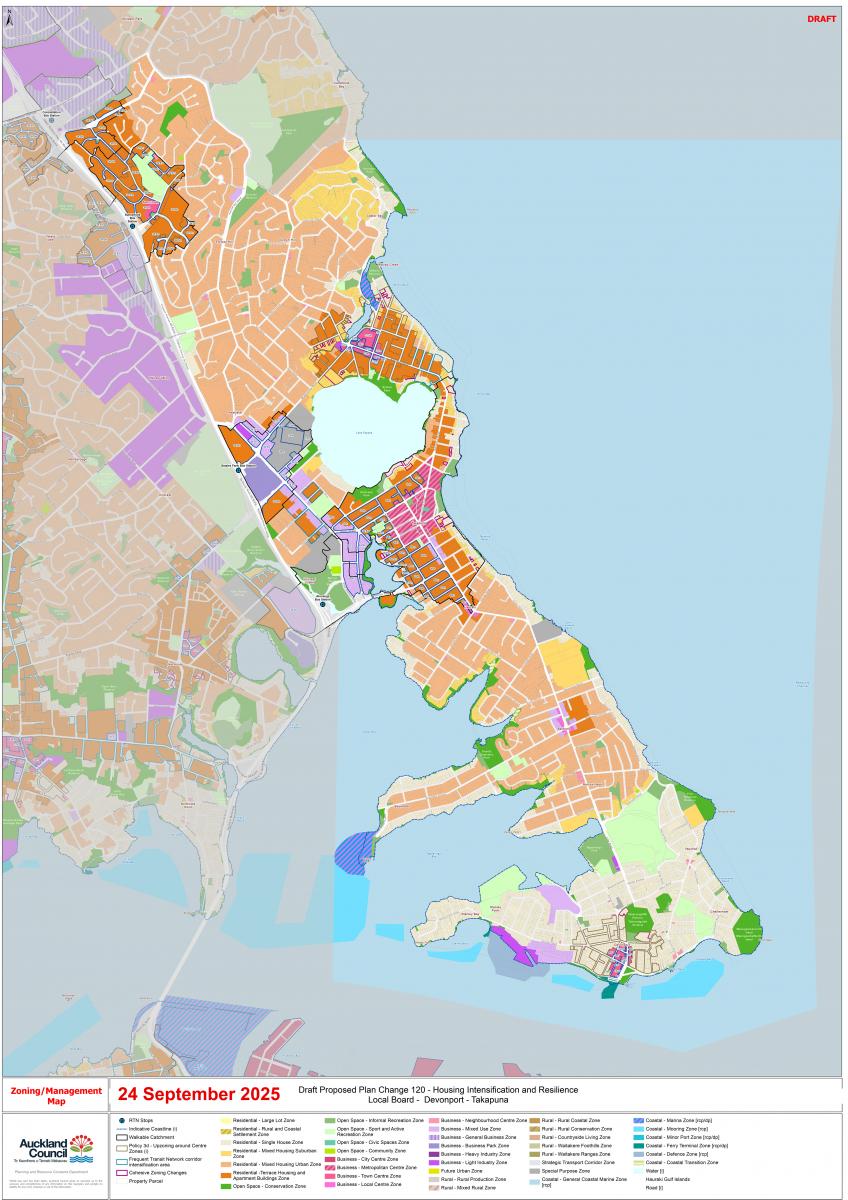
I've attached the zone maps for the North Shore that show the proposed new zone for each property. More maps showing more information for the North Shore and other parts of Auckland can be downloaded from the below link, and further information including factsheets will be available from 3 November: www.aucklandcouncil.govt.nz...
So what is this all about? It's complicated, but here's a brief history:
➡️ In 2016, the Unitary Plan zone rules allowed for an additional 900,000 new dwellings to be built, with greater intensification and higher building heights across much of Auckland. It also allowed buildings to stretch across land parcels, and reduced the amount of outdoor space needed for each dwelling. Since then, we've seen a lot more intensive housing being built and pressure on infrastructure.
➡️ In 2022, the Labour Government's MDRS rules came into effect, which allowed any property in Auckland to have up to 3 dwellings of 3 storeys built without needing a resource consent. This was to force Auckland to accommodate up to 2 million dwellings. However, Auckland Council's changes to the Unitary Plan to allow for this (called Plan Change 78) never fully came into effect, leading to a confusing layering of rules and much debate at consent hearings. While the MDRS rules didn't apply in special character areas, significant ecological areas, or any area that didn't have adequate infrastructure, it did apply in many flood plain and erosion-prone areas.
Also in 2022, the Government prohibited Councils from requiring developers to have on-site carparks. This has lead to a noticeable increase in cars parked on roads, creating safety and visibility issues on narrow roads.
➡️ The Unitary Plan together with the MDRS rules have led to a "pepper pot" approach to town planning, as new developments have appeared on almost every suburban road, with Council having to play catchup with infrastructure everywhere, rather than in a planned or staged manner.
➡️ This year, the National Government has allowed Auckland to opt out of the MDRS rules, and to make it more difficult to build on flood plains and coastal areas. But the Government is instead forcing Auckland to still accommodate 2 million new dwellings. To do this, Council is proposing Plan Change 120 which includes big changes to what can be built on most properties.
Some of the changes:
🏢 All zones have had changes made to the detail of them. So even if your property or your neighbour’s property is proposed to have the same zone as before, there may be changes that you should be aware of.
🏢 Many properties that were zoned for 2-storey “Mixed Housing Suburban Zone” are being up-zoned to 3-storey “Mixed Housing Urban Zone”. This affects most suburban roads and will allow 3 storey buildings by default, rather than 2 storeys as at present.
🏢 Terraced and apartment housing will be allowed up to 6 storeys high by default on main road corridors, such as Glenfield Rd, Onewa Rd, Mokoia Rd, Kitchener Rd, Hurstmere Rd and Killarney St.
🏢 There will be higher heights of 10-15 storeys allowed by default in “walkable catchments” around bus stations, train stations, town centres and some local centres, for example, 10 storeys around the Sunnynook Bus Station and 15 storeys in parts of Takapuna.
🏢 A lot of Single House Zoned properties will be up-zoned, except for coastal areas due to the risk erosion and slips; around many significant ecological areas due to the impact on the bush and risk of slips; and in special character areas.
🏢 There will be a reduction in the number of properties with Special Character Area overlay, with reductions in Devonport, Birkenhead and Northcote Point, and with the greatest number removed from Mt Eden.
🏢 If a property has a Natural Hazard layer applied to it, the underlying zone will still apply, however a developer will need to show that the design mitigates the hazard, for example, in a flood plain.

Poll: Should we be giving the green light to new mining projects? 💰🌲
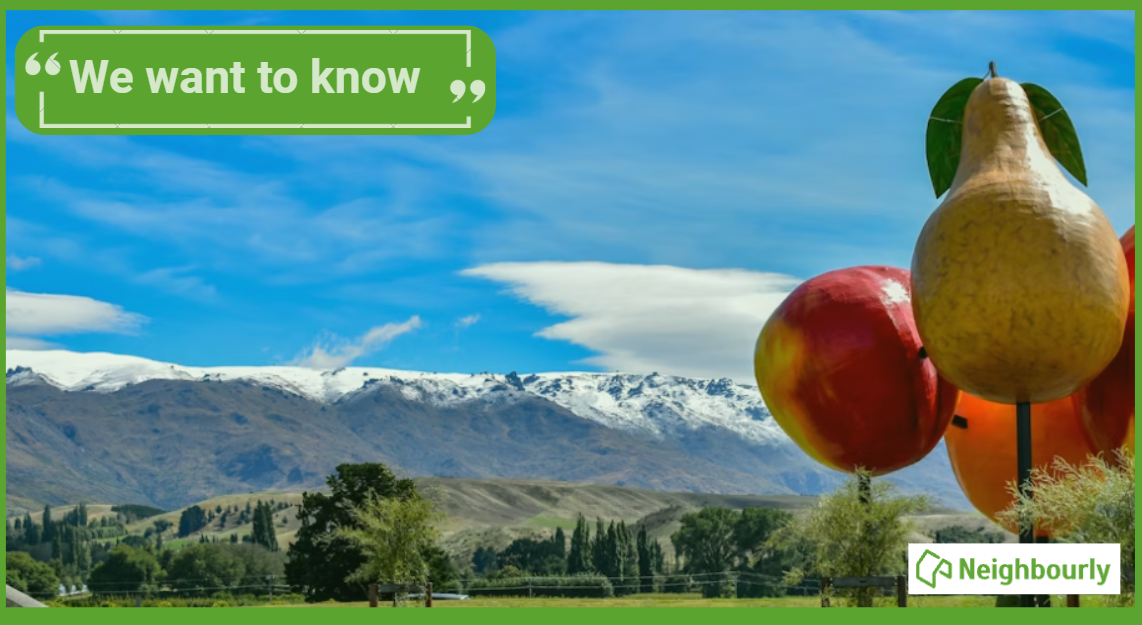
The Environmental Protection Authority announced this week that a proposed mine in Central Otago (near Cromwell) is about to enter its fast-track assessment process. A final decision could come within six months, and if it’s approved, construction might start as early as mid-2026.
We want to know: Should mining projects like this move ahead?
Keen to dig deeper? Mike White has the scoop.
-
53.1% Yes
-
46.9% No
Aucklanders, we want to know: How are you feeling about the current property market?
New Zealand homeowners are now more likely to sell at a loss than at any time since 2013, and if you’re in Auckland or Wellington, the odds are even higher.
But there is a silver lining: buyers are still in a strong position when it comes to negotiating prices.
So we’re curious…
How are you feeling about the current property market?
If you’re keen to dive into the details, Deborah Morris breaks down all the latest insights.

‘Tis the season to not get scammed ...
As Christmas gift shopping moves increasingly online, scammers are ramping up their activity across the country.
Dunedin’s Investigation Support Unit is seeing more and more people fall victim to scams and other fraudulent activity, particularly on Facebook Marketplace.
There are a few ways to avoid the scams and keep yourself safe doing online trades this holiday season, says Southern District Service Delivery Manager Senior Sergeant Dalton.
🔒 “A good first step when looking to purchase something on Marketplace is to check when the seller’s Facebook profile was created. If it’s very recent, there is a higher risk that they have just created this account for a one-off fake item.”
🔒 Another important step is to make sure the seller’s profile name and bank account name match up. “We’re seeing a lot of scammers claiming their bank account name is different because it belongs to their partner or family member - that’s a huge red flag."
🔒 “When you’re selling, never trust a screenshot anyone sends you showing that payment has been made. Check your own bank account to make sure a payment has gone through."
🔒 “Quite frankly, it’s best for all parties to agree to pay, or be paid, for items in cash and in-person. Ideally in a public place with CCTV coverage."
🔒 "If you’re buying a car, check Carjam.co.nz to see if it’s stolen or if there’s money owed on it.”
A reminder: Suspicious activity can be reported on 105

 Loading…