






Do people earning $200,000 need help with childcare?
Government “choices” mean some of the families now receiving Family Boost payments for their early childhood education are among the 10% wealthiest in the country, an economist says.
A revamp to the Family Boost programme means those with household incomes up to $229,100 a year are now eligible for support with their childcare fees.
The available rebate is also increasing to 40% of fees paid, or a maximum of $1560 a quarter.
The change applies to fees paid in the September quarter, and from then on.
But Craig Renney, policy director of the Council of Trade Unions and an economist who was previously a senior economic adviser to then-Finance Minister Grant Robertson, said there were “choices” being made.
He said those on the highest incomes, in the top 10% according to the Stats NZ Household Expenditure Survey, were benefiting the most from the change.
“If your household earns $60,000 a year, you can get up to an extra $2340 annually in new support. If your household earns three times that, $180,000 – you will get an extra $3440 annually. That’s 47% more. For exactly the same thing – having children in early childhood education.”
The difference was because the higher earners were previously not eligible at all.
Renney said data also showed higher-earning households tended to spend more on early childhood education anyway, which meant they would have larger fees to claim rebates on.
Most were already spending the money without the Government’s assistance, he said.
It could have been better used to help make early childhood education more affordable or accessible to low or middle-income earners, he said.
“Instead of having a 40% cap across the piece that could be claimed, you could have said for very-low-income households we’ll make it 50, 60 or 100%.
“Because this is a rebate scheme, those on low incomes don’t have the money to be able to afford it in the first place to then get the rebate.
“I’m not saying these families don’t need the money but I’m saying if you were making choices about where to spend, for a Government that’s focused on value for money – you may get better outcomes for your dollar if you were actually spending it on expanding ECE provision in low-income communities.”
Asked whether the adjustment would affect the number of families who could receive the full $250-a-fortnight relief that National campaigned on before the last election, as a combination of the Family Boost package and tax cuts, Finance Minister Nicola Willis said that data was not available.
“The National Party campaigned on a tax relief plan that included multiple elements – shifting tax brackets to compensate for inflation, expanding tax credits to reach more modest income earners, increasing Working for Families tax credits and introducing the FamilyBoost childcare tax credit.
“We delivered on these policies in our first Budget. We made clear that the impact of these policies would vary according to family circumstances and encouraged people to use our tax calculator so they could find out what it would mean for them.”
She said the $250 example was a family with a household income of $120,000 split across two earners spending at least $300 a week on childcare.
“We did not model how many families would match that scenario.
“Inland Revenue is not geared up to calculate how many people would have matched that scenario in the past 12 months or will match it in the coming years. This is because some elements of the tax plan are calculated on an individual basis while others, including FamilyBoost, are calculated according to household income. Inland Revenue does not routinely collect information on household incomes.”
She said about 60,000 families had received the full FamilyBoost payment they were entitled to.
With the scheme expansion, she said, about 16,000 more families would probably benefit.
“The amount of rebate they receive will vary according to the fees they pay and the income they earn each quarter. The maximum a family can now receive from FamilyBoost is $240, an increase on the $150 that National campaigned on.
“To receive that amount, a family would have to be spending at least $300 a week on childcare and have a combined family income of less than $140,000 a year. Inland Revenue does not calculate how many families find themselves in that circumstance.”
===================================================

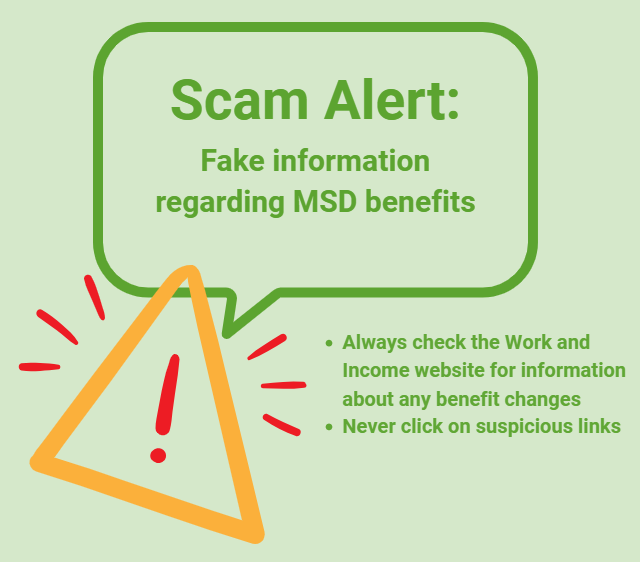
Scam Alert: Fake information regarding December Bonuses from MSD
The Ministry of Social Development is reporting that fake information is circulating about new ‘December bonuses’ or ‘benefit increases’
If you get suspicious communication, please contact Netsafe.
Poll: Are Kiwis allergic to “exuberance”? 🥝
In The Post’s opinion piece on the developments set to open across Aotearoa in 2026, John Coop suggests that, as a nation, we’re “allergic to exuberance.”
We want to know: Are we really allergic to showing our excitement?
Is it time to lean into a more optimistic view of the place we call home? As big projects take shape and new opportunities emerge, perhaps it’s worth asking whether a little more confidence (and enthusiasm!) could do us some good.

-
41.5% Yes
-
33.6% Maybe?
-
24.9% No
Tips and advice to stay street smart this summer
Summer is finally here!
Time for BBQs, holidays, Christmas, travelling and events galore.
We've put together a whole range of tips and advice so you can put your feet up and relax this summer, knowing that it's all good in your hood.
Our first piece of advice to make your neighbourhood safer this summer, is to get to know the people who live around you! People who know each other are more likely to offer, accept, and ask for help when needed.
Shop Safe - Preventing Fraud & Scams
You might find yourself making more purchases than usual at this time of year, and many of those might be online, so here's a set of tips and advice to make sure you stay safe and secure whilst doing your Christmas shopping this year. And remember to think about the security of your online shopping when it gets delivered!
Heading away this summer?
It's a busy time of year on new Zealand roads and everyone wants to get from A to B safely. It's also important that your home stays safe while you're away enjoying your 'home away from home'. We have put together a set of tips and advice to help make that happen!
Keeping your car, home and belongings safe
From recording valuable possessions to securing locks, keeping valuables hidden and informing trusted neighbours that you will be away, there are many things you can do to keep your car, home, and belongings safe. Here's a bunch of handy tips!
Party planning checklist and fire-wise tips
Whether it’s a small backyard gathering, or a big celebration for a special occasion, a little extra planning and consideration will go a long way in keeping you, your guests, and your neighbours happy. We also have some tips to make sure you and your families stay fire-wise during summer.
Get to know your neighbours - look out, reach out, help out
The most important action you can take to make your community safer is get to know the people who live around you. People who know each other are more likely to offer, accept, and ask for help when needed.
It is also important to know who to contact in an emergency and when to use the non-emergency contact for NZ Police. Learn more about Neighbourhood Support, get tips on getting to know your neighbours and the best way to contact the police below.
Strong communities start with small hellos
In terms of crime prevention, your neighbours are the best and cheapest security system you can have. You don't have to love your neighbour, but at least get their number just in case!
===================================
Have a happy, safe and connected summer!
===================================
 Loading…