







Simple steps Kiwis can take to save more than $1200 as the cost of living crisis bites
The consumer protection organisation advises that the easiest way to cut costs is to be power savvy and New Zealanders should start by checking if they are on the best power plan for their household.
Gemma Rasmussen, Consumer head of communications and campaigns, said it only takes minutes to check what savings could be made by using Powerswitch.
“It could not be simpler to switch power plans or providers.”
This year the average saving netted by Powerswitch users was $385.
Other steps households can take is to load-shift and only use ‘power-hungry’ devices during off-peak hours - Consumer NZ says this can save people up to $440.
Meanwhile, washing only in cold water, using LED bulbs and switching appliances off at the wall could save Kiwis more than $100 a year for each step taken.
“Loads of devices use power even on standby mode, so cut them off at their source,” said Rasmussen.
Finally, when you feel like a cuppa – only boil the amount of water you need.
“You can save $25 a year by halving the amount of water you boil in your kettle,” said Rasmussen.
Rasmussen said these power-saving steps alone could save New Zealanders more than $1200 a year, but there were even more ways to ensure money was staying in pockets.
Consumer NZ advises Kiwis to shop around to find the best prices, something made easier thanks to a range of apps and online tools.
Grocer App is great for comparing prices between supermarkets.
“We want to remind New Zealanders there’s little reward in being loyal to one supermarket chain,” said Rasmussen.
Gaspy is a great app to scan fuel prices while PriceSpy is an online tool which tracks the prices of items between different stores and over time.
Consumer NZ said that using these three tools means shoppers could save more than $200 a year.
Furthermore, the organisation is reminding people to review their insurance policies and mobile phone plans.
“Our insurance survey found a huge difference between the cheapest and most expensive insurance policies for a standard-sized house,” said Rasmussen.
“It’s worthwhile taking the time to explore different insurance providers – you could stand to make a sizeable saving.”
Finally, Consumer NZ advises Kiwis to get their credit cards under control - a timely reminder following Christmas shopping.
They say to start by paying more than just the minimum payments required which can lead to less interest being paid and can easily be done by setting up a direct debit.
Rasmussen said checking a bank’s offering is also a good idea as many offer low interest and even zero interest balance transfers.
“Taking a bit of time to use tools like Powerswitch, Grocer, PriceSpy and Gaspy, as well as being deliberate about how, when and where you spend could net you well over $1200 in 2023,” she said.
===================================================


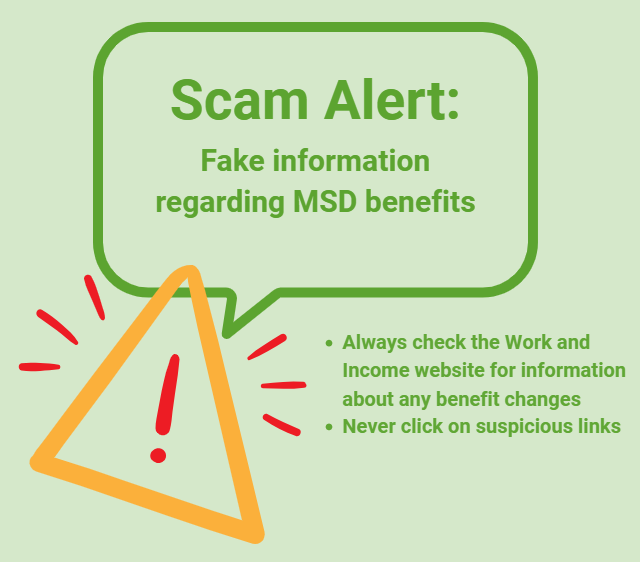
Scam Alert: Fake information regarding December Bonuses from MSD
The Ministry of Social Development is reporting that fake information is circulating about new ‘December bonuses’ or ‘benefit increases’
If you get suspicious communication, please contact Netsafe.

Some Choice News!
Many New Zealand gardens aren’t seeing as many monarch butterflies fluttering around their swan plants and flower beds these days — the hungry Asian paper wasp has been taking its toll.
Thanks to people like Alan Baldick, who’s made it his mission to protect the monarch, his neighbours still get to enjoy these beautiful butterflies in their own backyards.
Thinking about planting something to invite more butterflies, bees, and birds into your garden?
Thanks for your mahi, Alan! We hope this brings a smile!

Poll: Are Kiwis allergic to “exuberance”? 🥝
In The Post’s opinion piece on the developments set to open across Aotearoa in 2026, John Coop suggests that, as a nation, we’re “allergic to exuberance.”
We want to know: Are we really allergic to showing our excitement?
Is it time to lean into a more optimistic view of the place we call home? As big projects take shape and new opportunities emerge, perhaps it’s worth asking whether a little more confidence (and enthusiasm!) could do us some good.

-
41.8% Yes
-
32.1% Maybe?
-
26.1% No
 Loading…