







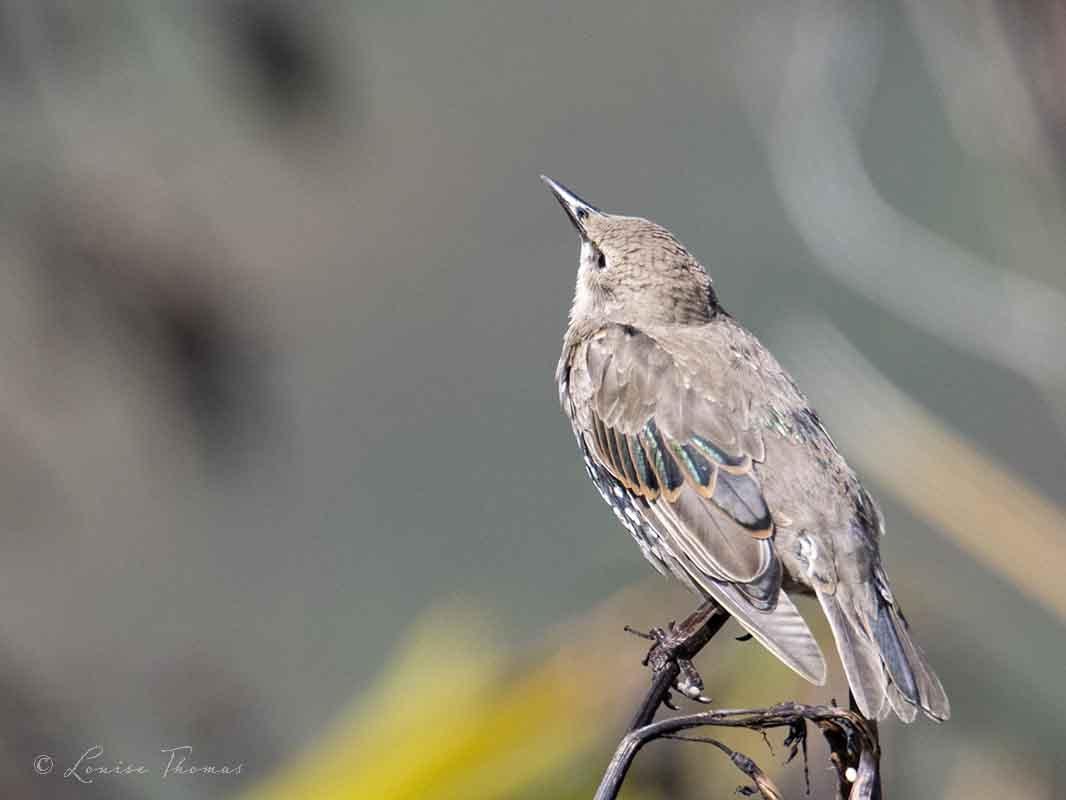
Starlings - a variety of plumage as they mature
The variety of plumage at the moment on young birds as they transition into their adult feathers is amazing. I think a few years ago I would have thought of common starlings (Sturnus vulgaris) as a dozen different species if I thought of them at all. Many of the new generation still have their brown heads, but are developing their star-spangled chest feathers. Mature feathers coming in on their backs are beautiful, with pale brown borders and the middles an iridescent green in the sunlight. Nature is an artist. Notes: "Common" means they occur in other countries (...common to). Very different species of birds don't interbreed (while there is some hybrids among ducks, gulls, geese, and pheasants, it is not that common in the wild outside of closely related species), while mynas are in the same family (Sturnidae), they are a different species and don't breed with starlings. There are no official reports of mynas in Lower Hutt, they are not known to occur this far South, so if you do see one, make sure you get a photo and send it to me or log it on iNaturalist. While there are several species of starling around the world and 12 subspecies, we only have the subspecies vulgaris in New Zealand.

Neighbourhood Challenge: Who Can Crack This One? ⛓️💥❔
What has a head but no brain?
Do you think you know the answer? Simply 'Like' this post if you know the answer and the big reveal will be posted in the comments at 2pm on the day!
Want to stop seeing these in your newsfeed?
Head here and hover on the Following button on the top right of the page (and it will show Unfollow) and then click it. If it is giving you the option to Follow, then you've successfully unfollowed the Riddles page.


Gardening section clearing
Last chances too book a Garden tidy
B4 xmas
0272420951
Ian
 Loading…