






Dive Tanks
Dive tanks or cylinders are manufactured from steel or aluminium. Which is better I often get asked, and the answer to that is your personal preference. To help with that here is a little information about dive tanks.
Both tank types come in a range of sizes, the most common sizes for an aluminium tank is 95 cuft/12l approx capacity and the 80 cuft/10l approx capacity. The aluminium tank is easily identified by having a small or virtually no neck where the valve screws in and a flat bottom.
Common steel tank sizes are 10l, 12l, 12.2l and the 15l. The steel tank has a distinct neck where the valve screws in and a rounded bottom which requires a boot to enable the tank to stand up right.
All dive tanks require regular servicing, whether they are used for diving or not, this is very important for everyone’s safety.
A yearly visual inspection checks for any contamination that may be in the tank itself, cracks at the neck or damage to the outside of the tank which may pose a risk to the tanks integrity. As proof of testing a plastic tag is fitted to the neck of the valve with the month, year and testers insignia/number stamped on it, the colour of theses tags changes in January each year.
A hydrostatic test is performed every 2 years and is done to determine the strength of the tank. This is done by filling the tank with water and pressurizing the tank to a specified pressure and measuring the deformation of the tank, this test helps maintain the safety and durability over the lifetime of the tank. Proof of a hydrostatic test is a stamp with the month, year and testers insignia/number on the tank itself.
These procedures are for the tank only and does not include the valve.
Perhaps the biggest factor when deciding on which tank to use is the effect they have on your dive. An aluminium tank will become slightly positively buoyant as the air is used, this requires the diver to compensate for this by using more weight to maintain neutral buoyancy and prevent an unwanted ascent.
Steel tanks remain negatively buoyant for the duration of the dive no matter the air pressure remaining in the tank.
It is recommended as good practice to complete your dive at the surface with a tank pressure of 50 bar left in the tank.
When traveling and in use store your tanks lying down to prevent them from falling over causing damage or harm.
When storing tanks for an extended period, keep tanks upright in a safe area to prevent falls. The reason for this is if there is an unknown amount of water in the tank it will cause the least amount of damage to the inside of the tank whereas if the tank is lying down the water is able to spread over a wider area causing corrosion damage to the side wall which is thinner than the bottom of the tank.
Never store your tanks empty, a minimum pressure of 30 bar is recommended. If stored empty the absence of internal pressure can allow all sorts of contaminants to enter.
Your tanks are a valuable investment and by following these few simple rules you will be safer and your tank will last much longer.

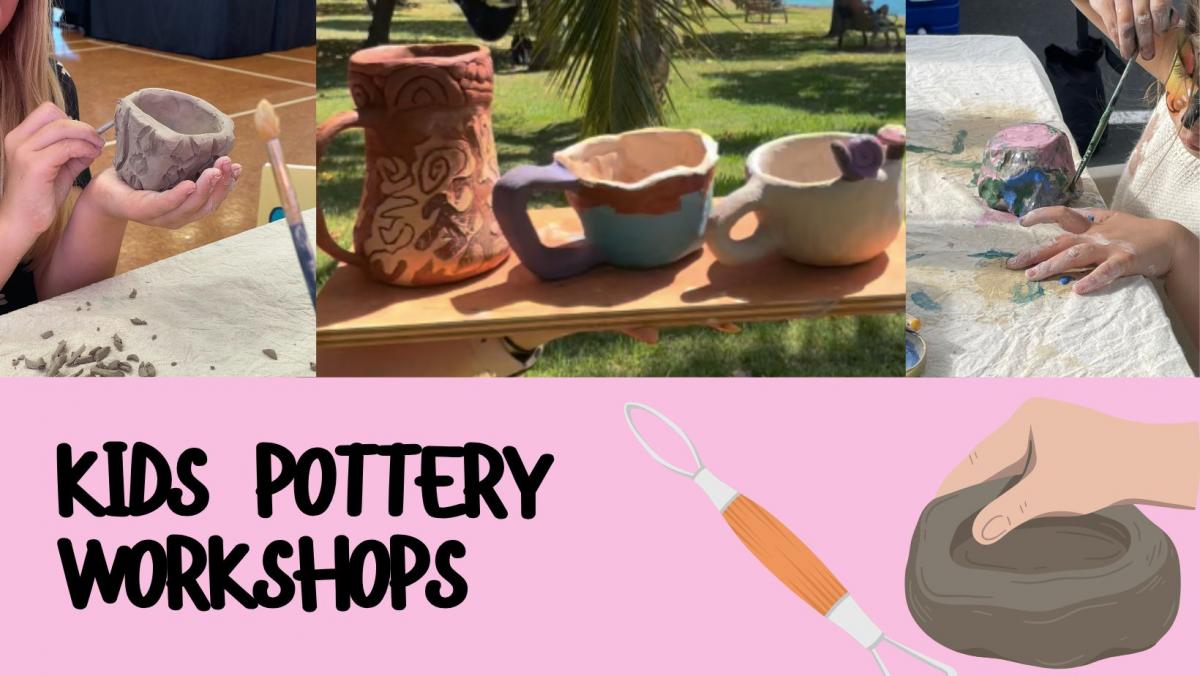
Kids Pottery workshops with artist Madison Cowper
Swap the usual routine for something a little more colourful. Join us at Franklin Arts Centre for a fun morning of creativity. Come, meet new friends and make and paint your very own pottery!
Suitable for ages 4 and up. No experience needed, just bring yourself and your imagination. Wear something you don't mind getting dirty. We’ll provide all the materials, easy guidance, and an open-hearted, supportive teaching environment to encourage you to make whatever you like! Participants will be shown how to make a mug, a bowl, a planter or a pet, but they are more than welcome to bring their own ideas.
🖌 What’s Included:
🌸 Clay and professional guidance
🎨 A wide range of tools, paints and brushes
🎶 A fun, supportive atmosphere with music and good vibes
You can take your unfired piece home, or leave it with us to be professionally fired and glazed for an additional $20. The additional fee can be paid with cash in person. The finished piece can be collected from FAC 2 months after the event.
Session 1 Monday 12th January
Session 2 Tuesday 13th January
10am -12pm
Wētā room, Franklin Arts Centre
To book:
Monday 12th Jan Session: www.eventfinda.co.nz...
Tuesday 13th January Session: www.eventfinda.co.nz...

Poll: Is it ok to regift something that you have been given?
🎁 Holiday Gift Chat!
Do you ever regift?
What’s your take on asking for a receipt if a gift doesn’t fit?

-
79.2% Yes! It's better to regift what I don't need
-
20.8% No. It's the thought and effort that matters

Bloom Pukekohe Op Shop
And that's a wrap for 2025!!!
A huge thank you to all of our customers, volunteers and team who have supported us since we opened in February this year. We appreciate each and every one of you and wish you a safe and happy holiday season.
We will reopen on Wednesday 7th January, 9:30am.

 Loading…