





How to "Lake Onslow" it at home
I installed a small solar rooftop array (3.6kW) and a small residential storage battery (8kWh) in my home in 2017. The battery charges whenever there's excess photovoltaic production during the day, and discharges whenever I consume more electricity than I produce (particularly overnight). Most of the year that works well enough to keep my home's power consumption almost constant between 1 and 1.5kWh per day, rain or shine, peak or off-peak, summer or winter. However, when I get a few days in a row with overcast, cloudy or stormy weather and little solar production, the battery eventually runs flat, and I have to use power from the grid. Initially I didn't care when that happened, as I was paying the same price per kWh all day and year round.
That changed in 2020, with the introduction of time-of-use pricing by both my lines company Northpower and my electricity retailer Ecotricity. The differences were minimal at first, but since then they've been increasing every April 1st, depending on the time of day and day of the week. That opened up an opportunity to make my battery work better for me and the grid during those times of low solar production. Over the last few weeks, with more rainy and cloudy weather hitting Northland, I've been charging up the battery from the grid at night (more or less, depending on the solar production forecast for the following day), so that it discharges during the day and - together with whatever little solar power is produced - keeps the heat pump running at a cozy 21 degrees. That has three distinct advantages. First, it shifts my electricity demand to the night period when ample generation is available and also "cleanest" (i.e. with the highest percentage of renewable generation, usually well above 90%, according to Transpower's live data). It also keeps my grid demand low during peak periods (like 5:30pm to 8pm, when everybody comes home, cooks dinner, runs the heaters, plugs in the EV and so on, which causes a huge spike in electricity demand), because I'm running on stored battery power. And finally, it even saves me money, because due to the time-of-use pricing I only pay 22c/kWh for the off-peak overnight energy to charge my battery and avoid the more expensive peak (38c/kWh) and shoulder (32c/kWh) time periods.
What I'm doing here is basically what Lake Onslow would do on a grand scale - smoothening out the demand on the grid, by storing energy during periods of ample generation and releasing it during peak usage periods. I have no idea if lots of us doing it at the household level, like me, would be better than doing it at grid scale, like pumped hydro - that is a question for the engineers and scientists to answer. Certainly our increasing number of obese luxury EVs could help with doing it at home, while they're parked and plugged in. That way their oversized batteries (often chosen due to our range anxiety and a profound misunderstanding of how an EV works and drives) would at least do some good.
You can argue that I'm only able to do this because I'm retired and have the time to educate myself and look into all of this, and that nobody who's leading a "busy life" would bother with that or inconvenience themselves - and you'd be right. However, there's no reason that what I'm doing manually at the moment couldn't be done by a bit of smart tech, maybe even powered by some good AI, and help us all smoothen out our electricity demand, keep our grid healthy (and us warm and dry), avoid having to overbuild generation capacity and invest more just to satisfy high demand in short peak periods, and make electrification a bit easier and more affordable for all of us. I think this is the kind of "good green tech" that would have a place in a degrowth world.

The Summer Kiwi Quiz is back by popular demand
Grab a copy of your local Stuff newspaper between 1 Jan - 28 Jan and participate in the Summer Kiwi Quiz! Test your knowledge, answer the daily New Zealand based questions, and find out how well you know our beautiful country!
Each correct answer will get you one entry into the draw to WIN 1 of 5 Ooni Karu 2 Portable Pizza Oven bundles, valued at $1024! Each bundle includes: an Ooni Karu 2 Multi-Fuel Portable Pizza Oven, Ooni Karu 2 Carry Cover, Ooni 12" Perforated Peel, Ooni Digital Infrared Thermometer and an Ooni Cookbook: Cooking with Ooni. The more answers you enter correctly, the higher your chance of winning. For more information and to submit your answers, click here
The Team at Stuff


Poll: Do you set New Year’s resolutions?
🎉 2026 is almost here!
We’re curious ... how do you welcome it?
Do you set resolutions, follow special traditions, or just go with the flow?

-
10.1% Yes! New Year, New Me
-
19.5% Yes - but I rarely stick to them
-
70.4% Nah - not for me
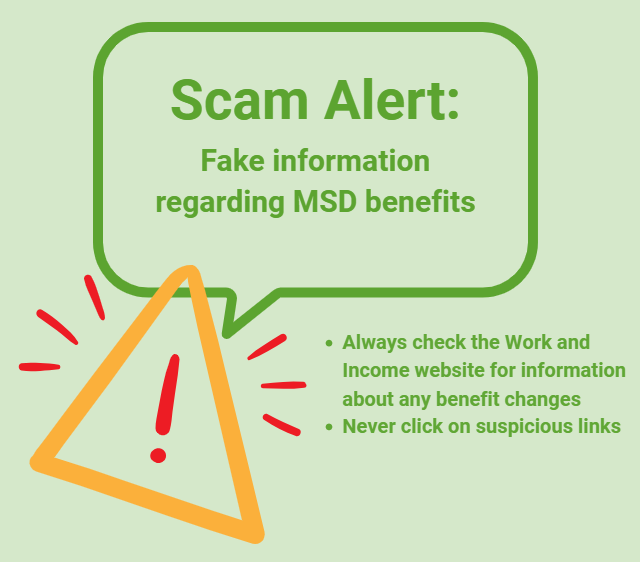
Scam Alert: Fake information regarding December Bonuses from MSD
The Ministry of Social Development is reporting that fake information is circulating about new ‘December bonuses’ or ‘benefit increases’
If you get suspicious communication, please contact Netsafe.
 Loading…