





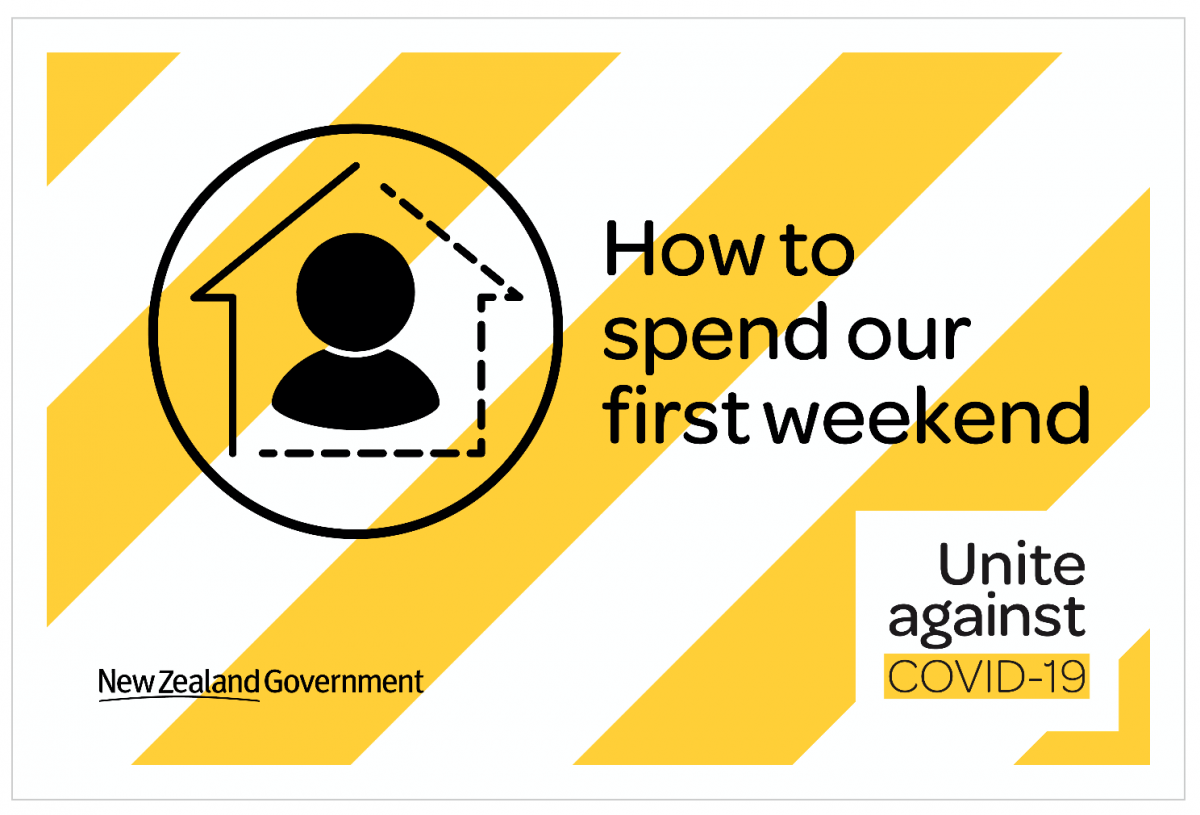
How to spend our first weekend at Alert Level 4
This is a crucial time. You might be tempted to leave the house this weekend to enjoy your free time. But it’s incredibly important that you don’t revert back to ‘normal life’.
Remember why we are all taking these extreme measures. Stay home. Save lives. This breaks the chain and stops the virus spreading.
How to break the chain, and protect us all:
STOP THE MOVEMENT
The virus is spread by us. It can’t move by itself. So we all need to avoid moving around as much as possible, eg:
● don't travel to and from baches or second homes
● avoid driving out of your neighbourhood
● don't travel across the country in campervans
● note that DOC has closed all of its campsites and huts.
KEEP EXERCISE LOCAL
There are very few exceptions to staying home, but exercise is one of them. Going for a walk, run or bike ride is good for your mental health. Just remember to:
● stay close to home. Enjoy your neighbourhood, but go no further
● keep it solitary, or only with those you live with
● keep a 2 metre distance from others.
DO SAFE ACTIVITIES ONLY
● Our emergency services need to be fully available to respond to COVID-19 cases. Any search and rescue operation reduces the ability of first responders to help others.
● Do your bit to help them by only undertaking safe activities, and avoiding going into areas where you could get lost or hurt and require their help. Avoid outdoor activities like swimming, surfing, tramping, or boating, hunting or hiking.
AVOID PUBLIC SPACES
● All bars, restaurants, cafes, gyms, cinemas, pools, museums, libraries and playgrounds are closed.
● Avoid places like beaches where people commonly linger, or are unable to maintain a 2 metre distance.
● Don't touch surfaces others may have touched when outdoors, like park benches or playgrounds.
When you return home carefully wash your hands, and any items you took with you outdoors.

Today’s Mind-Bender is the Last of the Year! Can You Guess It Before Everyone Else? 🌟🎁🌲
I dance in the sky with green and gold, a spectacle few are lucky to behold; I’m best seen in the south, a celestial sight—what am I, lighting up the New Zealand night?
Do you think you know the answer? Simply 'Like' this post and we'll post the answer in the comments below at 2pm on the day!
Want to stop seeing these in your newsfeed? No worries! Simply head here and click once on the Following button.

Scamwatch: How to recognise, avoid and act against scams.
A scam or a fraud is any scheme designed to con you out of money or steal your personal information. If someone contacts you unexpectedly – whether over the phone, through the post, by email, on a website, in person or on social media – always consider the possibility that it may be a scam.
Scammers target lots of people, often for small amounts of money. They constantly evolve their approach making scams harder to spot. Most scams come from overseas, but they may pretend to be locally based — from a reputable company, bank, or government agency, or even from your friends on social media if your account has been hacked. It is very difficult to get your money back once it is sent overseas.
Scams hurt us all. You can protect yourself and others by learning how to spot scams, share what you see and report them.
Figure out if you are being scammed: Use these questions to help figure out if you have been targeted by a scammer.
Article compiled from information kindly supplied by ConsumerProtection.govt.nz
Q&A regarding Neighbourly data breach
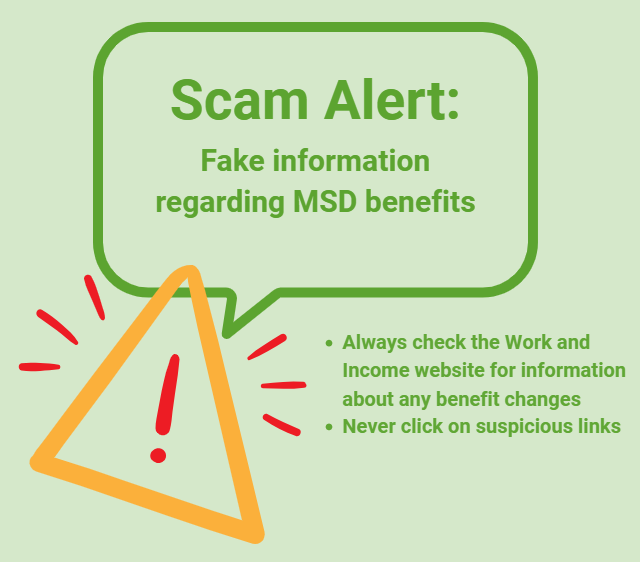
Scam Alert: Fake information regarding December Bonuses from MSD
The Ministry of Social Development is reporting that fake information is circulating about new ‘December bonuses’ or ‘benefit increases’
If you get suspicious communication, please contact Netsafe.
 Loading…