




Covid-19: Older, vulnerable Kiwis urged to ‘hunker down’ when Omicron cases peak
From reporter Cate Broughton:
------------------------------
Older and vulnerable people are being encouraged to “hunker down” in their homes during the peak of the Omicron virus, by some health experts – but others say this isn’t necessary.
New Zealand epidemiologist Professor Tony Blakely is based at Melbourne University and says he encouraged his nearly 80-year-old parents – who live in Rotorua – to stay at home when Omicron cases climb and the virus becomes endemic.
However, Cancer Society medical director Kate Gregory said there was not enough evidence to support giving this advice to cancer patients.
On Sunday, Prime Minister Jacinda Ardern confirmed there was community transmission of the Omicron variant in New Zealand.
The Ministry of Health on Monday reported confirmed Omicron cases in the Nelson-Tasman region, Auckland and Palmerston North.
Blakely said he talked to his parents about continuing their usual activities while using a N95 mask, but “hunkering down” when cases climbed.
“You probably do that for another 10 days until case numbers start to go up in Rotorua, and then you really hunker down. So that’s what we’ve talked about.”
Blakely said “the maths of an epidemic” meant up to half of the population was likely to get infected with Omicron.
“The trick is to make sure the people who get infected are the young ones. So you accept that. You accept there will be hospitalisations associated with that.
But to minimise the hospitalisations, the mortality and morbidity – a bit like trench warfare – you send over the young ones, and you hunker down the oldies and those with co-morbidities.”
Blakely said his parents, who are double vaccinated and have had their booster, had already decided to stay at home when cases climbed.
But he said it was hard to say how long this period should last.
New Zealand’s traffic light setting of red – the highest level of restrictions under the traffic light system –would help to slow the spread of Omicron, and protect essential services from being overwhelmed, but this would also mean the peak of the virus would last longer, Blakely said.
“Here’s the deep irony, the better New Zealanders are at flattening the curve, the longer the hunker down will be.”
Blakely acknowledged prolonged periods of isolation for the elderly and vulnerable could have significant mental health impacts.
In Australia, Omicron has taken a huge toll on the aged-care sector with hundreds of outbreaks in aged care homes. But some families have said the lockdowns were overly cautious and too hard on the elderly residents, most of whom were fully vaccinated.
Wellington GP and Royal New Zealand College of General Practice (RNZCGPs) medical director Bryan Betty said the Australian experience of Omicron showed it could peak for as long as four to six weeks.
Betty said most people – including fit older people – would experience a mild to moderate illness, if infected.
“However, the caveat on this is ... we know the biggest risk factor for a poorer outcome from Covid is age, the elderly population in particular are vulnerable to a poorer outcome with Covid.”
Betty said it would be good for older people to consider staying home, with some support from friends and family, “as the case numbers rise” in the community.
Cancer Society medical director Kate Gregory said there was not enough evidence to date to support advising patients to stay home, but this could change “if we see much higher numbers”.
“If, in a week’s time we are seeing thousands and thousands of cases we may be advising people differently. I think the reassuring thing we’ve seen is that Omicron doesn’t seem to cause such severe disease and we know the vaccine provides very good protection.”
Gregory said for cancer patients the best defence is to be vaccinated and for the people in their households to be vaccinated.”
She said in her experience a “vast majority” of cancer patients had received two doses of Covid-19 vaccine, many with a third primary dose.
“It’s a frightening time, and especially for those who are more vulnerable.
"I think as long as people have the vaccine, wear the mask, do the hand-washing and get tested promptly, I think that’s probably fine. At the moment, that’s the advice we’re giving our patients.”

Poll: Are our Kiwi summer holidays helping us recharge, or holding the economy back? ☀️🥝
There’s growing debate about whether New Zealand’s extended Christmas break (and the slowdown that comes with it) affects productivity.
Tracy Watkins has weighed in ... now it’s your turn. What’s your take? 🤔
-
72.5% We work hard, we deserve a break!
-
16.4% Hmm, maybe?
-
11.1% Yes!

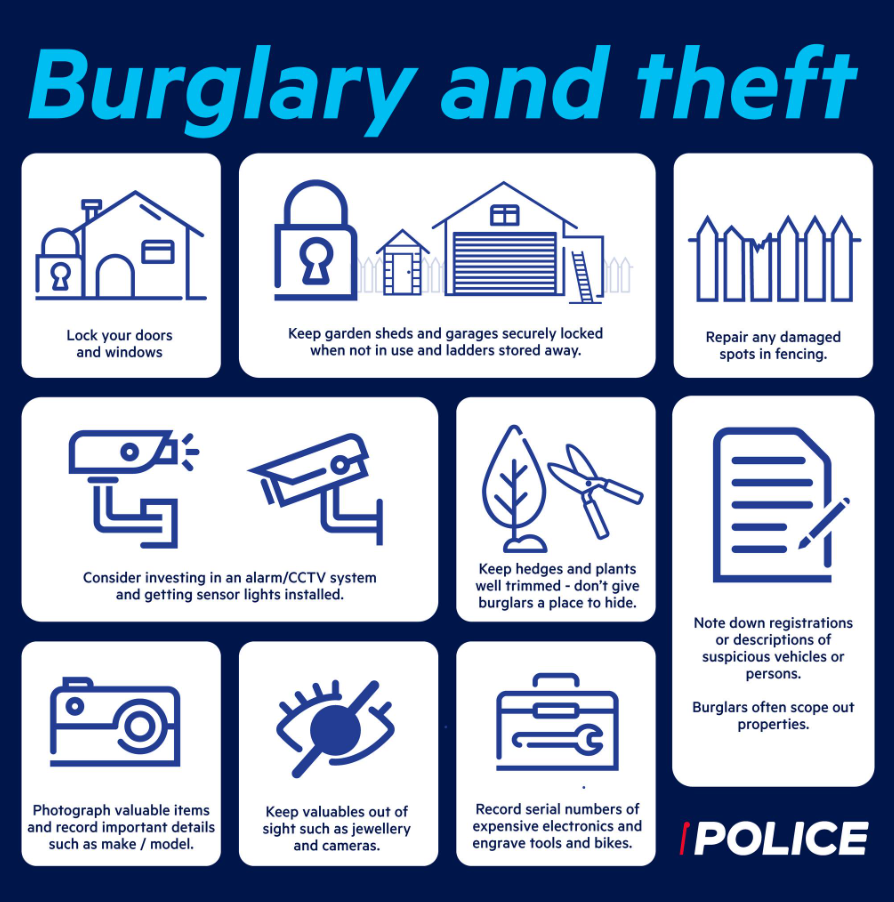
Secure your homes over summer
Police are reminding people to keep their homes secure during the summer months.
Inspector Glenda Barnaby, Christchurch Area Prevention manager, says daytime burglaries are just as common as nightime burglaries.
“Burglaries can be committed at any time of the day, and coming into warmer months there is more opportunity for thieves."
"Although a majority of burglaries involve forced entry through windows and doors, we are starting to see more incidents at insecure premises. Police deal with cases where burglaries are committed in broad daylight, sometimes even while the victim is at home. Good weather means open doors and windows, which makes homes more vulnerable to burglars.”
Inspector Barnaby says there’s a few things people can do to reduce their changes of a burglary being committed.
⚠️ If you’re going outside for gardening, relaxing in the sun, or working in the garage, take a moment to lock your doors and secure your windows first.
⚠️ Do the same at night when you go to bed - keep your doors and windows secure and close your curtains. Fitting window stays means you can get a breeze coming through, while keeping your windows secure.
⚠️ Get to know your neighbours - let them know if you’re going away and look out for one another.”
If you see any suspicious activity, people or vehicles in your neighbourhood, don't hesitate to contact Police.
If you witness or suspect any illegal activity, please call 111 if it is happening now, or make a report through 105 either online or over the phone, if it is after the fact.
Poll: Pedestrian access is being extended to the Ōtakaro Avon River - good idea?
Pedestrian access from one of Christchurch’s favourite streets is being extended all the way to the Ōtakaro Avon River. This new 12m-wide pathway will give you a direct, easy route from the street to the river promenade ... perfect for a stroll, a coffee run, or just soaking up the riverside vibes.
We want to know: In your view, what makes a city people-friendly?
What else should our urban areas be doing to support better community connections?
Curious about the full plans? You can check them out here.
-
90.5% Yes
-
9.5% No
 Loading…