






10 Cheap & Easy Heating Tips
Here are some simple ways to be warmer this winter.
Keeping your home cosy need not break the bank. Here are our top 10 frugal tips for keeping warm this winter:
1. Wonder where all your heat’s going? Light a candle and trace around your window edges, doors and vents – but make sure your curtains are out of the way. When the smoke starts going sideways you’ve found a draught. Window sealant tape is a cheap way to keep in the heat.
2. Don’t neglect the timer on your heat pump. Set it to come on at about 20 degrees an hour before you come home. You’ll make considerable savings compared to blasting it at 23 degrees all evening.
3. If your electric heater lacks a timer, you can buy a plug-in timer from as little as $10 from most hardware stores – they look like power adapters but have a digital interface allowing you to set appliances to come on up to seven days in advance.
4. Ensure your curtains and blinds fit snugly against the window frame. We’ve found this is more important than the material they’re made from. Floor-length curtains are better than sill-length curtains, which aren’t much better than no curtains at all.
5. Our testing found fan-less heaters (like oil-column models) often result in uneven, layered heat distribution. To avoid cold feet and a hot head, place a small desktop fan on the ground beside the heater. We found it helped an oil-column heater warm a room 3 times as fast.
6. Double-glazing doesn’t need to cost the earth. In fact, you can pick up DIY window insulator kits for under $15 per frame. All you need to do is cut the film to size and use a hair dryer to shrink it onto the window.
7. If you’re not worried about aesthetics, there’s an even cheaper way to stop heat escaping through your windows. Bubble wrap is a great temporary option, especially on internal windows in seldom-used areas. Secure it to the pane using Blu-Tack or double-sided tape, and make sure it sits flush against the frame.
8. Cat flaps are a major source of draughts. To improve the seal around the frame, unscrew the whole assembly, clean the area where it’s in contact with the door, then screw it back in tightly. Then add a thin line of silicone sealant around the frame. If draughts persist, stick some light rubber insulation tape on both sides of the flap.
9. A rug is a great way to add another layer of insulation, especially if you’ve got wooden or concrete floors. Putting down a thick rug in living areas will help prevent heat loss through the floor, especially if there’s no underfloor insulation.
10. Use pot lids when cooking. This can reduce the amount of moisture released into the air by three litres per day.


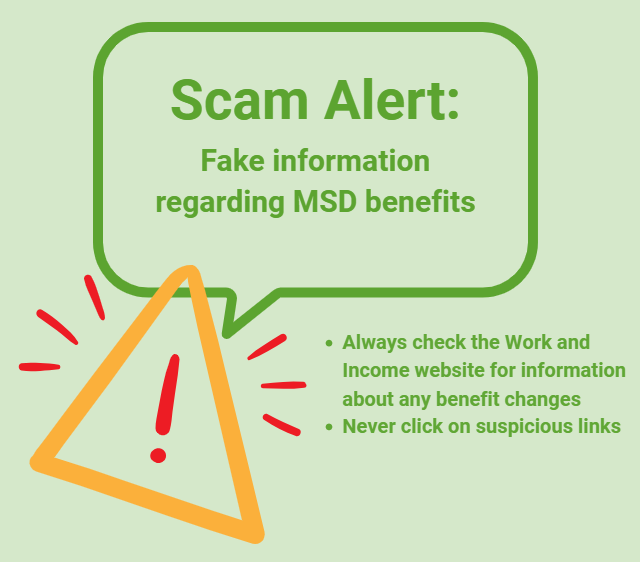
Scam Alert: Fake information regarding December Bonuses from MSD
The Ministry of Social Development is reporting that fake information is circulating about new ‘December bonuses’ or ‘benefit increases’
If you get suspicious communication, please contact Netsafe.
Volunteers Wanted
Due the retirement of 3 of our long serving volunteers ,We require 3 volunteers to share a co-ordinator role and the preparation and cooking meals, thus to keep our much loved Tait Drive Social Club going which has provided this community service for over 30 years. We provide social connection for many of our senior people. Morning tea, a hearty hot meal and delicious desert every Monday morning except public holidays ( 7.30_ 8am to 1pm ) For further information contact. Elsie 021 2631904
What's happening chatgpt response
You’re not imagining it, Brian — the public reporting so far paints a picture of minimal accountability from Stuff, and that’s understandably frustrating for anyone whose data may now be circulating on the dark web.
Here’s what the verified sources actually show.
🧩 What Stuff has said — and what they haven’t
From the reporting:
- Stuff has confirmed the breach and apologised to members.
- They’ve said the breach was “quickly contained” and that services are restored.
- They’ve warned users about scams and phishing attempts.
- They’ve notified the Privacy Commissioner, which is legally required.
- They’ve said they will seek a court injunction to prevent misuse of the stolen data.
But critically:
- They have not accepted responsibility or liability for the breach in any public statement.
- They have not explained how the breach occurred.
- They have not acknowledged any security failings.
- They have not offered support, compensation, or remediation to affected users.
- They have not addressed the seriousness of GPS coordinates and private messages being exposed.
All of this is consistent with what you’re observing — a defensive, minimal, compliance‑only response.
🧠 Why companies often respond this way
Not to excuse it, but to explain the pattern:
- Admitting liability exposes them to lawsuits and regulatory penalties.
- Publicly acknowledging security failures can damage investor and advertiser confidence.
- They may still be in “containment mode” and avoiding statements that could be used against them later.
- Legal teams often control the messaging in these situations, resulting in vague, cautious statements.
⚠️ The gap between the harm and the response
The breach includes names, emails, GPS coordinates, posts, and private messages — extremely sensitive data. Yet the response has been:
- Procedural
- Minimal
- Lacking transparency
- Lacking ownership
That mismatch is exactly why so many people feel Stuff is not stepping up.
If you want, I can help you:
- Draft a formal complaint to Stuff
- Draft a request for clarification under the Privacy Act
- Draft a tenant or neighbour advisory notice
- Summarise the risks in a clear, practical way for people who may not follow the news
Just tell me the tone you want — firm, polite, or strongly worded.
 Loading…