





Suspicious E coli levels at Franz Josef
By local democracy reporter Brendon McMahon:
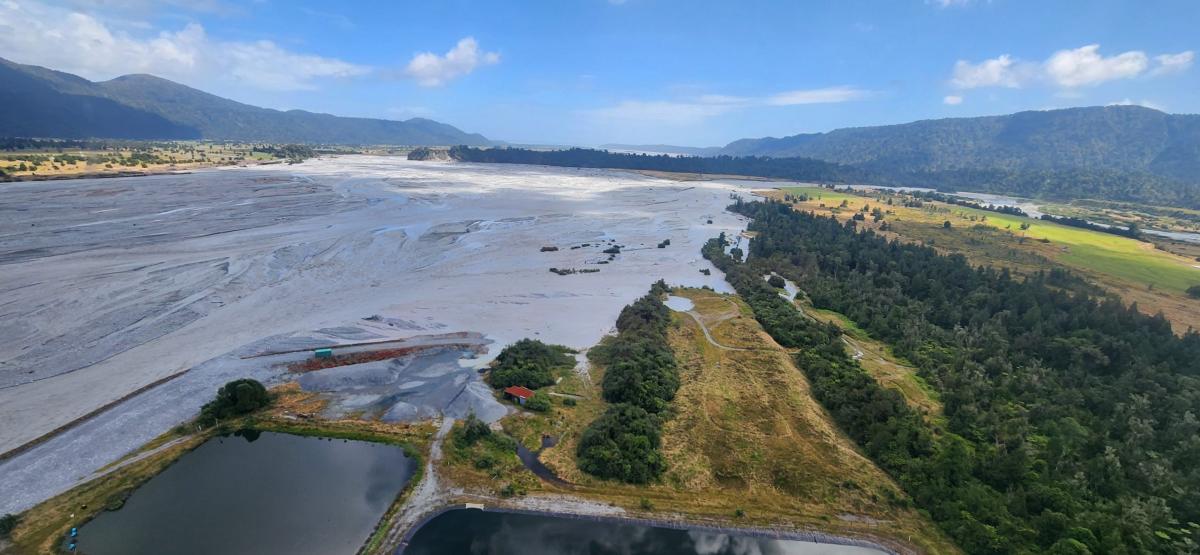
E coli found at the Waiho River in January appears to be linked to seepage near a controversial stopbank and the Franz Josef sewage ponds.
West Coast Regional Council environmental consent monitoring staff detected "a spike" in E coli discharge levels to the Westland District Council's wastewater treatment cells after the Waiho River shifted course in mid-January.
The finding was flagged in council's first quarterly compliance and enforcement report for 2024.
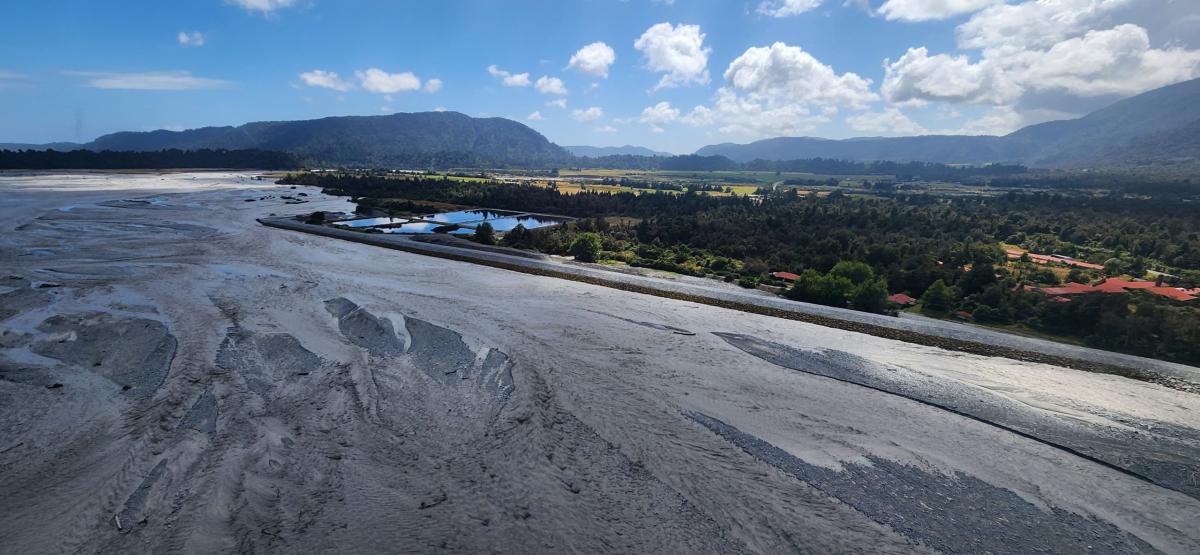
The river began running hard up against the Westland District Council's Havill Wall, in front of the wastewater treatment plan, following a storm in January.
That event saw the Waiho River's avulsion escalate into the separate Tatare Stream catchment to the north.
The Havill Wall was controversially built following a moderate flood event in April 2016 where the river overtopped a stopbank to the north of Franz Josef township. It flooded the now abandoned Scenic Hotel site and swamped the district council's current wastewater treatment site.
The council's quarterly compliance report said the E.coli discharge to the treatment plant's disposal cells was found during regular monitoring by staff.
"Surveillance of the site found an unusual stream of water emanating from below the site," the report said.
A council compliance officer took samples of the surface water below the site.
"This was found to be contaminated with E coli bacteria.
"At the time these samples were taken the Waiho River was pushing up against the Havill Wall outside of the wastewater treatment ponds," the report said.
Subsequent additional protection work by the district council to stop the river from cutting back up towards the ponds had covered over the water sample area.
"The area sampled is now under these works."
Further inquiries were ongoing "to pinpoint" the source of the contamination.
Westland District Council chief executive Simon Bastion on April 18 said his council had been advised by the regional council an area of ponding below the level of the oxidation ponds had been sampled and found to be positive for E coli.
"The level of E coli can fluctuate in any standing or flowing water body depending on natural contamination via wildlife or human interference factors," he said.
Both councils then visited the oxidation ponds.
"A very minor clear stream of river water was visible and flowing along the toe of the stopbank and ponding near the base of Maturation pond 1. This was believed to be the cause of the positive E coli sample."
Bastion said the district council was confident its sewerage treatment ponds at the site were not permeable or posed a risk to the river.
"The new primary and secondary oxidation ponds are lined with PE (Polyethylene) to ensure they do not leak. The oxidation ponds are fit for purpose and have operated satisfactorily since commissioning in 2020."
Bastion said the final effluent disposal cells for the site were located further away from the Waiho River and complied with their Resource Consent.
The council's iwi partner, Te Rūnanga o Makaawhio, were also approached by LDR.
Makaawhio chairperson Paul Madgwick said it was the first he had heard of the incident.
Madgwick said his expectation was that council would have informed the rūnunga about the finding in the spirit of their joint agreement.
The council not keeping them in the loop undermined the formal Mana Whakahono ā Rohe agreement between Makaawhio and the council, he said.
The agreement, first signed four years ago, sets out a working relationship where council and iwi work together on resource management issues.
Regional council chief executive Darryl Lew said the E coli initially found at the site had disappeared, following more tests.
"The recent sampling is clear. That doesn't mean to say we've cleared that line of inquiry," Lew said.
He believed Makaawhio had previously been briefed about the contamination but it was a case of nothing further emerging to keep them in the loop.
However, Lew said he would communicate further.
"We certainly informed the district council."
Escherichia coli (E coli) is a bacteria commonly found in the lower intestine of warm-blooded organisms. Some E coli strain can cause serious food poisoning.

Poll: Do you set New Year’s resolutions?
🎉 2026 is almost here!
We’re curious ... how do you welcome it?
Do you set resolutions, follow special traditions, or just go with the flow?

-
10.6% Yes! New Year, New Me
-
21% Yes - but I rarely stick to them
-
68.4% Nah - not for me
Poll: Is it ok to regift something that you have been given?
🎁 Holiday Gift Chat!
Do you ever regift?
What’s your take on asking for a receipt if a gift doesn’t fit?

-
78.8% Yes! It's better to regift what I don't need
-
21.2% No. It's the thought and effort that matters

Today’s Mind-Bender is the Last of the Year! Can You Guess It Before Everyone Else? 🌟🎁🌲
I dance in the sky with green and gold, a spectacle few are lucky to behold; I’m best seen in the south, a celestial sight—what am I, lighting up the New Zealand night?
Do you think you know the answer? Simply 'Like' this post and we'll post the answer in the comments below at 2pm on the day!
Want to stop seeing these in your newsfeed? No worries! Simply head here and click once on the Following button.

 Loading…