





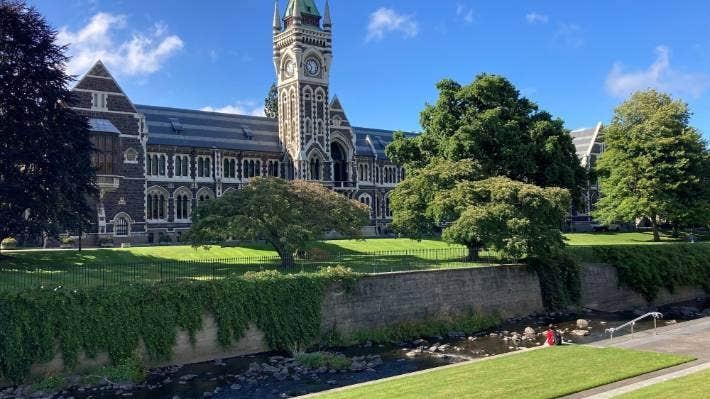
'A perfect storm': inside the decline in student numbers at the University of Otago
From reporter Hamish McNeilly:
The ‘’poor retention’’ of students was a key reason for a decline in domestic enrolments at the University of Otago.
“Student enrolment numbers for 2023 are now clear, and they are down on what we had budgeted for,’’ acting vice-chancellor Helen Nicholson told staff after announcing the tertiary institution faced a $60million deficit, and the possible loss of hundreds of jobs.
“Overall, our enrolments are down by 0.9% on last year, but we were forecasting growth of 4.9%.”
Emails released to Stuff under the Official Information Act about that shortfall, highlights one of the major reasons behind that drop: retention.
‘’Poor retention - which seems to have tripped-up pretty much the whole university sector in its forecasting is the crucial factor in the shortfall,’’ David Thomson, director – strategy, analytics and reporting office, wrote.
At the time of the announcement, Universities New Zealand noted there had been an overall drop in enrolments at the country’s eight universities of around 3%. Enrolments were up at just three – Waikato, Canterbury and Lincoln.
Thomson noted that Otago's poor retention of domestic enrolments accounted for 70% of ‘‘our domestic shortfall’’.
‘‘It appears to be driven in part by the cumulative impact of Covid-19 disruption and fatigue (manifested in various ways, including poorer pass rates). Retention is generally very stable year-to-year, and even in 2021 and 2022 retention held firmly at pre-Covid levels.’’
In the released emails, which were sent to senior university management, Thomson wrote: ‘’it’s worth noting that the Covid-19 pandemic has caused the biggest disruption to tertiary education (globally as well as nationally) since the Second World War’’.
‘‘This, along with a growing tendency over the time of the pandemic towards later/last-minute enrolment decision-making by students, and associated wider instabilities beyond tertiary education, means we are forecasting in a context of unprecedented uncertainty.’’
He stressed that the university’s methodologies, which had previous proved reliable, were being scrutinised.
Thomson also penned another email with the subject line: ‘Backgrounder for Local MPs’ eight days after the proposed cuts were announced to staff.
In that report Thomson noted the large intakes of 2021/2022, and had Otago had more accommodation, domestic enrolments would have been higher, and that Otago had increased its market share amongst other universities.
But the 2023 decline in enrolments was down to a ‘perfect storm’, with about a dozen factors involved, including poor retention, a drop in University Entrance achievement rates, strong job market, and the rising cost of living.
Thomson, in that report to MPs, noted that funding from the Government was not ‘’keeping pace with inflation’’.
‘’What was a relative narrow gap up to 2020 has opened into a chasm, as funding rate increases failed to adjust as the inflation rate rocketed.’’
The released emails come after Prime Minister Chris Hipkins visited the Dunedin campus on Friday, and where he told hundreds of concerned students that any decision about cuts was up to those institutions which had autonomy from the Government.
Sometimes educational institutions had to make difficult decisions, and they were best placed to make those calls, he said.
The Government had given the sector the biggest funding increase in two decades, but ‘’there will never be enough funding’’, he added.
Applications for voluntary redundancy at the university closed on Friday, and the tertiary institution was not in a position to make those numbers available, a spokeswoman said.

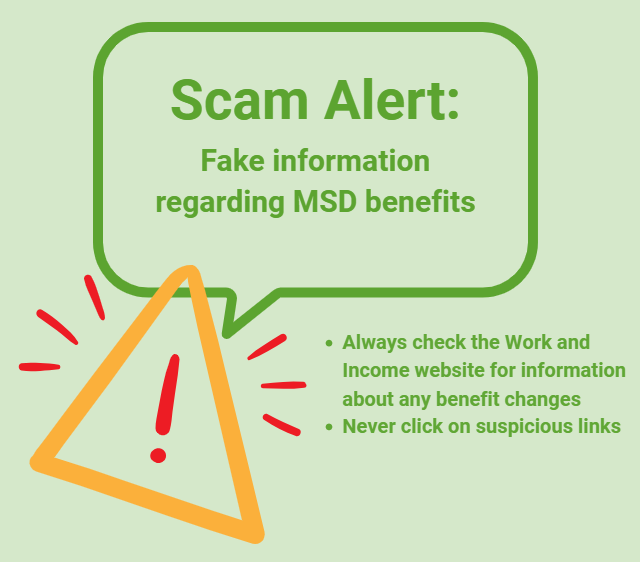
Scam Alert: Fake information regarding December Bonuses from MSD
The Ministry of Social Development is reporting that fake information is circulating about new ‘December bonuses’ or ‘benefit increases’
If you get suspicious communication, please contact Netsafe.
Poll: Do you set New Year’s resolutions?
🎉 2026 is almost here!
We’re curious ... how do you welcome it?
Do you set resolutions, follow special traditions, or just go with the flow?
-
10% Yes! New Year, New Me
-
17% Yes - but I rarely stick to them
-
73% Nah - not for me
Update to Neighbourly members on data breach 06/01/2025 8am
Yesterday in the High Court at Auckland, Neighbourly was successful in being granted an injunction against any unauthorised use of the data taken in a recent breach.
As we alerted you on January 1 and confirmed on January 3, our systems were accessed illegally and members’ information, including names, email addresses, GPS coordinates from the address you provided to us, forum posts and direct member communications were among the data that was accessed.
We acted immediately upon hearing of a potential breach: we temporarily disabled the site, notified members and authorities and worked with our external security consultants to understand if and how it had occurred. We then confirmed the breach with members, safely restored the site to service and began the process of seeking the injunction. Yesterday’s decision by Justice Johnstone prohibits the use of the data by any unauthorised person, and requires them to permanently delete it, or any information obtained from it.
This does not mean that vigilance against scammers is not still required: there is a large industry globally that seeks to use stolen information for identity fraud or to dupe people into providing details of their financial affairs for theft. Again, to keep yourself safe from scammers it is critical that you:
- Don’t click links in emails. Instead, type the web address directly into your browser. This helps ensure you’re visiting a real site, not a fake one
- Enable two-factor authentication where available as this adds an extra layer of security to your data
- Stay alert for phishing emails. Be cautious of unexpected emails asking for personal information, especially ones that create a sense of urgency.
Again, we want to apologise to you for this illegal access to the Neighbourly database and to assure you that we have carefully worked through how this occurred. We have safely secured the site and its services for use and ensured we have robust processes in place so this cannot happen again.
We are continuing to work with the relevant authorities, including the National Cyber Security Centre, on any further steps we need to take.
If you have any further questions please contact us via our customer support team at helpdesk@neighbourly.co.nz.
 Loading…