





'Their time in the light' - the repatriation of cultural taonga
From reporter Hamish McNeilly:
The repatriation of taonga should not be treated as a ‘’moment of loss’’ for a museum.
Those comments come from Dr Gerard O’Regan (Ngāi Tahu), curator Māori at Tūhura Otago Museum, which has announced two significant repatriation of museum acquired artefacts in as many weeks.
The first of those repatriated taonga was a taiaha (a long wooden weapon), returned to Ngāti Maniapoto as part of the iwi’s Treaty settlement, after the museum received advice from local rūnanga.
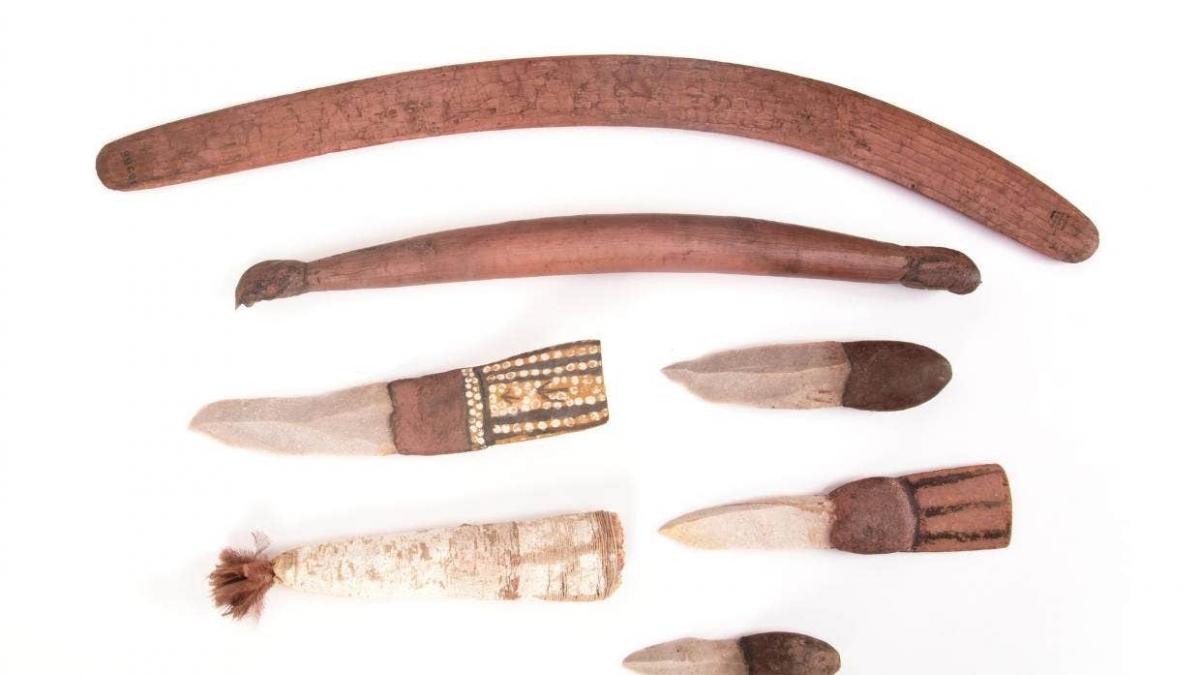
On Tuesday, the museum announced it would also be returning six cultural artefacts, including a kalpunta (boomerang), palya/kupija (adze) and a selection of marttan (stone knives), which are of Warumungu origin, from Indigenous Australians of the Northern Territory.
A few months ago the museum board decided to repatriate a lintel, a carved piece of wood above a door, to Ngāti Kahungunu.
‘’Under the repatriation process a whole lot of taonga are having their time in the light ... and that is where they are doing their work in terms of connecting us back to our people,’’ O’Regan, who has worked in heritage management for three decades, said.
‘’That is why when we look at repatriation we should not look at it as a moment of loss but a moment where we can actually get hold of a whole lot of stories and interrelationships and bring them together ... and create a moment.’’
The items were more than just artefacts in a museum, but treasures or taonga, O’Regan said.
‘’When you start talking about things as ‘treasures’ or taonga, people have to treasure them, and that is about who has connection to them ... who they are important to.’’
Canterbury Museum head of collections and research Sarah Murray said the museum had been involved in several repatriations in recent years.
In July, it was one of five New Zealand museums that returned Moriori karāpuna (ancestors) to the Hokotehi Moriori Trust (Rēkohu/Chatham Islands) in a national repatriation ceremony at Te Papa Tongarewa.
In May, the museum returned three iwi kūpuna (Hawaiian ancestral remains) to Hawaii, and also repatriated tīpuna to Rangitāne in 2009, Rapa Nui in 2018 and Confederated Tribes from the US Northwest in 2019.
Active discussions about repatriating kōiwi tangata (ancestral remains) and taonga were continuing, Murray said.
The museum worked closely with mana whenua and Ōhākī o Ngā Tīpuna, its iwi advisory group, as well as other New Zealand museums as part of the Ngākahu National Repatriation Partnership.
From the early 1970s, the late Maui Pomare was involved with international repatriations, as part of his work at the National Museum and which led to the return of 37 tūpuna (ancestors).
Since July 1, 2003 until May 1, 2017, Te Papa repatriated 420 Māori and Moriori ancestral remains from overseas institutions, with an estimated 600 remaining offshore.
In 2020, four toi moko (ancestral heads) were returned from Germany.
O’Regan said one of the first significant items repatriated from Otago Museum was the wharenui Mataatua – a fully carved Māori ancestral meeting house, which had toured the world before spending 70 years at the museum.
In 1983, the Ngāti Awa trust board began negotiating its return, and it was finally restored and reopened at its Whakatane site in 2011.
And the recent items would not be the last items to be repatriated, with the Otago Museum in ‘’ongoing conversations’’ with North Island-based iwi over other significant items.
O’Regan said it was important to view the story behind each taonga before any meaningful repatriation could be made.
‘’At the moment we are focused on taonga going away, but at some point there will be other taonga finding their way back here.’’
Some repatriation discussions in New Zealand centred not around artefacts, but around ko iwi (ancestral bones).
The museum took the view that if the bones were known to be ‘’from our tribal area, it is our responsibility to look after them’’.
And the museum, alongside the Southland and Canterbury Museums, would continue to store those ko iwi, which are under the management of Ngāi Tahu, until a decision about their future was made.

Poll: Do you set New Year’s resolutions?
🎉 2026 is almost here!
We’re curious ... how do you welcome it?
Do you set resolutions, follow special traditions, or just go with the flow?

-
0% Yes! New Year, New Me
-
33.3% Yes - but I rarely stick to them
-
66.7% Nah - not for me
Poll: Is it ok to regift something that you have been given?
🎁 Holiday Gift Chat!
Do you ever regift?
What’s your take on asking for a receipt if a gift doesn’t fit?
-
78.7% Yes! It's better to regift what I don't need
-
21.3% No. It's the thought and effort that matters

Today’s Mind-Bender is the Last of the Year! Can You Guess It Before Everyone Else? 🌟🎁🌲
I dance in the sky with green and gold, a spectacle few are lucky to behold; I’m best seen in the south, a celestial sight—what am I, lighting up the New Zealand night?
Do you think you know the answer? Simply 'Like' this post and we'll post the answer in the comments below at 2pm on the day!
Want to stop seeing these in your newsfeed? No worries! Simply head here and click once on the Following button.
 Loading…