






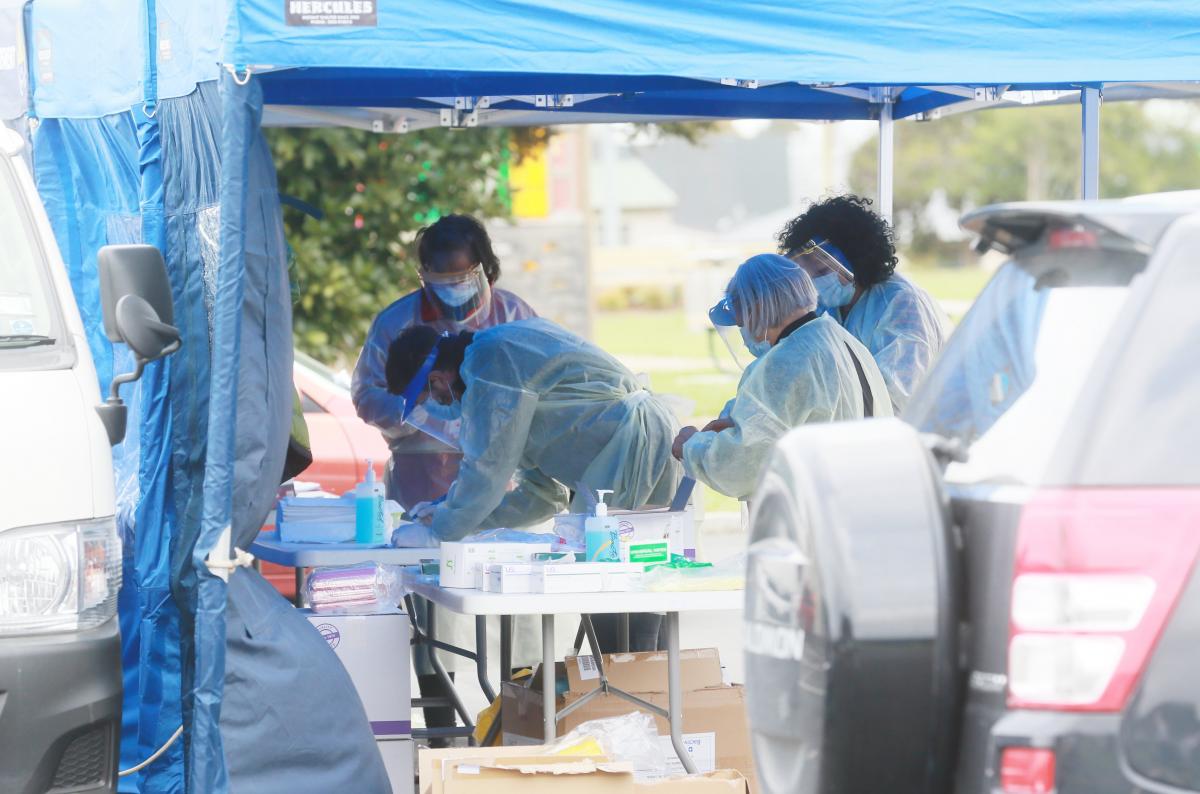
COVID-19: New community case has emerged in Auckland
UPDATED 6.10PM - Thurs 12 November:
- CBD Workers have now been asked to stay home on Friday 13 November.
- Additional locations visited by the community case include Smith & Caugheys, Starbucks and Red Pig Restaurant and Gateau House.
Key locations include:
• A-Z Collections store on High St
• Vincent Residences at 106 Vincent St
• Red Pig Restaurant on Kitchener St, Saturday 6pm – 8.30pm
The woman also visited the following locations briefly; anyone who was there at the same time is asked to get tested and self-isolate if they are symptomatic:
• Smith and Caughey’s department store on Queen St, Saturday 3.50pm – 6pm
• Starbucks on Queen St, Sunday 11.30am – 11.45am
• Sunnytown Restaurant on Lorne St, Sunday 11.30am – 11.45am
• The Gateau House at 332 Queen St, Sunday 6.40pm – 6.50pm
For a full list of locations click here.
_____________
One new coronavirus community case has been confirmed today in Auckland. The AUT student became symptomatic on Monday 9 November and was tested late on 10 November.
During this time they were working at A - Z Collection on High Street from November 8 to November 11, however did not attend the university. Other locations visited by
The Ministry of Health states they are investigating the source of this new community case and are asking people who may have visited A-Z Collections store on High St and 106 Vincent Street from November 7 to the November 12 to isolate and get advice on being tested even if asymptomatic, as well as staying isolated until test results are returned.
Further information will emerge once this person has been interviewed to share any further locations of concern.
If you are sick you can ring Healthline’s dedicated number 0800 358 5453 for any advice and you can find testing locations on the Auckland Regional Public Health Service website.
Poll: Are our Kiwi summer holidays helping us recharge, or holding the economy back? ☀️🥝
There’s growing debate about whether New Zealand’s extended Christmas break (and the slowdown that comes with it) affects productivity.
Tracy Watkins has weighed in ... now it’s your turn. What’s your take? 🤔
-
73.1% We work hard, we deserve a break!
-
16.2% Hmm, maybe?
-
10.7% Yes!

Brain Teaser of the Day 🧠✨ Can You Solve It? 🤔💬
How many balls of string does it take to reach the moon?
(Peter from Carterton kindly provided this head-scratcher ... thanks, Peter!)
Do you think you know the answer? Simply 'Like' this post and we'll post the answer in the comments below at 2pm on the day!
Want to stop seeing these in your newsfeed? No worries! Simply head here and click once on the Following button.


Minimum wage to increase from April next year, Govt commits to bigger rise than last year
The Government will increase the minimum wage by 2% from April next year.
Workplace Relations Minister Brooke Van Velden announced the hourly wage would move from the current $23.50 to $23.95 in line with advice from the Ministry of Business, Innovation and Employment.
“Moderate” increases of the minimum wage formed part of NZ First’s coalition agreement with National.
Van Velden says the new rate, which would impact around 122,500 New Zealand workers, strikes a right balance between keeping up with the cost of living – the Reserve Bank expects inflation to fall to around 2% by mid-2026 – and no adding more pressure to the costs of running a business.
The starting out and training minimum wage would be move to $19.16 to remain at 80% of the adult minimum wage.
The minimum wage was last increased on April 1 this year. That 1.5% increased to $23.50, affecting between 80,000 and 145,000 workers, was not at the time in line with inflation which sat around 2.5% in March.
“I know those pressures have made it a tough time to do business, which is why we have taken this balanced approach. With responsible economic management, recovery and relief is coming,” Van Velden said.
“I am pleased to deliver this moderate increase to the minimum wage that reflects this Government’s commitment to growing the economy, boosting incomes and supporting Kiwis in jobs throughout New Zealand.”
Official documents from the Ministry of Business, Innovation and Employment (MBIE) show the department provided the Minister with seven options for the minimum wage, ranging from maintaining the current rate or increasing by 3% up to $24.20 per hour.
A 2% increase was recommended, the Ministry said, as this was ”considered to best balance the two limbs of the objective - protecting the real income of low-paid workers and minimising job losses."
“CPI inflation forecasts suggest annual inflation will ease to be within the 2–2.5% range in the first half of 2026 and remain relatively stable at around 2% from June 2026 through to 2028.
“These forecasts indicate that a 2% increase would largely maintain the real income of minimum wage workers relative to the level of the minimum wage when it last increased on 1 April 2025.”
Officials said a 2% increase wouldn’t have significant employment restraint effects.
But given recent economic data, including a Gross Domestic Product (GDP) contraction and elevated unemployment, MBIE said it favoured a “cautious approach”.
“A 2% increase to the adult minimum wage is expected to affect approximately 122,500 workers, including those currently earning at or below the minimum wage, or between the current rate and $23.95.”
The key groups that would be impacted include youth, part-time, female, and Māori workers, as well as sectors like tourism, horticulture, agriculture, cleaning, hospitality, and retail.
“While these workers would benefit from a wage increase, they may also be more exposed to employer responses to increased labour costs such as reduced hours or adjustments to non-wage benefits,” the ministry said
“The estimated fiscal cost to government from this increase is relatively modest, at $17.5 million annually, consistent with the small cost estimates across all rate options.”
=====================================================
 Loading…