






Mangere Bridge information day this Saturday
People will be able to walk over the Manukau Harbour this weekend where the new Mangere Bridge is being built.
They are invited to an information day this Saturday for the old Mangere Bridge replacement project.
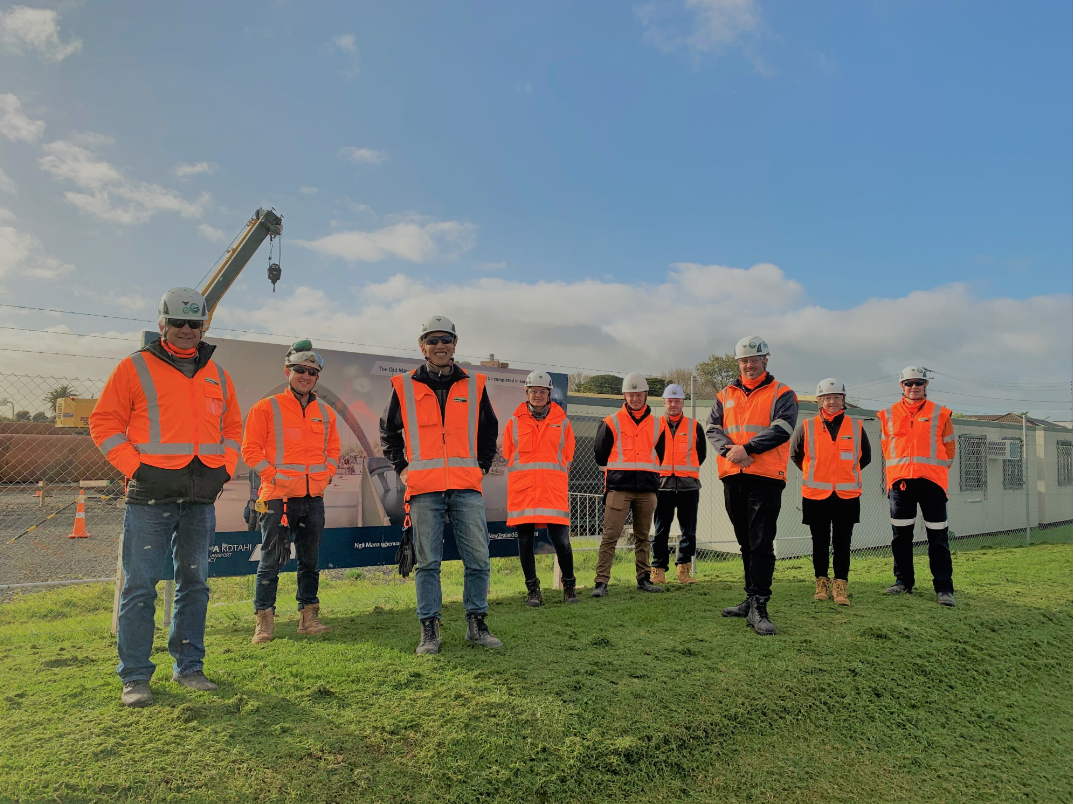
People can meet the team behind the bridge build and learn more about the new walking, cycling and fishing bridge spanning the harbour.
The information day will be held from 9.30am to 1pm at the Waterfront Reserve in Mangere Bridge.
Visitors will be able to walk on the temporary staging, which is like a temporary road in the harbour, said Waka Kotahi senior manager project delivery Andrew Thackwray.
The staging allows cranes to move out over the water alongside where the new bridge is under construction.
Earmarked for completion in 2022, the new bridge will restore the walking, cycling and fishing connection to the Mangere Bridge and Onehunga communities.
The new bridge will boost space between the piers for waka, canoes and small watercraft to sail through Mangere Inlet.
Thackwray said the event will be a great chance for people to see close up what the team is doing.
"They are very proud of the progress they are making and will be on site to explain what they're doing and answer any questions," he said.
A sausage sizzle and activities to entertain children are also planned.
A limited number of people will be able to check out the big cofferdams created in the harbour to build the bridge piers.
A cofferdam is a watertight box made from joined steel plates driven up to 20 metres below the seabed and rising above the water level at high tide.
Workers had to pump 1.4 million litres of water to create a dry working space in one of the biggest cofferdams which stretches 25 metres by 12.5 metres.
A crane lowered a digger into the cofferdam to dig through 2.5 metres of mud to reach the seabed.
Workers then had to remove 1100 cubic metres of mud - enough to fill 187 trucks.
They poured a concrete floor which will be the foundation of construction of the first pier.
“The cofferdams and the temporary staging will only be in place for as long as they’re needed to construct the bridge, so this is a one-off chance for some people to come and see them up close and understand what they’re for," Thackwray said.
Tickets to the site tour will be limited and subject to health and safety requirements.
This part of the information day may be cancelled if bad weather hits.

Poll: Are our Kiwi summer holidays helping us recharge, or holding the economy back? ☀️🥝
There’s growing debate about whether New Zealand’s extended Christmas break (and the slowdown that comes with it) affects productivity.
Tracy Watkins has weighed in ... now it’s your turn. What’s your take? 🤔
-
73.1% We work hard, we deserve a break!
-
16.2% Hmm, maybe?
-
10.7% Yes!

Brain Teaser of the Day 🧠✨ Can You Solve It? 🤔💬
How many balls of string does it take to reach the moon?
(Peter from Carterton kindly provided this head-scratcher ... thanks, Peter!)
Do you think you know the answer? Simply 'Like' this post and we'll post the answer in the comments below at 2pm on the day!
Want to stop seeing these in your newsfeed? No worries! Simply head here and click once on the Following button.


Minimum wage to increase from April next year, Govt commits to bigger rise than last year
The Government will increase the minimum wage by 2% from April next year.
Workplace Relations Minister Brooke Van Velden announced the hourly wage would move from the current $23.50 to $23.95 in line with advice from the Ministry of Business, Innovation and Employment.
“Moderate” increases of the minimum wage formed part of NZ First’s coalition agreement with National.
Van Velden says the new rate, which would impact around 122,500 New Zealand workers, strikes a right balance between keeping up with the cost of living – the Reserve Bank expects inflation to fall to around 2% by mid-2026 – and no adding more pressure to the costs of running a business.
The starting out and training minimum wage would be move to $19.16 to remain at 80% of the adult minimum wage.
The minimum wage was last increased on April 1 this year. That 1.5% increased to $23.50, affecting between 80,000 and 145,000 workers, was not at the time in line with inflation which sat around 2.5% in March.
“I know those pressures have made it a tough time to do business, which is why we have taken this balanced approach. With responsible economic management, recovery and relief is coming,” Van Velden said.
“I am pleased to deliver this moderate increase to the minimum wage that reflects this Government’s commitment to growing the economy, boosting incomes and supporting Kiwis in jobs throughout New Zealand.”
Official documents from the Ministry of Business, Innovation and Employment (MBIE) show the department provided the Minister with seven options for the minimum wage, ranging from maintaining the current rate or increasing by 3% up to $24.20 per hour.
A 2% increase was recommended, the Ministry said, as this was ”considered to best balance the two limbs of the objective - protecting the real income of low-paid workers and minimising job losses."
“CPI inflation forecasts suggest annual inflation will ease to be within the 2–2.5% range in the first half of 2026 and remain relatively stable at around 2% from June 2026 through to 2028.
“These forecasts indicate that a 2% increase would largely maintain the real income of minimum wage workers relative to the level of the minimum wage when it last increased on 1 April 2025.”
Officials said a 2% increase wouldn’t have significant employment restraint effects.
But given recent economic data, including a Gross Domestic Product (GDP) contraction and elevated unemployment, MBIE said it favoured a “cautious approach”.
“A 2% increase to the adult minimum wage is expected to affect approximately 122,500 workers, including those currently earning at or below the minimum wage, or between the current rate and $23.95.”
The key groups that would be impacted include youth, part-time, female, and Māori workers, as well as sectors like tourism, horticulture, agriculture, cleaning, hospitality, and retail.
“While these workers would benefit from a wage increase, they may also be more exposed to employer responses to increased labour costs such as reduced hours or adjustments to non-wage benefits,” the ministry said
“The estimated fiscal cost to government from this increase is relatively modest, at $17.5 million annually, consistent with the small cost estimates across all rate options.”
=====================================================
 Loading…