





Inland Revenue on the hunt for 170,000 bank account numbers to process Cost of Living Payment
As many as 170,000 people are at risk of missing out on the Government's $350 Cost of Living Payment, because the Inland Revenue Department (IRD) doesn't have their bank account numbers.
Addressing Parliament's Finance and Expenditure Committee, IRD acting commissioner and chief executive Cath Atkins said she is confident the tax department can track down most of these people.
It has already sourced around 130,000 bank account numbers, which it didn't have.
But IRD believes it'll struggle to contact 11,000 of the 170,000 people it still needs to get hold of.
Around 2.1 million people, who earn less than $70,000 a year (before tax) and don't receive the Winter Energy Payment, are eligible for the payment, unveiled at the May Budget.
Atkins said as many as 750 IRD staff will be required to administer the scheme at peak times when payments fall due.
She said 300 of these staff are being contracted for a five-month period, largely to deal with inquiries from the public.
The payment will be paid in three monthly instalments of $116.67 starting from August 1.
Those eligible don't need to apply; they'll receive it automatically. But they may like to check, via the myIR online portal, whether IRD has their correct bank account number.
People have until March 31, 2023 to update their details with IRD to get the payment.
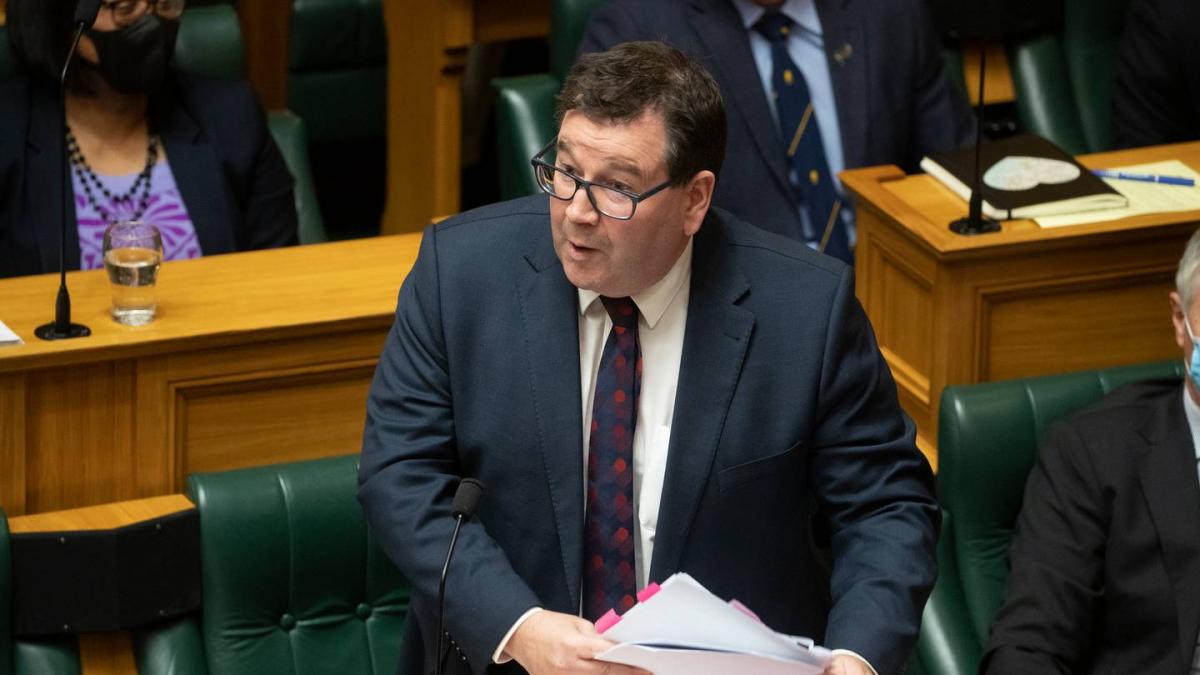
Finance Minister Grant Robertson has allocated $814 million towards the payment.
IRD confirmed $14m of this will go towards the 300 contractors' wages, office space, IT infrastructure, postage and printing.
Pressed by National MPs Andrew Bayly and Nicola Willis about the cost associated with administering the payment, Atkins said some of the contractors had been working on projects that are wrapping up, including IRD's Business Transformation project, and Covid-related support.
She said it was important IRD was adequately staffed to address public inquiries, which are likely to escalate when payments fall due.
Green MP Chlöe Swarbrick asked Revenue Minister David Parker, who also appeared before the committee, whether IRD would be able to employ fewer contractors if the payment was more universal.
Parker said this would simply cost a lot more.
He also said employing 300 contractors isn't as material as one might think, given IRD has been cutting staff in recent years.
It employed 4106 full-time equivalents in the year to June 2021 – a drop from 5401 in 2017.
Parker said IRD needs to be able to continue doing its other work while it administers the Cost of Living Payment.
He said IRD having more people's bank account numbers will also make the tax system more efficient in the long term.
National Party finance spokeswoman Nicola Willis characterised the Cost of Living Payment as a "bureaucratic dog's breakfast".
"IRD is now having to build a massive bureaucracy to administer it, and taxpayers are being landed with the bill," she told.
She questioned exactly how much the 300 contractors were being paid, noting IRD's recruitment effort is taking place at a time the labour market is exceptionally tight. IRD wouldn't disclose this information.
Furthermore, she said, "Far from targeted, IRD has confirmed that many high-income earners will qualify while thousands of lower income earners will miss out due to missing bank account details.
"Instead of going into bureaucratic overdrive, the Government should have simply inflation-adjusted existing income tax brackets."
Act leader David Seymour believed the Cost of Living Payment exemplifies "rushed policy by ministers who don't ask practical questions".
"The payment is inflationary to the extent that it helps," he told.
"The Prime Minister said, earlier in the week, that she didn't think it would be inflationary because it wouldn't last very long. Well, it also makes it less effective at achieving its underlying goal.
"There are a whole lot of reasons why it's not a good policy. The only conclusion you can come to is, they felt a need to do something to address the political imperative of having an answer to the cost of living crisis."
======================================================

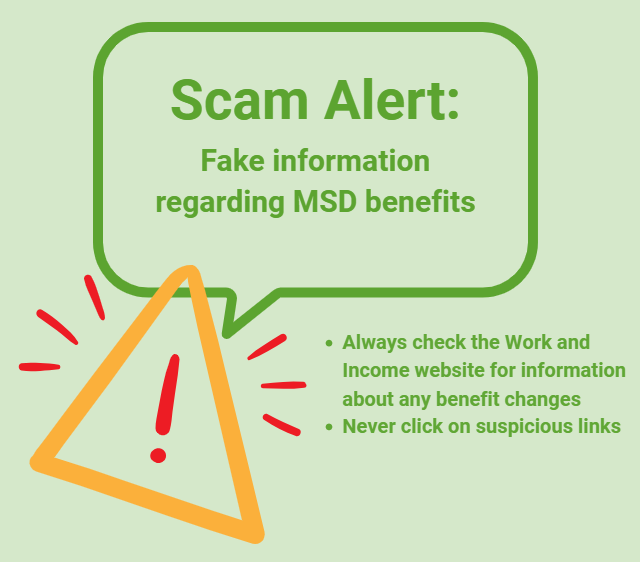
Scam Alert: Fake information regarding December Bonuses from MSD
The Ministry of Social Development is reporting that fake information is circulating about new ‘December bonuses’ or ‘benefit increases’
If you get suspicious communication, please contact Netsafe.
Poll: Are Kiwis allergic to “exuberance”? 🥝
In The Post’s opinion piece on the developments set to open across Aotearoa in 2026, John Coop suggests that, as a nation, we’re “allergic to exuberance.”
We want to know: Are we really allergic to showing our excitement?
Is it time to lean into a more optimistic view of the place we call home? As big projects take shape and new opportunities emerge, perhaps it’s worth asking whether a little more confidence (and enthusiasm!) could do us some good.

-
41.5% Yes
-
33.6% Maybe?
-
24.9% No
Tips and advice to stay street smart this summer
Summer is finally here!
Time for BBQs, holidays, Christmas, travelling and events galore.
We've put together a whole range of tips and advice so you can put your feet up and relax this summer, knowing that it's all good in your hood.
Our first piece of advice to make your neighbourhood safer this summer, is to get to know the people who live around you! People who know each other are more likely to offer, accept, and ask for help when needed.
Shop Safe - Preventing Fraud & Scams
You might find yourself making more purchases than usual at this time of year, and many of those might be online, so here's a set of tips and advice to make sure you stay safe and secure whilst doing your Christmas shopping this year. And remember to think about the security of your online shopping when it gets delivered!
Heading away this summer?
It's a busy time of year on new Zealand roads and everyone wants to get from A to B safely. It's also important that your home stays safe while you're away enjoying your 'home away from home'. We have put together a set of tips and advice to help make that happen!
Keeping your car, home and belongings safe
From recording valuable possessions to securing locks, keeping valuables hidden and informing trusted neighbours that you will be away, there are many things you can do to keep your car, home, and belongings safe. Here's a bunch of handy tips!
Party planning checklist and fire-wise tips
Whether it’s a small backyard gathering, or a big celebration for a special occasion, a little extra planning and consideration will go a long way in keeping you, your guests, and your neighbours happy. We also have some tips to make sure you and your families stay fire-wise during summer.
Get to know your neighbours - look out, reach out, help out
The most important action you can take to make your community safer is get to know the people who live around you. People who know each other are more likely to offer, accept, and ask for help when needed.
It is also important to know who to contact in an emergency and when to use the non-emergency contact for NZ Police. Learn more about Neighbourhood Support, get tips on getting to know your neighbours and the best way to contact the police below.
Strong communities start with small hellos
In terms of crime prevention, your neighbours are the best and cheapest security system you can have. You don't have to love your neighbour, but at least get their number just in case!
===================================
Have a happy, safe and connected summer!
===================================
 Loading…