






New Zealand and Australia reach deal over refugee resettlement offer
Australia has taken up New Zealand's offer to resettle up to 150 refugees per year nearly a decade after the offer was first made.
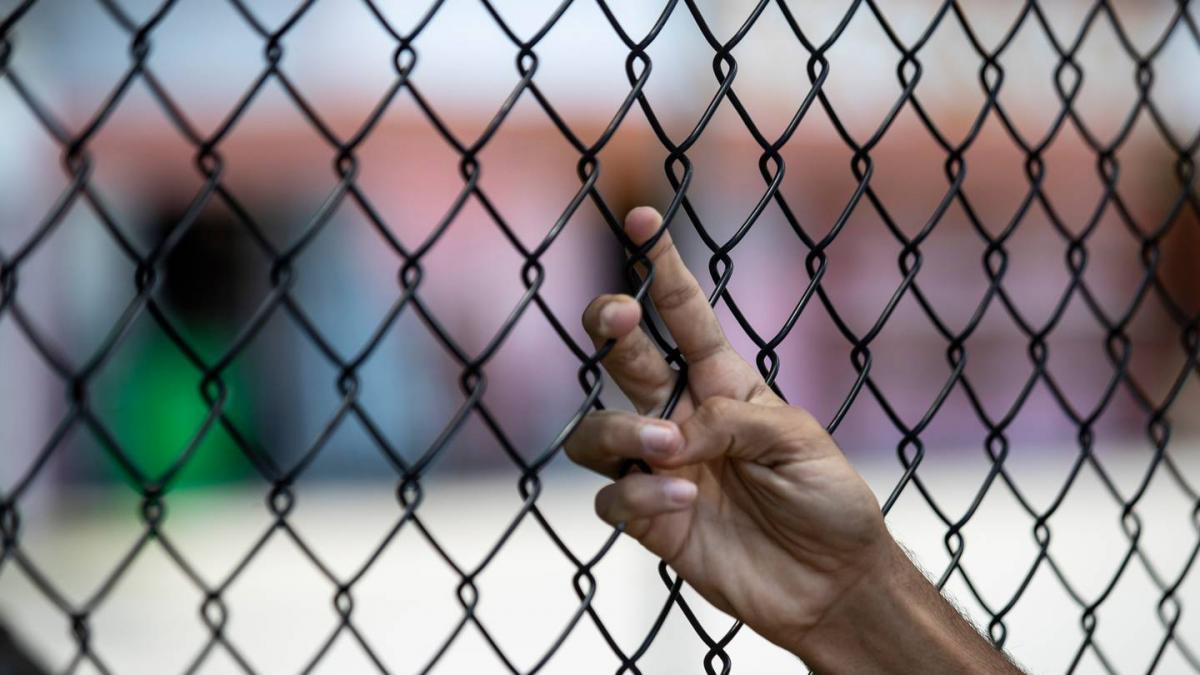
The deal, first offered in 2013, would mean asylum seekers, some who have been held indefinitely in limbo in such centres on Manus Island and Nauru, could soon come to New Zealand.
The initial three-year arrangement would see up to 450 people resettle in New Zealand through the existing refugee quota programme, and initially cover those who met certain criteria.
The Green Party has welcomed the deal to resettle those "held unlawfully in Australia's prison islands" but says the number should be over and above the current quota of 1500 a year - a commitment New Zealand has not met for three years.
In announcing the deal, Immigration Minister Kris Faafoi said the long-standing offer reflected New Zealand and Australia's close relationship.
"New Zealand is very pleased that Australia has taken up the offer to resettle up to 150 refugees annually for three years," Faafoi said.
"New Zealand has a long and proud history of refugee resettlement and this arrangement is another example of how we are fulfilling our humanitarian international commitment.
"We are pleased to be able to provide resettlement outcomes for refugees who would otherwise have continued to face uncertain futures."
Green Party human rights and refugee spokeswoman Golriz Ghahraman said they welcomed the "long overdue deal" to resettle those held "unlawfully in Australia's prison islands".
"We welcome wholeheartedly the refugees preparing to travel to Aotearoa from Manus and Nauru.
"But I think Australia deserves some very harsh criticism on the delay. We know Australia is the kind of country where successive governments have been torturing refugees on prison islands."
Ghahraman said the deal should come on top of the existing quota, which New Zealand had not met for three years due to the pandemic. This would also allow New Zealand to better support the crisis in Ukraine and Afghanistan.
Since July 2019, just over 1500 quota refugees have arrived here, out of 4500 spaces.
Last year just 263 arrived. Additionally spaces for 300 family members a year have not been filled, with just 164 arriving over the past nearly three years from 900 spaces.
Ghahraman said New Zealand needed to do more to pressure Australia to shut its offshore detention centres permanently.
"We have our closest ally, right next door, holding people in conditions that have been described by the likes of Amnesty International and the United Nations... as being akin to torture.
"Australia is torturing people right next door in our Pacific neighbourhood. New Zealand needs to be a very loud voice of criticism and work constructively to shut down the centres."
The deal was struck by former prime ministers John Key and Julia Gillard in 2013 when New Zealand offered to assist with the thousands of asylum seekers arriving in the country, many by boat.
Key had said at the time it was an acknowledgement that New Zealand should share the burden. Per capita, Australia takes in about twice as many refugees per year as New Zealand.
The Australian Government had been concerned the agreement could see refugees who came to New Zealand try to travel back to Australia after they gained residency and/or citizenship, and settle permanently there.
Faafoi has said any refugees arriving here would eventually get the full rights and responsibilities of New Zealand citizens, and any decision on them being able to travel to Australia was for Australia.
Australia's Minister for Home Affairs Karen Andrews said despite the deal their "strong border protection policies had not changed and no one who attempted to travel to Australia illegally by boat would ever settle here".
"This arrangement does not apply to anyone who attempts an illegal maritime journey to Australia in the future.
"Australia remains firm – illegal maritime arrivals will not settle here permanently.
"Anyone who attempts to breach our borders will be turned back or sent to Nauru."
Under the deal, all applications to resettle in New Zealand would undergo the same quota processes – including credibility, security, risk and biometric checks and health assessment – that New Zealand applies to all refugees through the United Nations High Commissioner for Refugees process.
Refugees under the deal could include those who are in Nauru or are temporarily in Australia under regional processing arrangements, along with those who meet general quota requirements and/or are referred to New Zealand by the UNHCR.
It would include those who are not engaged in other third-country resettlement pathways, such as the United States resettlement arrangement.
======================================================
/www.nzherald.co.nz/nz/new-zealand-and-australia-reach-deal-over-refugee-resettlement-offer
7 tips for buying your Christmas ham
It’s the centerpiece of the Christmas table, so when you’re peering into the supermarket chiller or ordering from the butcher, choosing the perfect ham can feel like a daunting task.
Here are some things to keep in mind when choosing one to bring home with you.
1. What type of ham to buy
You’ve got some decisions to make when it comes to the type of Christmas ham you’re going to buy.
Cooked on the bone (COB) ham is the traditional Christmas ham. If you’re buying a half ham, you’ll have the choice of the shank or fillet end. The shank is the part with the bone sticking out that gives the ham that traditional look. The fillet end is the round part that gives more meat. If you’re deciding whether to get a whole ham or half, consider how quickly you’ll be able to eat it all. You only have about a week to eat an opened ham before it will go off, so it can be a good idea to get two halves. That way you can eat one half during the week of Christmas and save the other for January.
Champagne ham has had the bone removed and only has the hock left on, so it’s easier to carve.
Pressed ham – also known as continental ham – has had the bones removed and has been pressed, so it’s also easy to carve.
2. Check the pork percentage
The label on a packaged ham will say what percentage is actually meat. Hams are injected with brine, to keep them moist, and additives. The brine injection level for manufactured hams is usually between 10% and 35% of the ham's weight. A manufacturer that wants to produce a cheap ham will add more water to bump up the weight.
3. Know how to tell if it’s New Zealand pork
By far, most of the hams bought in New Zealand this Christmas will be from pigs reared overseas. New Zealand imports pork from about 25 countries. It’s frustrating for New Zealand pig farmers because this ham can come from farms that don’t have to meet the same animal welfare standards as we have in this country. As a result, overseas meat is often cheaper.
If buying New Zealand pork is important to you, look for:
words on the packaging like ‘New Zealand pork’ or ‘born and raised in New Zealand’
4. Have a good look at the ham
If you’re going to be glazing your ham, look for one that is covered in a finger-thick layer of fat. This will give you the thickness you need to make good score lines.
New Zealand Pork’s website also advises looking for a ham that has a meaty texture rather than one that looks wet or rubbery. It says the ham’s skin should be smooth with even colouring. “If the knuckle is sunken, it may be overcooked. If the rind is buckled or uneven, it may be a sign of dryness.”
5. Ask a lot of questions
If you’re ordering your pork from a butcher, you probably won’t be able to compare hams like you would at the supermarket. So, make sure you ask lots of questions, now that you know what you’re looking for.
You could ask:
Is the ham made from New Zealand born and farmed pork?
What will be its injection percentage?
What flavours will it have?
You could even ask if there’s a glaze the butcher thinks would work particularly well with those flavours.
6. Know what size you’ll need
If the ham is the only meat on your Christmas menu, New Zealand Pork advises allowing 1kg of ham for five people. Or if you’ve got other meat options, 1kg will feed about six to eight people.
7. Know the best hams in New Zealand
The best hams of the year were awarded at the 100% New Zealand Bacon & Ham Awards earlier in the year so you can check out which ones got medals. Some of them are only available in the city the butcher is based, but a Farmland boneless ham available nationwide won a gold award and Woolworths bone-in and boneless hams picked up bronze.
====================================================

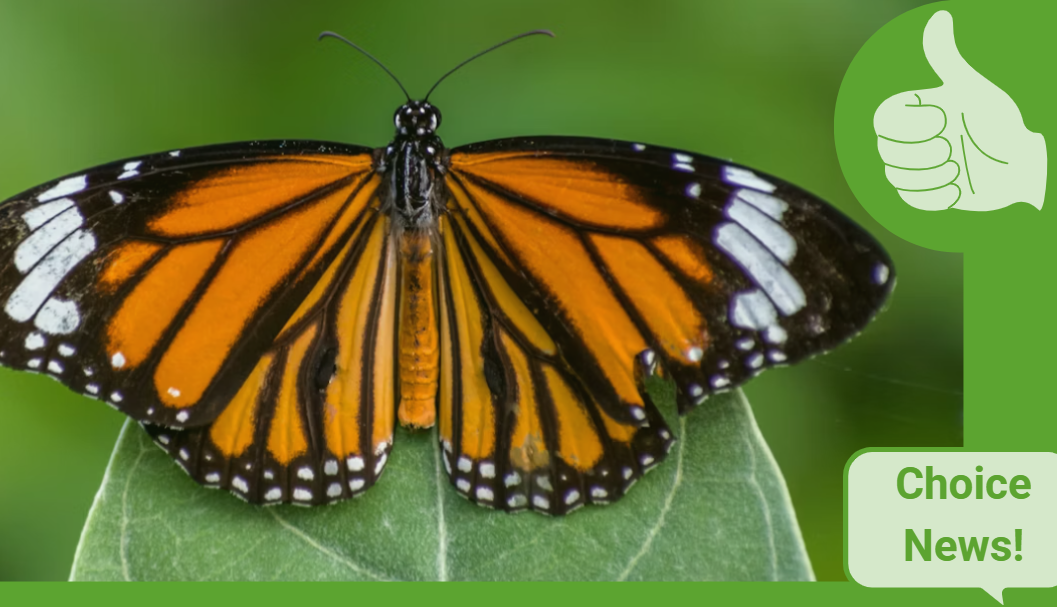
Some Choice News!
Many New Zealand gardens aren’t seeing as many monarch butterflies fluttering around their swan plants and flower beds these days — the hungry Asian paper wasp has been taking its toll.
Thanks to people like Alan Baldick, who’s made it his mission to protect the monarch, his neighbours still get to enjoy these beautiful butterflies in their own backyards.
Thinking about planting something to invite more butterflies, bees, and birds into your garden?
Thanks for your mahi, Alan! We hope this brings a smile!
From National MP--CHRIS BISHOP----'Twas the night before taxes'
’Twas the night before taxes, and all through the nation,
Hard-working Kiwis were still feeling Labour’s inflation.
While their payslips were hidden with care,
They prayed Hipkins and Chloë wouldn’t take their ‘fair’ share.
When out by the Beehive there rose such a shout,
The Greens’ TikTok was not getting enough clout.
“We need more taxes!” Chloë said with a flair,
“For justice! For progress! For… I’ll think of the rest later, I swear.”
Hipkins quickly agreed, as Chloë and the Greens held the key,
He knew he couldn’t win without their guarantee.
But before he could breathe, Te Pāti Māori came with a glare,
Holding a wishlist of taxes that reached mid-air.
And so the trio assembled, a most troublesome sight,
Ready to dream up new taxes till the early midnight.
But no need to worry, National set things right,
We delivered tax relief that finally eased the bite.
And with new roads, schools, and hospitals underway,
Our infrastructure is getting stronger everyday.
Fixing the basics and building the future, as we’ve said,
So every Kiwi family can finally get ahead.
=======================================================
 Loading…