Know what’s happening
Access the private noticeboard for verified neighbours near you. Keep informed about any suspicious activity, send urgent updates to your neighbours when required and discuss emergency planning.
Get to know your neighbours
Browse the directory and start getting to know your neighbours. Don’t want to post to the whole neighbourhood? Send a private message.
Buy, sell and give away
Want to declutter your garage? Buy some used household items? Give away some garden stuff? Become a verified neighbour to browse and post items for sale. Trading is simple when everyone lives nearby.
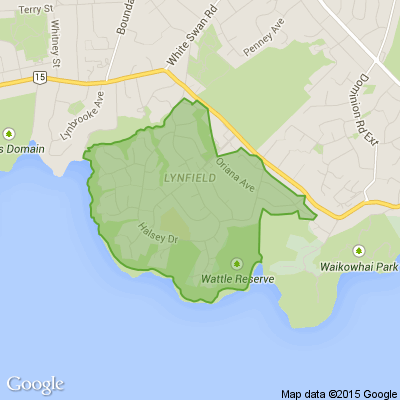

Lynfield news is brought to you by the team at Central Leader
Recent posts







Got some bits to give away?
Clear out that garage and pop it on Neighbourly Market for free.


Thank you for using Neighbourly
You may receive an email confirmation for any offer you selected. The associated companies will contact you directly to activate your requests.

Alan Storage from Kiwi Self Storage - Mt Roskill
Properly storing your tools, whether for professional use or home projects, is essential to maintain their functionality and longevity.
Whether you're storing in your shed, utilizing a self-storage unit at Kiwi Self Storage for short-term convenience or long-term safekeeping, following … View moreProperly storing your tools, whether for professional use or home projects, is essential to maintain their functionality and longevity.
Whether you're storing in your shed, utilizing a self-storage unit at Kiwi Self Storage for short-term convenience or long-term safekeeping, following best practices ensures your tools remain in optimal condition.
Read our helpful article and related blogs to keep your tools safe.


The Team from Resene ColorShop New Lynn
Upgrading a lampshade is a cinch. Add a touch of design flair to your home by updating an old lightshade with Resene wallpaper. Find out how to refresh your lampshade with these easy step by step instructions.


There’s something magical about winter – slower mornings, steaming mugs, and time to plan your dream garden. So why not cosy up and get inspired by some of the world’s most beautiful green spaces?
Right now, when you subscribe to NZ Gardener for 1 or 2 years, you’ll receive The Joy of … View moreThere’s something magical about winter – slower mornings, steaming mugs, and time to plan your dream garden. So why not cosy up and get inspired by some of the world’s most beautiful green spaces?
Right now, when you subscribe to NZ Gardener for 1 or 2 years, you’ll receive The Joy of Exploring Gardens book from Lonely Planet – completely FREE! But hurry, this offer is only available to the first 300 subscribers, so don't miss out!
This beautifully photographed book features 60 of the world's most spectacular gardens, plus 120 inspiring travel ideas to stoke your love of the outdoors – from tranquil Japanese sanctuaries to vibrant desert trails in Arizona.
Subscribe today!
From the team at Mags4Gifts
Find out more


Premium care is just meters away from our village. Join our caring community, where passion thrives. Trust Terrace Kennedy House for exceptional care and meaningful connections. Find out more


The Team from New Zealand Police
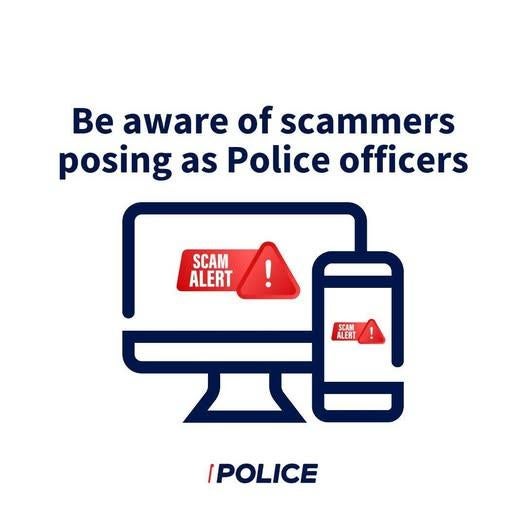
Real Police officers are warning Kiwis to be vigilant of cold callers posing as Police officers, as a pesky scam rears its head.
In the past year, Police have worked quickly to warn the public as these scam calls emerged.
Waitematā CIB’s acting Detective Senior Sergeant Ben Bergin says, … View moreReal Police officers are warning Kiwis to be vigilant of cold callers posing as Police officers, as a pesky scam rears its head.
In the past year, Police have worked quickly to warn the public as these scam calls emerged.
Waitematā CIB’s acting Detective Senior Sergeant Ben Bergin says, “unsuspecting victims are essentially being called out of the blue under a ruse”.
“The story changes slightly, but it will usually involve some sort of investigation and this ‘officer’ will report having located a valuable item of yours, such as a passport.
“He will need your help or ask for your personal information.
“The caller speaks with an English accent and provides a bogus ID number to the victim.”
If you receive a phone call such as this, Police advise the public to be extremely cautious.
Acting Detective Senior Sergeant Bergin says previous iterations of this scam has involved scammers asking people to withdraw cash as part of ‘an investigation’ or handing over bank details.
Police made several arrests last year over the scam.
“We strongly advise that you hang up,” he says.
“From time-to-time, Police officers may contact you as part of their genuine duties.
“It can be a bit surprising to receive a call unexpectantly, so stop and think if you get a far-fetched story shared down the telephone line.”
In the past week, Police have received reports from Kiwis on both islands, including: Warkworth, Riverhead, Royal Oak, Ngaruawahia and in the Clutha and Queenstown-Lakes districts.
“Fortunately, at this stage we are not aware of any victims losing money,” acting Detective Senior Sergeant Bergin says.
“Those recipients have done the right thing and ended the call and reported it to the real Police.”
If you have received a similar call, please report this to Police online now or call 105.
𝗜𝗺𝗽𝗼𝗿𝘁𝗮𝗻𝘁 𝗮𝗱𝘃𝗶𝗰𝗲 𝗳𝗿𝗼𝗺 𝗡𝗲𝘄 𝗭𝗲𝗮𝗹𝗮𝗻𝗱 𝗣𝗼𝗹𝗶𝗰𝗲 ⤵️
🚔Police will never ask for your bank details, pin numbers or banking log in.
🚔Police do not offer prize money
🚔 Police will never ask you to go to a bank and withdraw your own cash
🚔 Stop and think: If the call seems off, hang up and call 105 to verify the officer’s identity, or request a callback.

Brian from Mount Roskill
Working lives are getting longer as New Zealanders join the workforce earlier and work longer after retirement, according to Stats NZ.
Census data shows almost one in two Kiwis between 65-69 years old were still employed in 2023, while the percentage of people aged 15 to 29 in employment in 2023 … View moreWorking lives are getting longer as New Zealanders join the workforce earlier and work longer after retirement, according to Stats NZ.
Census data shows almost one in two Kiwis between 65-69 years old were still employed in 2023, while the percentage of people aged 15 to 29 in employment in 2023 was 65.7%, up from 56.6% in 2013.
Teenagers were the largest contributor to the increase, with employment among those aged 15 to 19 rising to 45.1% in 2023, compared with 40.7% in 2018 and 33.7% in 2013.
“Employment increased across all ages between 2013 and 2018 as the labour market recovered from the Global Financial Crisis,” said 2023 Census spokesperson Dr Rosemary Goodyear.
“However, for teenagers there was another increase in employment between 2018 and 2023, leading to larger growth over the decade compared with other age groups.”
Goodyear said other sources of labour market data, including Stats NZ’s Household Labour Force Survey, captured particularly strong employment for people aged 15 to 29 years across 2022 and 2023.
“This 2023 spike in employment for young people was likely linked to the low unemployment rate at the time, and the high unmet demand for labour following Covid-19 migration restrictions,” Goodyear said.
Meanwhile, more New Zealanders appear to be working for longer.
Employment among those aged 65 to 69 rose to 44% in 2023, up from 42.2% in both 2013 and 2018.
The percentage of those aged 70 to 74 who were employed in 2023 was 24.7%, up from 23% in 2018 and 21.9% in 2013.
For those 75 years and older, employment rose to 9.9%, compared with 8% in 2018 and 7.4% in 2013.
“The proportion of older people in employment has been steadily increasing over time,” Goodyear said.
“There are several factors which may be contributing to this trend, including better health, longer life expectancy, and financial pressures surrounding retirement.”
Data released earlier this year from Seek, as part of its Evolving Working Life report, showed cost of living pressures mean 41% of people don’t expect to retire by age 70.
Meanwhile, 32% believe they’ll be working longer than they want to.
The biggest reason for delaying retirement was that their financial situation won’t allow them to (58%).
According to Work and Income, those eligible for NZ Superannuation at 65 years old are entitled to payments even if they are still working, but the payments may be less depending on their tax code.
Meanwhile, Stats NZ said only three age groups had a decrease in employment between 2018 and 2023 – ages 25-29; ages 50-54; and ages 55-59.
The highest proportions of youth employment (15-29) were in Marlborough (75.0%), Southland (71.1%), and Tasman (71.2%).
In Auckland, youth employment was 63.9%.
Goodyear said the Marlborough region is well known for its seasonal work opportunities, particularly in fruit picking and viticulture.
“This type of work suits backpackers and young people who are looking for the opportunity to travel and gain new experiences.”
=================================================

The Team from Ryman Healthcare
For the 11th time, you’ve voted us your Most Trusted Brand and that means the world to us. Because trust this strong doesn’t happen by chance. Ten years? That’s a perfect score. But eleven? That’s off the charts. Whether it’s your first visit or you call a village home, that feeling of … View moreFor the 11th time, you’ve voted us your Most Trusted Brand and that means the world to us. Because trust this strong doesn’t happen by chance. Ten years? That’s a perfect score. But eleven? That’s off the charts. Whether it’s your first visit or you call a village home, that feeling of trust is what sets us apart. Find out more


Marguerite Durling from West Lynn Garden Club
Come along to West Lynn Garden venue at 9.30am to meet like-minded gardeners over a coffee, hear this month's speaker and learn about up coming day trips. All welcome
Brian from Mount Roskill
What's happening: Tens of thousands more New Zealanders are struggling under the cost of living crisis as KiwiSaver hardship withdrawals reach new highs. Both the number of Kiwis making withdrawals and the amount taken out have smashed last year’s figures in just 10 months. Inland Revenue … View moreWhat's happening: Tens of thousands more New Zealanders are struggling under the cost of living crisis as KiwiSaver hardship withdrawals reach new highs. Both the number of Kiwis making withdrawals and the amount taken out have smashed last year’s figures in just 10 months. Inland Revenue data shows between July 2024 and April 2025, more than $389.4 million had been withdrawn from KiwiSaver for financial hardship reasons, up from $300.5m in the year to June 30, 2024. A total of 44,360 people had withdrawn money from KiwiSaver for hardship reasons, up from 32,480 in the previous financial year.
The response: David Verry, financial mentor at Auckland Central Budgeting and North Harbour Budgeting Services, said it was no surprise to see those figures. "Across the board we’re seeing increases in the number of people approaching us for KiwiSaver hardships," he said. "I’d have to say probably two out of three people that have approached me in recent times have been looking for KiwiSaver hardship withdrawals." Verry said some financial mentors have seen a doubling of those seeking withdrawals over the last two years. There were now people fronting up for their second round of hardships, he said.
===============================================

The Team from Neighbourly.co.nz
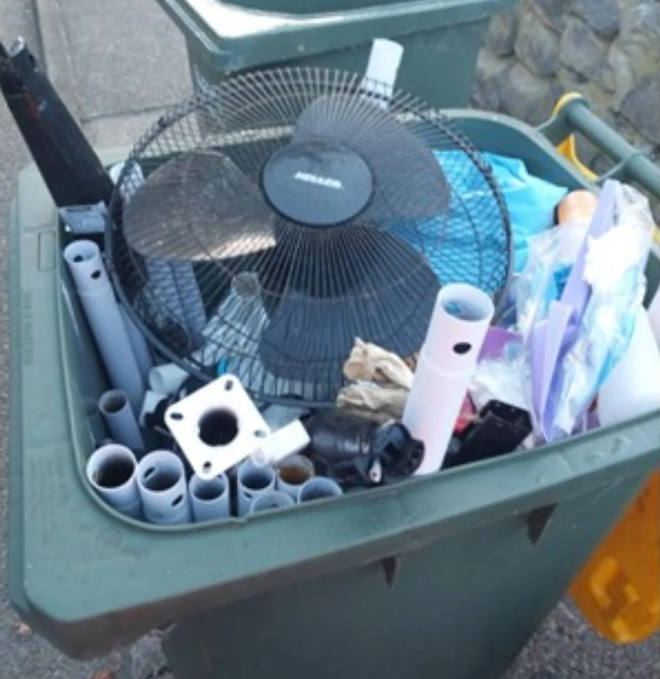
Whakatāne District Council plans to crack down on residents recycling mistakes with a "three-strikes" rule - contaminate your bin three times and you could lose it for three months.
The goal? Less landfill, more proper recycling.
104 replies (Members only)
Brian from Mount Roskill
The Government will allow migrants in New Zealand to sponsor their parents to visit and stay here under a new visa rolling out in September.
The visa will allow the parents of New Zealand citizens and residents multi-entry access for up to five years, with the opportunity for renewal once, meaning… View moreThe Government will allow migrants in New Zealand to sponsor their parents to visit and stay here under a new visa rolling out in September.
The visa will allow the parents of New Zealand citizens and residents multi-entry access for up to five years, with the opportunity for renewal once, meaning they could hold the visa for 10 years.
However, applicants will have to fulfil a list of criteria, including demonstrating they have health insurance and meet character requirements. An income requirement will also need to be met by either the applicant or their sponsor.
The National Party promised the “Parent Boost” visa during the 2023 election campaign, with the intention of making New Zealand a more attractive option for skilled migrants.
Prime Minister Christopher Luxon today announced that applications would open on September 29.
He said there was expected to be between 2000 to 10,000 applicants per year, with no cap. The visa will be monitored closely with a review in 2027.
Luxon said that to “drive economic growth, we need to incentivise skilled migrants to choose New Zealand”.
“Ensuring we continue to attract the right people with the skills this country needs will deliver significant economic and social benefits for all New Zealanders,” the Prime Minister said.
Immigration Minister Erica Stanford said the Government understood a long-term visitor visa for parents was a key consideration for migrants when choosing where to build their lives.
“Whether it be welcoming a new child, additional support during health challenges or providing childcare so parents can work, there is nothing quite like having family support close by,” Stanford said.
“We are proud to deliver this coalition agreement between National and Act, which will make the New Zealand proposition more appealing and more competitive.”
According to the Government, to be eligible for a Parent Boost visa, applicants must:
==================================================
have an eligible sponsor who is a New Zealand citizen or resident
meet acceptable standard of health requirements
demonstrate they have at least one year of health insurance coverage which provides for emergency medical cover (of at least up to $250,000), repatriation, return of remains and cancer treatment (of at least $100,000) and to maintain this insurance for the entire duration they are in New Zealand
meet character requirements and be a bona fide / genuine visitor
while offshore during the third year of the multiple-entry visitor visa, complete a new medical assessment and demonstrate they have maintained their insurance
One of the following income requirements must also be met:
============================================
The sponsor must earn the median wage to sponsor one parent, joint sponsors must earn 1.5x the median wage, or;
The parent/s have an ongoing income aligning with the single rate of New Zealand Superannuation for a single parent and the couple rate for a couple, or;
The parent/s have available funds of $160,000 for a single parent and $250,000 for a couple to support themselves for the duration of their visa.
The sponsors must remain living in New Zealand while the visa holder is here and are liable for any costs incurred in relation to the visa holder during this period, the Government said.
The applicants will be able to renew their visa once, allowing for a maximum length of visit to be 10 years. They will need to spend three months outside of New Zealand prior to getting their second visa.
Act’s immigration spokeswoman Dr Parmjeet Parmar welcomed the visa, though noted it was slightly different to what her party had proposed during the 2023 election campaign.
“Act’s 2023 proposal differed slightly in that it would have included an annual fee to fund healthcare costs through a public health fund,” she said.
“The Parent Boost Visa’s alternative, a requirement for comprehensive private health insurance, serves a similar purpose in protecting New Zealand taxpayers.”
Luxon said there was a “whole bunch of complexity” associated with a healthcare levy and it was instead easier to require healthcare insurance instead.
Stanford believed the Government was being “flexible” with the insurance requirement.
“Not only are we saying you can have it from a New Zealand country, you can have it from overseas companies as well,” she said. “We have looked at other countries. There are plenty of providers who will come to the table and offer this product.”
The Green Party was critical of the income requirement threshold, saying the Government was telling migrants families “if your parents don’t have a quarter of a million in funds, they are not welcome here”.
“The Government’s changes to the Parent Boost visa send a clear signal that they do not value the significant contribution of our migrant communities who National labelled as essential not long ago. This is not good enough,” said the party’s immigration spokesman Ricardo Menéndez March.
“The requirements of the five-year parent category visa mean only those with significant wealth will be able to apply, leaving out the lower wage migrant workers National was calling “essential” not many years ago," Menéndez March.
“The Greens support having genuine residency pathways for parents, because it makes no sense for families to be kept apart. Being wealthy should not be a prerequisite to having your parents with you in New Zealand. We will overhaul the parent residency scheme to ensure families are treated fairly.”
Currently, Immigration New Zealand’s Parent and Grandparent Visitor Visa allows for stays of up to six months at a time, with a maximum of 18 months across three years. The separate Parent Resident Visa allows parents to come to New Zealand indefinitely, but they must be invited to apply after submitting an expression of interest.
==================================================

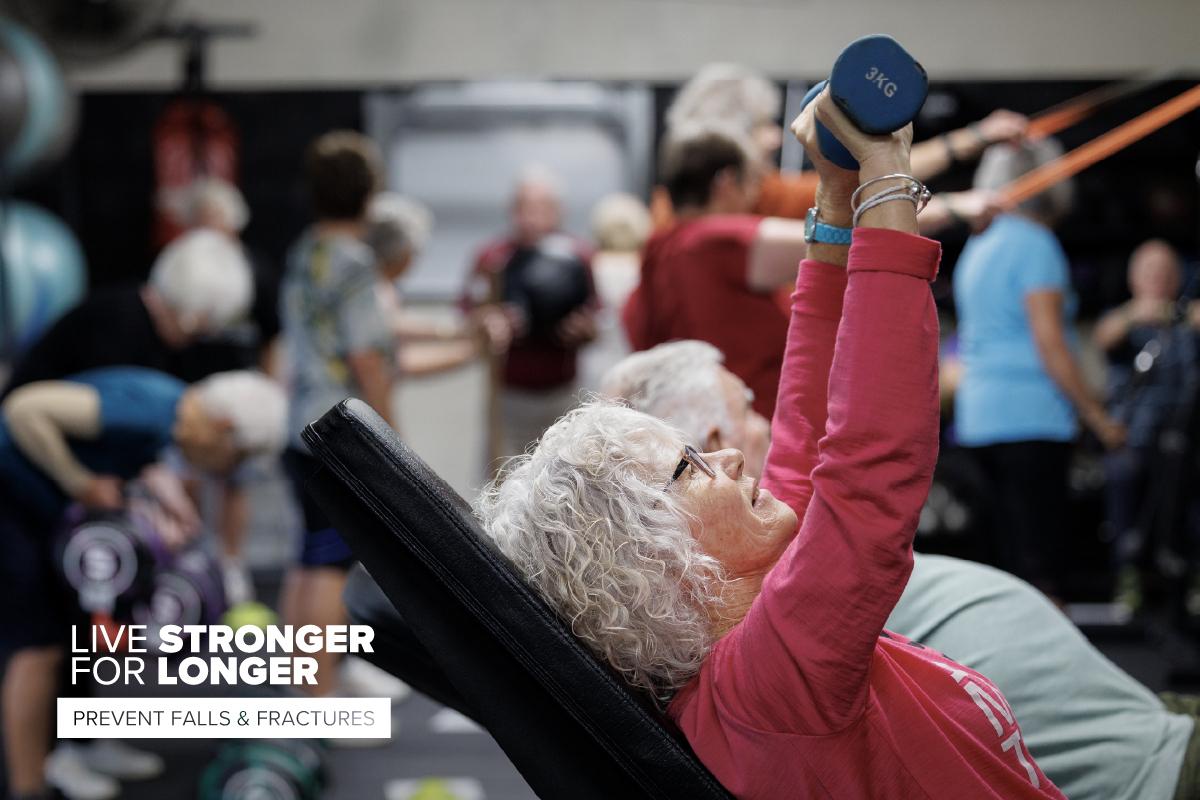
Stay active and keep doing the things you love.
Join a strength and balance class near you. With classes to suit every pace and ability, and trained instructors to guide you through, it’s a great way to keep healthy and make new friends. So you can live stronger for longer, and keep living the … View moreStay active and keep doing the things you love.
Join a strength and balance class near you. With classes to suit every pace and ability, and trained instructors to guide you through, it’s a great way to keep healthy and make new friends. So you can live stronger for longer, and keep living the life you want. Find a class near you today.
Learn more
Brian from Mount Roskill
When self-driving cars hit the market, politicians and academics alike questioned whether our criminal laws could deal with the new tech.
If the car had a prang or mowed down a bystander, who would stand in the dock at court and face the jury – the driver who had no control over the accident or … View moreWhen self-driving cars hit the market, politicians and academics alike questioned whether our criminal laws could deal with the new tech.
If the car had a prang or mowed down a bystander, who would stand in the dock at court and face the jury – the driver who had no control over the accident or the AI-programmed hunk of metal that could steer itself?
Ai
In fact, the law had dealt with the question of self-driving cars hundreds of years before the vehicles would even be invented. When horses were the in-vogue mode of transport, their riders generally faced responsibility for the horses’ actions even though the animals could act of their own accord.
However, some legal experts agree that our consumer laws will need to adapt at speed to keep up in this brave new world.
AI in a nutshell
============
Artificial intelligence (AI) generally refers to the ability of computer systems to do tasks that would historically require human intelligence.
As Nick Gelling, product test writer at Consumer NZ, said, “Artificial intelligence is a broad field of research that’s been expanding for decades. Depending on how you define it, it’s been developing since the invention of the modern computer – in 1950, Alan Turing proposed a test to work out whether a computer could think.”
Gelling said that, until recently, most consumers would only have experienced AI to sort or categorise data, and they might not even have realised they’d been working with AI to do this.
“For example, email services use AI to detect spam, and facial recognition systems use AI to match photos to existing records. These are called discriminative models, and they’re also used extensively in industries like medical research and finance.”
The trendy AI models being hyped more recently, and the ones causing the most concern, are generative rather than discriminative. “They’re designed to generate new data rather than just analyse existing data,” Nick said.
A popular example is OpenAI’s ChatGPT. Users can ask the model to answer a question, write text or problem-solve.
Microsoft has recently integrated a similar AI model, called Copilot, into its Office software. It’s these generative AI models that could pose the most harm and therefore should be front of mind in any law reform process.
Your rights when it comes to AI
==========================
How might developing AI models interact with our consumer laws, now and in the future, and how could we update our laws to make them more robust against any detrimental effects of AI?
Below, we take a look at the Consumer Guarantees Act and the Fair Trading Act to see how well these acts currently respond to potential AI issues.
AI and the Consumer Guarantees Act
===============================
The Consumer Guarantees Act (CGA) provides a scheme for rights and remedies when consumers have problems with goods or services. It has a broad application, and there are many ways an issue involving AI might manifest itself in a CGA context.
Scenario: You purchase a pair of trousers online and, when they arrive, they look nothing like the picture that had attracted you to buy them. Unbeknownst to you, the picture had been generated by AI. What are your rights?
The application of the law in this instance will likely be the same as if the seller had uploaded a picture of a real pair of trousers and sent the wrong pair. In both scenarios, the seller has breached your right to receive goods that match those goods’ descriptions. Because the trousers don’t match the picture, you’re entitled to a remedy under the CGA. To that end, the seller will usually have the option of giving you either a refund or a replacement. Replacement will depend on whether the seller actually has the right pair of trousers.
Scenario: You buy a fridge with AI built into it. It can do things like write shopping lists based on the food available inside the fridge. Soon after purchase, the AI functionality stops, but the fridge continues to work just like a fridge should. What are your rights?
Even though the fridge is still keeping food cool, you’re entitled to a refund, repair or replacement, whichever the supplier chooses. If you bought the fridge specifically because of its AI functionality, you could argue there was a failure of substantial character and formally reject the fridge. This means it would be your choice as to whether you get a refund or a replacement.
Scenario: You purchase a computer software subscription to an AI model, like ChatGPT or Microsoft Copilot. A month later, the AI stops performing as you expected. What are your rights?
Under the CGA, computer software is classed as a “good” rather than a service. This is a result of a 2003 amendment to the act intending to give consumers clarity about their rights when it comes to software. The distinction between good and service is important because consumer guarantees change depending on whether something is one or the other. However, AI, particularly generative AI, is different to the traditional computer software that legislators had in mind, and it’s difficult to apply the same law to it.
As a good, an AI model must be fit for purpose, but how can consumers trust that something that changes, adapts and has the potential to produce false outputs (also called hallucinations) will remain fit for purpose?
AI learns from data and changes its performance over time rather than requiring direct human programming, like regular software. Its ability to change might mean it transforms into an entirely different thing from what you originally purchased.
Under the CGA, an AI model must also be of acceptable quality, which includes durability and safety. Exactly how a piece of software that is inherently adaptable is meant to be durable isn’t obvious. Perhaps developers would be required to update and maintain models for a reasonable time to ensure the software doesn’t devolve. But if the model changes materially, would it breach its guarantee of acceptable quality?
Generative AI’s ability to produce sexually explicit, graphic and biased material might cause safety issues. The question is whether any of these instances would be captured by the CGA’s safety requirement, which, despite being undefined, tends to evoke concepts of physical safety, like mandatory standards for children’s toys to prevent choking. AI models might not pose a choking hazard, but interacting with them could affect a person’s mental health and wellbeing, with one 2024 news report suggesting an AI chatbot “manipulated” a young man into committing suicide.
There are several questions raised in this scenario that don’t have clear answers yet. Where necessary, law reform might help to clarify them.
AI and the Fair Trading Act
======================
The Fair Trading Act (FTA) combats misleading and unfair trade practices, among other things.
Like the CGA, there are a range of ways AI might interact with the FTA and its general prohibition against misleading and deceptive conduct. Instances where a trader misleads you about an AI product are likely to be fairly easy to deal with under the act. That is, the act prohibits misleading conduct regardless of what a trader misleads you about, whether it be a surfboard or an environmental certification.
Scenario: A developer says its AI model can generate images and text, but you buy the software, and it only generates text. What are your rights?
This scenario covers the CGA right to goods that match their description and is a clear-cut example of misleading or deceptive conduct prohibited under the FTA.
But what happens when, rather than the developer, it’s the AI model itself that misleads you?
Scenario: Imagine that a new pair of shorts you bought online arrives at your door with a rip at the seam. It’s a clear breach of the CGA. Yet the seller’s AI chatbot says you don’t have any rights to a refund, repair or replacement. Is the chatbot correct or is it misleading you, and what are your rights now?
Because the new shorts arrived ripped, your right to goods that are durable has been breached, and you’re entitled to a refund, repair or replacement under the CGA.
But more than that, by stating you aren’t entitled to a remedy, the chatbot has misled you about your consumer rights. Under the FTA, it is illegal for any person in trade to mislead a consumer about their consumer rights. However, to attribute liability under the current legal framework, a person must have misled a consumer. So who is responsible?
It would appear logical to attribute liability to the business selling the pants, as it was the one using the AI chatbot. But the business might be able to argue that the actions of the AI chatbot were beyond the business’ reasonable control. It could be that no one can be held responsible.
This is another example where our current laws might fail to adequately protect consumers from AI harms. We could let the law play out and see if the courts apply the same logic as they did when it came to self-driving cars and horses.
The British Columbia Civil Resolution Tribunal, the Canadian equivalent of our Disputes Tribunal, recently ruled that Air Canada had to refund a passenger after its AI chatbot gave an incorrect explanation of the airline’s bereavement policies. But Canadian decisions might not influence our own.
Instead, the potential for consumer harm might warrant a proactive approach, like reforming the law to tweak the definition of “personhood” or provide a clear way of attributing fault to businesses who fail to take reasonable care to ensure their AI systems don’t breach the FTA.
Chatgpt
Do we need bespoke AI laws?
========================
In a July 2024 Cabinet paper, Minister of Science, Innovation and Technology Judith Collins recommended New Zealand law makers take a “proportionate, risk-based approach to AI”.
This means amending existing regimes, like our consumer laws, rather than developing a bespoke act.
Collins said frameworks like our consumer laws “are largely principles-based and technology neutral. These frameworks can be updated as and when needed to enable AI innovation or address AI harms.”
The dangers of not adapting
=======================
Kate Tokeley is a legal expert in the field of consumer law and deputy chair of Consumer’s board. Tokeley said that, when it comes to our current consumer laws, the rules we have in place “are based on increasingly outdated notions of how advertising and commercial communication take place.
“Legal systems will need to adapt to these [AI] developments to maintain control of misleading or deceptive commercial speech. … Truth is a cornerstone of a fair and efficient marketplace. The dangers of not adapting are disconcerting.”
Tokeley emphasised that without some legal controls “we might end up in a future where we are subjected to the manipulating forces of commerce in almost every waking moment.”
A game of wait and see
In October 2024, the Australian Treasury released a discussion paper reviewing the impact AI has or will have on Australian consumer law. The review focused on whether the Australian consumer laws are fit for purpose in the age of AI.
Our own consumer laws share similarities with Australia’s. They’ve managed to help protect consumers for multiple decades with minimal updates. But the landscape is changing, and AI has the potential to cause consumers a lot of harm. Legal concepts like durability and safety as well as personhood and theories of liability may need to change to ensure consumer rights legislation remains relevant.
Unfortunately, changing any law is complicated, especially when updates are targeting a constantly evolving technology.
Tokeley said AI has, in essence, opened the doors to a new world of human existence.
“Redesigning legal regimes to effectively battle this new world will no doubt be a challenge. Any meaningful change will require lawmakers to first confront the fact that there are genuinely difficult problems that existing regulatory tools are ill-equipped to handle.”
That’s why a review of our consumer laws, like the review currently underway in Australia, could help regulators decide whether change is needed and on what scale.
================================================
Brian from Mount Roskill
Renew at age 75, 80 and every 2 years after that
=======================================
Your licence will expire on your 75th birthday, on your 80th birthday, and every second birthday after that.
You must renew your driver licence on or before its expiry date if you want to keep driving.
How… View moreRenew at age 75, 80 and every 2 years after that
=======================================
Your licence will expire on your 75th birthday, on your 80th birthday, and every second birthday after that.
You must renew your driver licence on or before its expiry date if you want to keep driving.
How to renew your licence
======================
You can renew your driver licence up to 6 months before it expires.
We’ll send you a reminder and an application form about 8 weeks before your licence is due to expire, but you can renew earlier if you wish.
You'll need to make an appointment with your doctor to get a medical certificate. You may also need to see a specialist or take a test, so allow plenty of time.
Once you've got your medical certificate, you'll need to visit a driver licensing agent in person.
Find your nearest driver licensing agent
What you need to take
==================
A medical certificate issued within the last 60 days – see below for more information.
Your current photo driver licence or other acceptable evidence of your identity.
See the Identification page for more information
EFTPOS, credit card or cash to pay the renewal fee of $21.50.
You'll need to complete an application form (DL1). You can download the form and take it with you, or fill one in when you get to the agent.
Download the application form to renew your driver licence (DL1) [PDF, 202 KB]
When your renewal is complete, the agent will give you a temporary licence which is valid for 21 days. Keep this on you whenever you’re driving until your new driver licence arrives in the mail – within 2 to 3 weeks.
Getting a medical check
====================
You need to get a medical check to renew your licence, so make an appointment with your doctor.
The doctor will give you the medical certificate you'll need to renew your driver licence. The certificate is valid for 60 days, so make sure you take it to a driver licensing agent before the 60 days runs out.
Your doctor will give you one of the following results:
Medically fit to drive
You're able to drive safely in all conditions.
Your doctor will give you a medical certificate to take with you to renew your licence.
Medically fit to drive with conditions
You're able to drive safely, but only if you do, or don't do, specific things. For example, you might need to wear glasses or not drive at night.
Your doctor will give you a medical certificate with the conditions on it. Take this with you to renew your licence.
Medically fit to drive if a specialist agrees
You need to see a specialist for more testing. Your doctor will tell you what kind of specialist. It could be an optometrist to test your eyes, or an occupational therapist to check you can safely cope with complex driving situations.
If you pass, you're able to drive safely and can renew your licence. The specialist will give you a medical certificate to take with you to renew your licence.
Medically fit to drive if you pass an on-road safety test
Your doctor may ask you to do a driving test in a car with a testing officer.
The doctor will give you a medical certificate with a requirement to sit an on-road safety test. Take the certificate with you to a driver licensing agent, and they'll start your renewal application and book the test.
The test is included in your renewal fee. There's no fee to change, cancel or rebook the test. You can sit the test more than once if you need to with no extra fees.
If you live in an area that doesn't have testing officers, you'll need to request an on-demand test. Check our agent list to see if you need to do this in your area. You'll need to apply to renew your licence and present your medical certificate at the agent first. It can take up to 3 months to get a test booking, so make sure you do this early.
Find your nearest driver licensing agent
Prepare for the on-road safety test
If you pass the test, you're able to drive safely. The testing officer will give you a temporary driver licence to use until your photo driver licence arrives in the mail.
Not fit to drive
============
You're not able to keep yourself and others safe when driving. It's no longer safe or legal for you to drive, and you must stop driving immediately. Your doctor will let NZTA know, and you won't be able to renew your licence.
Not being able to renew your licence can be upsetting. Take some time to process this news. There are many options for people who don't drive.
========================================================
Brian from Mount Roskill
Three of the top five fastest-growing salaried roles in the past year were for IT jobs.
The role of branch manager had the highest average salary rise of 15.30%.
The national average advertised salary only rose 2.6% year on year in February.
=================================================
… View moreThree of the top five fastest-growing salaried roles in the past year were for IT jobs.
The role of branch manager had the highest average salary rise of 15.30%.
The national average advertised salary only rose 2.6% year on year in February.
=================================================
Jobs in IT dominated fastest-growing advertised salaries in the past 12 months but it was an unlikely role that took top spot, new data from Seek shows.
The role of branch manager within the retail and consumer industry had an average salary rise of 15.30% in the three months from February to April compared with the same period last year.
The average salary for a branch manager is now $83,944, Seek said.
Advertised salaries for security officers on average rose 12.80% to $55,965.
Three of the top five fastest-growing salaried roles were for jobs in IT.
A systems administrator saw on average a 12% rise in advertised salary to $96,755.
Data engineers’ salaries rose 11.60% to $131,952, while roles for data analysts increased 11.10% to $98,265.
“Businesses are increasingly building their digital capacity and preparing for the AI revolution, which requires robust IT infrastructure, resulting in salary growth for those with the skills to support the ongoing digital transformation,” said Seek senior economist Blair Chapman.
“With these skills in demand across several countries, New Zealand businesses are increasingly competing to keep and attract these workers, supporting robust advertised salary growth.”
Average salaries for project engineers ($120,688) and therapists ($90,153) both increased 10.60%.
“With numerous infrastructure projects ongoing across New Zealand, project engineer roles for people with the skills to contribute to these projects have had relatively quick average advertised salary growth over the past 12 months,” Chapman said.
Also making the top 10 fastest-growing advertised salaries were roles for a technical lead in IT, which rose 10.30% to $155,775.
Meanwhile, the national average advertised salary only rose 2.6% year on year in February, according to the latest Seek Advertised Salary Index.
“Annual average advertised salary growth continues to slow but remains above inflation,” Seek country manager Rob Clark said of the data.
“Slower advertised salary growth in some of the largest industries is dragging down the national average, with some smaller industries like science and technology growing much faster.”
=================================================
 Loading…
Are you sure? Deleting this message permanently removes it from the Neighbourly website.
Loading…




© Neighbourly 2025