Lynfield, Auckland

Got some bits to give away?

Got some bits to give away?

Clear out that garage and pop it on Neighbourly Market for free.

58 days ago

Law Enforcement Torch Run to blaze through Auckland this weekend

Brian from Mount Roskill

Police will be part of something special this weekend, supporting Auckland’s Special Olympics athletes to carry the Flame of Hope in support of The Special Olympics Games.
The games are to be held at the new Wolfbrook Arena in Christchurch from Wednesday 10 until Sunday 14 of December this … View more
Police will be part of something special this weekend, supporting Auckland’s Special Olympics athletes to carry the Flame of Hope in support of The Special Olympics Games.
The games are to be held at the new Wolfbrook Arena in Christchurch from Wednesday 10 until Sunday 14 of December this year.
Media is invited to attend the three exciting events in the Auckland area this weekend for the Law Enforcement Torch Run.

The events take place in central Auckland on Saturday and two venues in south Auckland on Sunday.
Media are welcome at all three events to take photos, video footage and conduct interviews with athletes and officers.
What: Law Enforcement Torch Run Auckland Central
===========================================
Where: Meet at Victoria Park at the intersection of Victoria Street West and Beaumont Street (Freemans Bay Auckland).
When: Saturday 11 October 2025 at 10am
Who: District Special Olympics athletes, coaches, families and police
What: Law Enforcement Torch Run for Auckland Central Police.
What: Law Enforcement Torch Run Weymouth, South Auckland
Where: Meet at Mountfort Park, 10 Sykes Road Weymouth (Opposite the swimming pools).
When: Sunday 12 October 2025 at 10am
Who: District Special Olympics athletes, coaches, families and police
What: First Law Enforcement Torch Run for Counties Manukau District.
What: Law Enforcement Torch Run Pukekohe, South Auckland
Where: Meet at Navigation Homes Stadium, (Lower car park), 21 Stadium Drive, Pukekohe.
When: Sunday 12 October 2025 at 2pm
Who: District Special Olympics athletes, coaches, families and police
What: Second Law Enforcement Torch Run for Counties Manukau District.
Police contact: Inspector Mark Harrison 021 1907 805
Special Olympics contact: Coen Lammers 021 730 239
Known as Guardians of the Flame, police members, along with Special Olympics athletes, will carry the Flame of Hope as it traverses the country to get local communities excited about the upcoming December Games.
Athletes, supporters and Police staff will assemble at the three different Auckland locations to run the flame.
“Lighting the Flame of Hope means that the games are just around the corner,” says Special Olympics Chief Executive Fran Scholey. The New Zealand Law Enforcement Torch Run that starts in Northland on October 4 will travel all the way down to Southland, before it ends up in Christchurch in the week before the games start.
The countdown is on!
Inspector Rupert Friend, New Zealand Police says, “We are always proud to take part in the Law Enforcement Torch Run to help raise awareness and funds for the Special Olympics movement.
“The Torch Run has grown over the years and now includes many fundraising platforms including Polar Plunges.
We held two plunges in Wellington and Christchurch this year where a total of $26,000 was raised for our New Zealand athletes.
“The Law Enforcement Torch Run is a worldwide organisation and celebrated this year raising $1 billion to support the athletes of Special Olympics.
We encourage all kiwis to come out and show their support at Torch Run events up and down the country from October to December leading up to the games.”
=====================================================

59 days ago

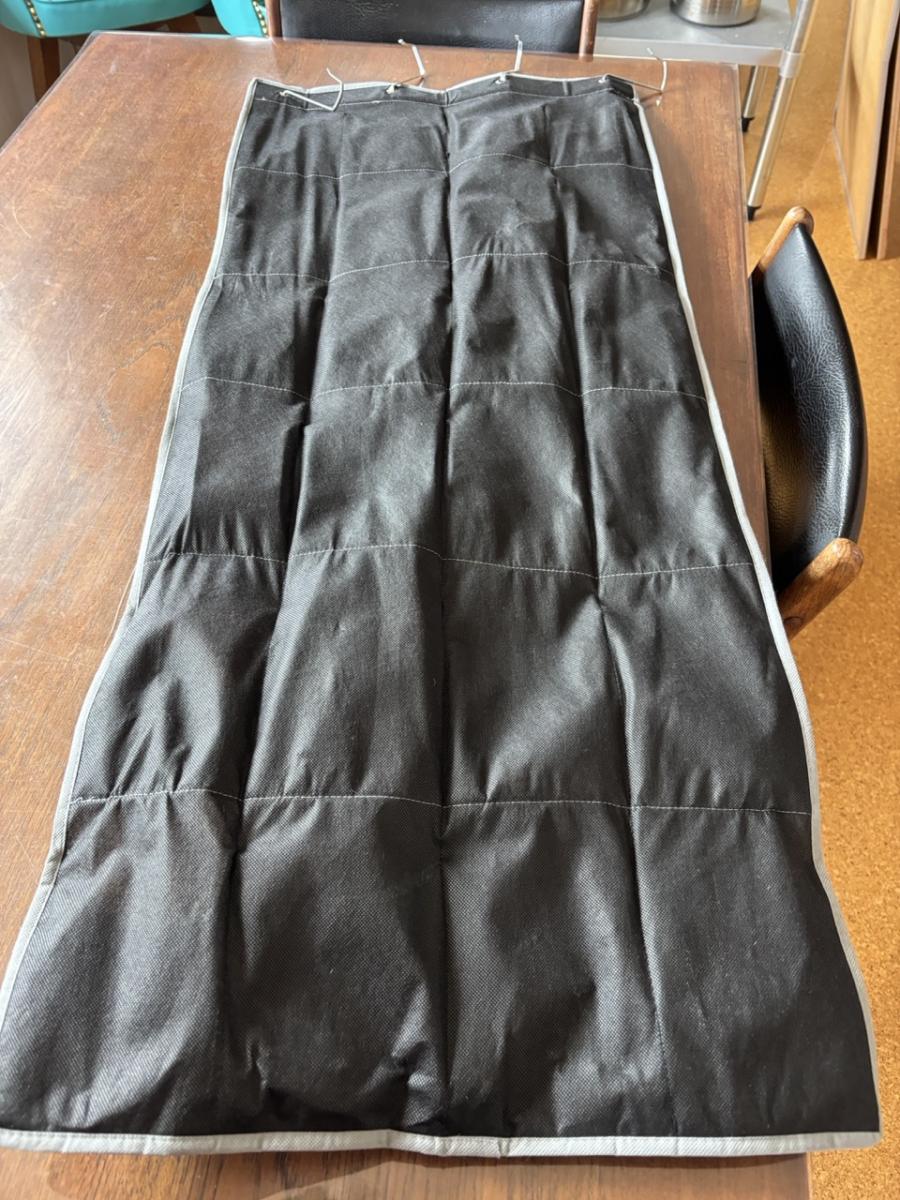
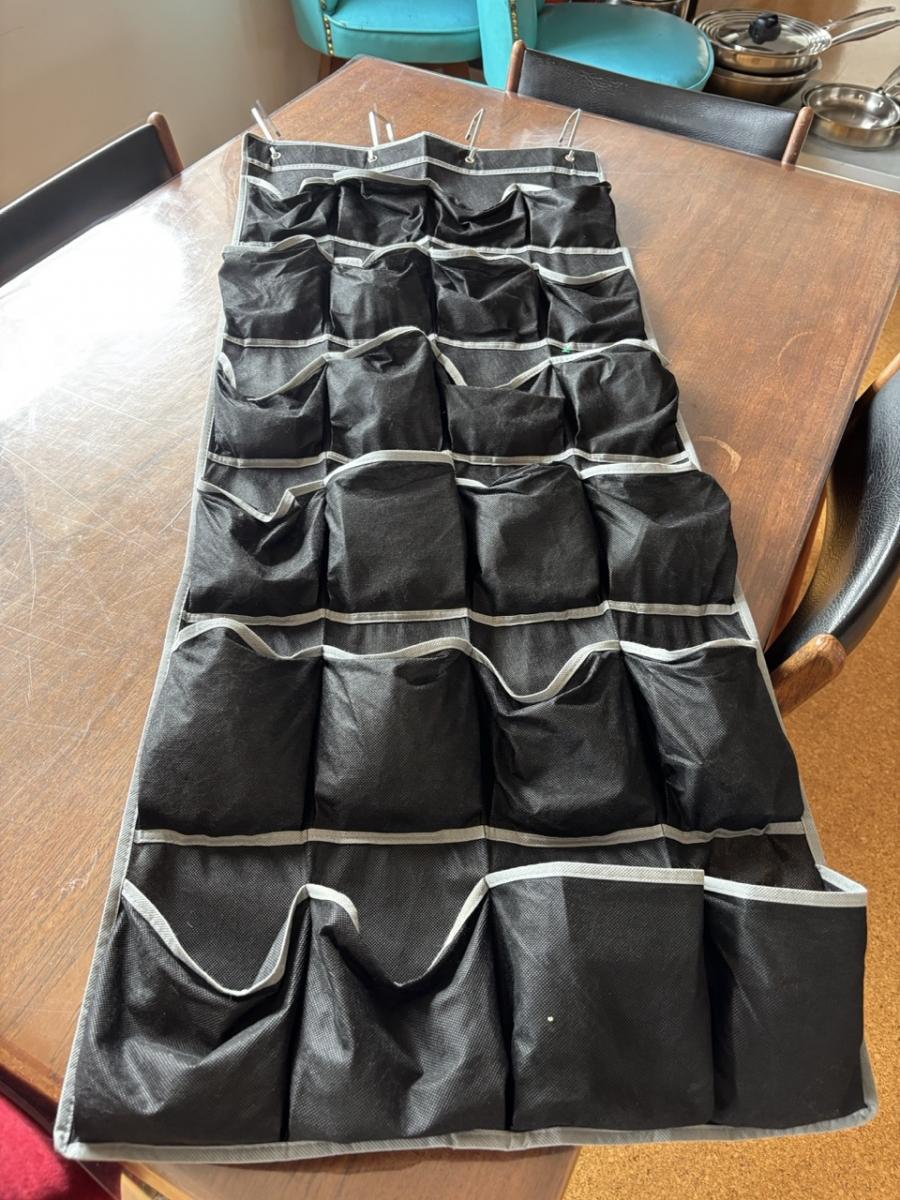
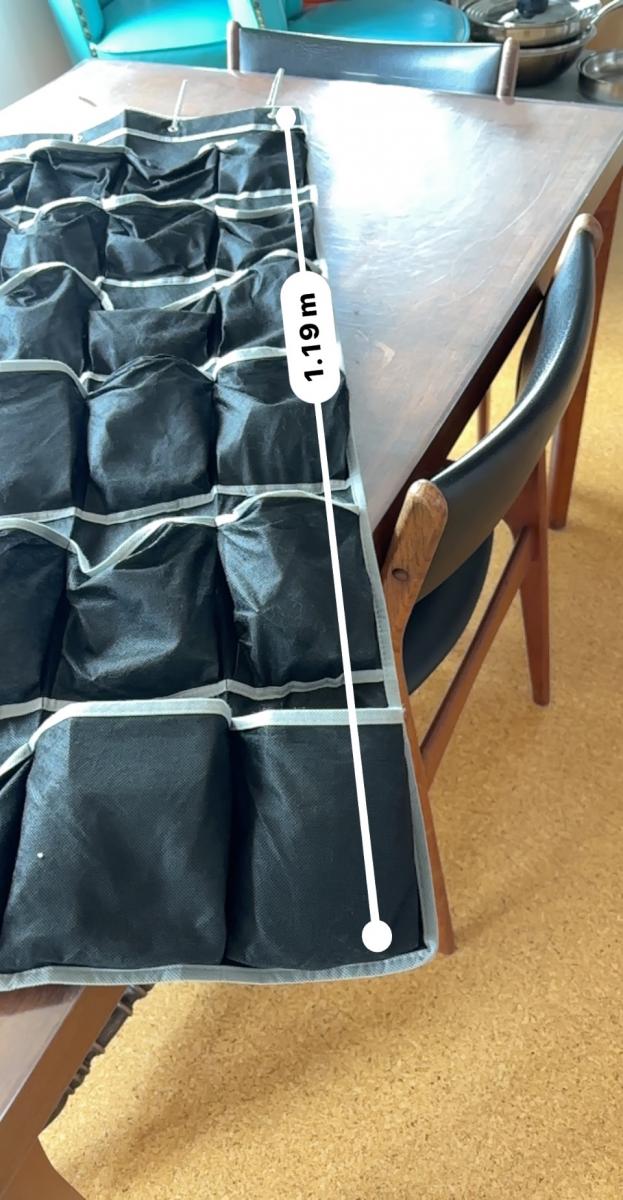
Over the door shoe holder

Joel from Blockhouse Bay

Easy to use
Small tear at the top, but still quite sturdy
See photos for measurements

Free

59 days ago

It's more common than you think!

Brian from Mount Roskill

Did you know that 93% of adults over the age of 65 have at least one chronic condition. And 79% have two or more. Our society is designed for able-bodied and healthy people, so it's no wonder that many people keep quiet when facing a chronic condition.
You might feel like you're the only… View more
Did you know that 93% of adults over the age of 65 have at least one chronic condition. And 79% have two or more. Our society is designed for able-bodied and healthy people, so it's no wonder that many people keep quiet when facing a chronic condition.
You might feel like you're the only person you know who needs a colostomy bag, or incontinence-wear, or a joint replacement, for example. But in New Zealand...
• approximately 7000 people have a colostomy bag,
• 50% of women aged 50-74 experience incontinence,
• and in 2023, there were 27,238 joint replacement procedures.
These numbers are not insignificant! So while you might not feel "normal" when living with a chronic condition, remember that you're certainly not "abnormal".
Regardless of what age you are, the only thing standing between being able-bodied or not is luck. Yes, we can take measures to stay healthy well into our later years, but our well-being is outside our control. It's time to normalise speaking out about topics that are often seen as hard to talk about, so people don't feel ashamed when trying to fit into a society that isn't designed for them.
=====================================================

59 days ago

A gift for you when you subscribe to NZ House & Garden

NZ House & Garden

Looking for inspiration for your home and garden? Subscribe to NZ House & Garden today and receive a luxurious bonus gift.

When you take out a 1- or 2-year subscription, you’ll receive a FREE ManukaRx Firming Day Cream, valued at $52 RRP.

Infused with the power of East Cape mānuka … View more
Looking for inspiration for your home and garden? Subscribe to NZ House & Garden today and receive a luxurious bonus gift.

When you take out a 1- or 2-year subscription, you’ll receive a FREE ManukaRx Firming Day Cream, valued at $52 RRP.

Infused with the power of East Cape mānuka oil, this lightweight daily cream is designed to hydrate, firm, and nourish your skin – the perfect treat to enjoy while you relax with your magazine.

Subscribe now for endless ideas, beautiful homes and gardens from across New Zealand, and a little indulgence just for you.

From the team at Mags4Gifts

T&Cs apply. Offer available to the first 300 people who subscribe to NZ House & Garden for 1 or 2 years before 26 October 2025
Find out more

Image
59 days ago

Small Group Tour Specialists

Calder and Lawson Tours

We are hosting coffee mornings in the coming weeks if you would like to come catch up and hear about our 2026 program.

Wintergarden Cafe, Parnell on Tuesday 14th October at 10.00 AM

Address: The café is located at the Auckland Domain, 20 Kiosk Road, Parnell.
There is two-hour free public… View more
We are hosting coffee mornings in the coming weeks if you would like to come catch up and hear about our 2026 program.

Wintergarden Cafe, Parnell on Tuesday 14th October at 10.00 AM

Address: The café is located at the Auckland Domain, 20 Kiosk Road, Parnell.
There is two-hour free public parking nearby.

Please RSVP to Rochelle if you are keen to join us rochelle@calderandlawsontours.co.nz
or phone 0800 853 276
Find out more

Image
60 days ago

They made it for astronauts. We get to sleep on it. Coincidence?

Beds4U - Avondale

Hey neighbours!

Here’s a fun one — the same material NASA created to cushion astronauts in space is now helping Kiwis get their best sleep ever.

It’s called Tempur, and it’s not your average mattress. The TEMPUR® material gently adapts to your body, easing pressure points and giving… View more
Hey neighbours!

Here’s a fun one — the same material NASA created to cushion astronauts in space is now helping Kiwis get their best sleep ever.

It’s called Tempur, and it’s not your average mattress. The TEMPUR® material gently adapts to your body, easing pressure points and giving you that “floating on air” kind of comfort.

We’ve put together a simple guide to help you find the perfect one for your sleep style. Check them out here: beds4u.co.nz...

So if you’ve been mattress-hunting, maybe it’s time to check out the brand that started in space. Pop into your nearest Beds4U store and feel the Tempur difference for yourself — your back (and your dreams) will thank you.

Image
60 days ago

How many job hunters are there for each job ad?

Brian from Mount Roskill

Finding work may not be as easy as "getting off the PlayStation": data shows there are many times more potential job hunters than jobs advertised.
The Rotorua Daily Post reported Prime Minister Christopher Luxon told local business leaders that unemployed school leavers needed to … View more
Finding work may not be as easy as "getting off the PlayStation": data shows there are many times more potential job hunters than jobs advertised.
The Rotorua Daily Post reported Prime Minister Christopher Luxon told local business leaders that unemployed school leavers needed to "get off the couch and stop playing PlayStation".
And he told Morning Report on Monday there were employers "crying out" for young people.
But data shows in almost all parts of the country, there were more people unemployed than there were jobs available.
Using just the number of people on Work Ready JobSeeker benefits, not including those who are on the benefit for sickness or disability reasons, there are just under four people for every job ad, nationwide.
That's down from about nine in 2020 but about twice the rate of 2021 and 2022 and the number has stayed relatively constant since then.
The number of unemployed per job ad is five, which is not as high as the 2010 peak but higher than the 2020 number.
Luxon said Hawke's Bay and the South Island were particularly keen on workers but Hawke's Bay had 7359 jobSeekers and 568 jobs on Seek.
Based only on Trade Me jobs data, Kawerau had the highest ratio of jobseekers to jobs, at 228.
Queenstown-Lakes was the only area in balance by that measure.
Professor Matthew Roskruge, from the Massey University school of economics, said it was an "incredibly difficult" time to be looking for a job.
"Especially where they don't have really specific experience or certification… the regions from what we have seen have been hit particularly hard. Public service cuts look like they've hit regions hard and we've seen manufacturing go, too."
He said policies designed to push people off the benefit would work better when the labour market was stronger. "It might make sense if there was demand out there for employees but if we increase supply they have got to have somewhere to go."
Craig Renney, policy director at the Council of Trade Unions and previously an adviser to former Finance Minister Grant Robertson, agreed it was a tough market. "We're seeing more and more people want more work and can't get it."
He said the number of unemployed per job ad would understate the real picture because about 400,000 people were underutilised - not working as much as they would like to.
"We still appear to be shedding work, we see on a weekly basis at major plants and in particular manufacturing sites closing across the country."
He said the situation was worse in the North Island then the South.
He said many job ads were for temporary positions or commission-based roles that would not give security.
He said young people had been particular hit by the downturn. The number of unemployed 15 to 19 year olds had risen by 10,000 in two years, to 37,200.
Simplicity chief economist Shamubeel Eaqub said jobhunters without experience would be "at the back of the queue".
He said people should be careful about comparing regions because the boundaries could be arbitrary.
"People travel across territorial authority boundaries all the time."
But he said there were some localised areas of pain such as Tokoroa where there had been major employer closures.
"That means those local job opportunities are further reduced."
He said young people trying to enter a workforce during weak economic times could feel the effect for a long time.
"They miss out on that entry into the job, the career pathway. And then by the time the economy recovers, there's a new cohort of people who are competing for those positions."
Massey University Dean's Chair in Management Professor Jarrod Haar said it did not help anyone to have young people on benefits.
But he said it would be better to use the money that would have been spent on teenagers' benefits on encouraging businesses to hire them.
"The reality is there's just no jobs, you know, or let's be honest, there'll be the few jobs out there, but there'll be hundreds of young people wanting them, applying for them. And it'll be the case that demand outstrips supply in a big way."
Meanwhle, An orchardist says the horticulture industry is not crying out for workers.
Yummy Fruit Company chief executive Paul Paynter, who grows apples and stone fruit in Hawke's Bay, said the industry wasn't short staffed right now.
=====================================================

61 days ago

From next year, teens whose parents earn more than $65k won't be eligible for the dole

Brian from Mount Roskill

The Government is introducing a $1000 incentive to keep young people on their new job coaching service off the dole, amid efforts to tackle the “trap” of starting on welfare at a young age.
A previously-announced plan to cut the dole for 18- and 19-year-olds who could be supported by their … View more
The Government is introducing a $1000 incentive to keep young people on their new job coaching service off the dole, amid efforts to tackle the “trap” of starting on welfare at a young age.
A previously-announced plan to cut the dole for 18- and 19-year-olds who could be supported by their parents is also being brought forward to the end of next year - and it has now been revealed how much money parents can make before they are expected to support them.
If parents are earning a little over $65,000 they will be required to support their unemployed 18 and 19-year-olds, rather than the teens receiving the benefit.
Social Development and Employment Minister Louise Upston has today announced a carrot on the stick alongside the stricter rules: a $1000 bonus for certain young people who stay off the benefit for long enough.
“Young people participating in the Ministry of Social Development’s new Community Job Coaching service can apply for a $1000 bonus payment if they get a job and stay off the benefit for 12 months,” Upston said.
“Going on welfare when you’re young is a trap, with recent modelling suggesting that people under the age of 25 on Jobseeker Support will spend an average of 18 or more years on a benefit over their lifetimes.
There are more than 15,000 people aged 18 and 19 who are on the Jobseeker benefit right now, she said.
“I have far greater hopes and aspirations for those young Kiwis than a life on welfare.”
Upston outlined further details around the earlier announcement that young people would stop being eligible for the benefit if their parents could support them.
“Today, I can confirm that we are bringing our Budget initiative forward for implementation to November 2026. From then, all young people aged 18 and 19 without dependent children will have to pass a Parental Assistance Test in order to access Jobseeker Support or the equivalent Emergency Benefit,” she said.
“This targets welfare assistance to those who need it the most, as young people will be expected to first be supported by their parents.”
The new Parental Assistance Test will kick in when young people apply for a benefit and comprises:
===================================================
A parental income test, demonstrating whether their parents earn income at or below the income limit, and/or;
A parental support gap test, demonstrating they cannot reasonably be expected to rely on their parents for support.
The income limit will be set at an income cut-out point for a couple with children receiving the Supported Living Payment and will be adjusted annually.
Currently this limit is $65,529 and it is expected to rise to reflect the Annual General Adjustment of benefit payments.
This limit will ensure that young people from very low-income families will still be able to access support if required.
Eligibility for the new $1000 bonus payment will apply to people aged from 18 to 24 on Jobseeker Support:
========================================================
who have worked with Community Job Coaching after being on the benefit for at least 12 months
who find work
who stay off the benefit for 12 months
who are in work at the time of their application
The payment will be available for eligible young people 12 months later, from October 2026, and is part of National’s Welfare that Works policy.
“Our Government is focused on reducing benefit dependency in young people, and we have already introduced a number of initiatives such as a new phone-based employment case management service,” Upston said.
“We’ve got 4000 places for young people to get community job coaching. We’ve also got more regular work seminars and a traffic light system to help them stay on track with their benefit obligations.
“I am determined that young New Zealanders see education, work and training as their best options for the future.”
As of June this year, 15,045 18- and 19-year-olds were on Jobseeker Support, and more than 4000 are expected to become ineligible when the changes kick in.
The change was originally planned to happen in July 2027.
“With this announcement, we’re clearly saying that 18- and 19-year-olds who don’t study or work and can’t support themselves financially, should be supported by their parents or guardians, not by the taxpayer,” Upston said at the time.
Budget documents showed that it was forecast to save the Government $84 million a year from 2027.
Green Party social development and employment spokesman Ricardo Menéndez March said at the time the Government was “pulling the rug” on young people receiving income support.
“The Government has just told teenagers doing it tough that they are on their own. A lot of teenagers having to rely on benefits for support do not have family to lean on – the Government knows this, it just doesn’t care.”
Treasury expects unemployment to worsen over the next few years.
The jobless rate was now expected to be 5% over the next year, up from a forecast in December of 4.8%.
In 2027, unemployment is expected to be 4.8% – up from earlier forecasts of 4.5%.
=====================================================

62 days ago

Thinking about a retirement village? 5 key questions to ask yourself first

Brian from Mount Roskill

1. Am I ready to part with my home and some of my things?
================================================
Moving into a retirement village usually involves downsizing. That could mean shifting from a three-bedroom home to a two-bedroom villa, or even an apartment. It can feel liberating to … View more
1. Am I ready to part with my home and some of my things?
================================================
Moving into a retirement village usually involves downsizing. That could mean shifting from a three-bedroom home to a two-bedroom villa, or even an apartment. It can feel liberating to simplify, but the emotional attachment to a family home and a lifetime of belongings is real.
Ask yourself:
What will I need day to day, and what can I let go of?
Am I prepared to sell or donate furniture, keepsakes, or tools?
Would I need storage for things I want to keep but can’t take with me?
It helps to walk through a few village homes and visualise what daily life might look like. Could this space feel like home?

2. How do I feel about community living?
=================================
One of the biggest lifestyle shifts is moving into a more communal environment. Villages vary in size and each has its own unique culture.
Consider:
Do I enjoy meeting new people and joining in social activities?
Would I make use of the shared spaces, such as lounges and other facilities?
How do I feel about having neighbours close by?
All retirement villages let you choose how involved you want to be, but it’s worth thinking about whether a shared lifestyle suits your preferences.

3. Do I understand the costs and how they differ from buying a home?
========================================================
This is a big one. Retirement villages have a unique financial structure, and it’s important to go in with a clear understanding of how it works. Generally, you’ll encounter three main types of costs:
Upfront payment (capital sum):
This gives you the right to live in your chosen home and access the village facilities. You don’t technically own the home; instead, you are purchasing a ‘license to occupy’. Compare this initial capital sum to similar properties in the same area. It should be slightly lower, since you are unlikely to receive financial benefit from any resale gains.
Ongoing weekly fees:
=================
This fee covers the general running costs of the village, things like maintenance, rates, insurance, staff wages, and sometimes amenities or events.
Ask what’s included and how often the fees are reviewed.
Compare these to what you currently pay living independently (e.g. lawn care, house maintenance, rates, and water).
couple paperwork
Every village is different, so always review the Occupation Right Agreement and village disclosure statement closely.
Deferred management fee:
======================
This is charged when you leave and is usually a percentage of your initial capital sum (often capped at 20–30%). It contributes to long-term costs such as:
Refurbishment of your home prior to a new resident moving in
Maintenance of communal village areas, buildings, and facilities
Costs incurred during the resale process (e.g. marketing, admin, legal)
It’s not a cost you’d typically pay when selling a standalone home, so it’s worth understanding what’s included and how it may impact your estate.

4. Will the location work for me long-term?
==================================
Moving to a retirement village could bring you closer to shops, cafés, or healthcare, but further from family, friends, or familiar surroundings.
Ask yourself:
Do I want to stay in my current area, or am I open to moving?
Will it be easy for friends and family to visit?
Are there transport options nearby if I stop driving?
Also think long term, what will matter most to you five or ten years from now?

5. What kind of support might I need later on, and does the village offer it?
==========================================================
Not all villages offer healthcare services or higher levels of care. Some provide support within your home (e.g. help with medication or personal care), while others have an onsite care facility.
Consider:
Does the village offer ‘continuum of care’ if your needs change?
Would you prefer to move once now or potentially again if your health changes?
What kind of support is important to you - nursing, transport to appointments, meal services?
Even if you’re in great health now, having a plan for the future gives you and your family peace of mind.

Don’t wait too long to start looking
=============================
Many people wait until a move feels urgent, but the best time to explore your options is when you have the time and energy to visit villages, talk to residents, and compare what’s out there.
Some people join waitlists years in advance - and that’s okay. Taking your time means you’re more likely to find a village that truly fits.
=====================================================
68 days ago

Poll: Is the Government doing enough now to avoid a serious budget gap in the future? 💸

The Team from Neighbourly.co.nz

The Long-Term Fiscal Statement just dropped. At first glance, it might seem a bit dry, but the message is pretty clear ... and a bit worrying. The big takeaway? Our financial pressures are only going to keep growing.

There’s no single fix. It’ll take a mix of solutions to deal with the … View more
The Long-Term Fiscal Statement just dropped. At first glance, it might seem a bit dry, but the message is pretty clear ... and a bit worrying. The big takeaway? Our financial pressures are only going to keep growing.

There’s no single fix. It’ll take a mix of solutions to deal with the challenges ahead.

Want to read more? Andrea Vance shares her opinions here.

Image
Is the Government doing enough now to avoid a serious budget gap in the future? 💸
  • 18.8% Yes
    18.8% Complete
  • 76.4% No
    76.4% Complete
  • 4.7% No opinion
    4.7% Complete
1370 votes
63 days ago

How to avoid road rage (in you and other people)

Brian from Mount Roskill

Road rage is a dangerous and all-too-common issue on our roads, one that can quickly turn an everyday commute into a stressful or even potentially harmful situation, regardless of whether it is you or someone else who is doing the raging.
However, understanding what causes road rage in ourselves … View more
Road rage is a dangerous and all-too-common issue on our roads, one that can quickly turn an everyday commute into a stressful or even potentially harmful situation, regardless of whether it is you or someone else who is doing the raging.
However, understanding what causes road rage in ourselves and in others, and learning effective strategies to manage anger or deal with anger from others can significantly improve road safety and reduce stress for all drivers.
Why road rage happens
===================
Several factors can contribute to road rage. The physical separation from other road users when driving creates a sense of distance and anonymity, which can lower inhibitions and social filters.
This sense of being in a "bubble," combined with the stress of driving, can heighten frustration and anger, while the potentially high stakes of driving - where mistakes can have serious consequences – also contribute to heightened emotional responses.
Who is more likely to experience road rage?
===================================
While anyone can experience road rage, certain groups are more susceptible. Younger, male drivers tend to exhibit aggressive driving behaviors more often, while female drivers who experience anger while driving as much as male drivers do are less likely to act on it negatively.
However, female drivers may experience more intense anger in certain situations, such as when faced with hostile gestures or traffic obstructions.
How to avoid road rage
===================
It's important to remember that other drivers are just people, and minor missteps are often unintentional. Approaching driving with the same patience and understanding that we generally apply in other situations can make a significant difference in reducing road rage incidents.
Try to "thingify" other drivers less and see them as real people. Putting pictures of loved ones in the car can help with this. There are many strategies and techniques that can help reduce road rage incidents:
==============================
Self-awareness: Learn to identify the early signs of anger while driving. Recognising when you start to feel angry can help you take steps to prevent it from escalating.
Alternative explanations: Try to find alternative explanations for the behaviour of other drivers. Rather than assuming someone is deliberately rude, consider they may be distracted or having a bad day.
Mindfulness and relaxation: Practice mindfulness and relaxation techniques to remain calm. Deep breaths and focusing on the present can help reduce anger.
Move away from the trigger: If possible, move away from the situation that is causing you to feel angry. Change lanes or slow down to create distance from an aggressive driver.
Avoid anger rumination: Don’t replay anger-inducing events in your mind. Instead, shift your focus to something more positive.
Be a considerate driver: Practice being a courteous driver yourself by using your indicators, not cutting other drivers off, and maintaining a safe following distance.
What to do if you are threatened by a road rager
Handling road rage incidents means keeping a calm head, regardless of what the other driver is doing. While it is important to never engage in confrontation, it's also unwise to pretend that nothing is happening and a friendly wave to signal an apology is often enough to diffuse the situation.
Change lanes: If you are being tailgated, change lanes. If someone wants to pass, slow down and let them.
Do not engage: Don’t return gestures or shout back at them.
Stay behind: Stay behind the angry person at all costs, as they can do less damage if you are behind them.
Pull over: If necessary, pull off the road or take an exit and let them go by.
Don't get out of the car: Getting out of your car is the single easiest way to escalate road rage, so don't stop to confront them. If the are following you, contact the police or drive to the nearest police station.
Regardless of whether you are the victim of road rage or the perpetrator, understanding the triggers and trying to remain calm will create a safer and more pleasant experience for everyone on the road.
=====================================================

63 days ago

Waking Up Tired? It Might Not Be the Coffee

Beds4U - Avondale

Hey Neighbours!

Ever wake up feeling just as tired as when you went to bed? Sometimes it’s not the late nights or extra coffee—it’s your mattress. A good one can be the secret to deeper sleep, brighter mornings, and way more energy during the day.

The best part? Finding the right … View more
Hey Neighbours!

Ever wake up feeling just as tired as when you went to bed? Sometimes it’s not the late nights or extra coffee—it’s your mattress. A good one can be the secret to deeper sleep, brighter mornings, and way more energy during the day.

The best part? Finding the right mattress doesn’t have to break the bank—just know what to look for, test it out in-store, and keep an eye on sales.

Want to know if your mattress is past its prime? Here’s a quick guide that can help:
beds4u.co.nz...

Here’s to sweet dreams and happier mornings, neighbours!

Image
63 days ago

An 84-year-old widow who feared deportation to Iran has won her appeal and been granted residence in New Zealand, after a tribunal ruled that sending her back would be unsafe and inhumane.

Brian from Mount Roskill

According to a report by Gill Bonnett of RNZ, the Immigration and Protection Tribunal noted that her only son, a New Zealand citizen, works in a national security role and would face danger if he attempted to return to Iran with her. His dual citizenship and professional ties to Western security … View moreAccording to a report by Gill Bonnett of RNZ, the Immigration and Protection Tribunal noted that her only son, a New Zealand citizen, works in a national security role and would face danger if he attempted to return to Iran with her. His dual citizenship and professional ties to Western security projects could see him detained on arrival, the decision said.
The tribunal highlighted that deporting the woman would mean permanent separation from her son and force her into “a chaotic and unpredictable environment,” made worse by escalating conflict in the Middle East. At her age, without family support in Tehran, the risks to her survival were deemed “unmanageable” and potentially “fatal,” Gill Bonnett of RNZ reported.
The woman, a retired nurse, had previously travelled to New Zealand before the pandemic and again in recent years. On her last visit, however, she suffered a severe panic attack before boarding a flight back to Iran. A GP confirmed her extreme fear and anxiety about returning.
Her son, a software engineer, told the tribunal it would be impossible for him to live in Iran, given his clearance for restricted documents in New Zealand and affiliation with Western security projects. Such factors, the tribunal agreed, could be perceived by Iranian authorities as treason.
New Zealand’s official travel advisory currently warns against all travel to Iran, citing risks of civil unrest, arbitrary arrest, and detention, RNZ reported.
When the widow’s visitor visa renewal was declined, she became an overstayer. But the tribunal accepted her case on humanitarian grounds, concluding that deportation would be “unjust or unduly harsh,” RNZ reported.
“The country’s current volatile geopolitical situation makes it wholly unrealistic for the appellant to return,” the decision said, adding that her fragile emotional state and lack of social support would leave her unable to cope if sent back, as quoted by RNZ.
The ruling now secures her future in New Zealand, allowing her to remain with her son after years of uncertainty.
==================================================

64 days ago

Float style by your bedside with Resene.

The Team from Resene ColorShop New Lynn

Make a floating bedside ledge that tones into your colour scheme with Resene SpaceCote Low Sheen or higher gloss Resene Lustacryl. Find out how to create and paint your own floating ledge with these easy step by step instructions.

Image
64 days ago

City Vision team for Puketāpapa

City Vision

Kia ora,
We’re your City Vision team for Puketāpapa. Our candidates for council and the local board are local, experienced and ready to make a difference for your community. In Puketāpapa, we’ll invest in parks and infrastructure, fix our footpaths, and listen to our diverse communities … View more
Kia ora,
We’re your City Vision team for Puketāpapa. Our candidates for council and the local board are local, experienced and ready to make a difference for your community. In Puketāpapa, we’ll invest in parks and infrastructure, fix our footpaths, and listen to our diverse communities when making decisions. We want to hear from you: find us on Facebook, Instagram, or at our website

Your team for Puketāpapa
Raphaela Rose, Daniel Cliffords, Rowan Cant, Soraiya Daud and Jon Turner for Puketāpapa Local Board
Julie Fairey and Jon Turner for Council

Authorised by Gwen Shaw, 027 414 4074. Endorsed by City Vision, 2/21 Emmett Street, Herne Bay, Auckland"
Find out more

Image
Top