







Covid-19 Update: Covid-19: Kmart and vape store among new locations of interest linked to new case
Hi Neighbours,
Here's an important Covid-19 update:
Georgia Forrester and George Block
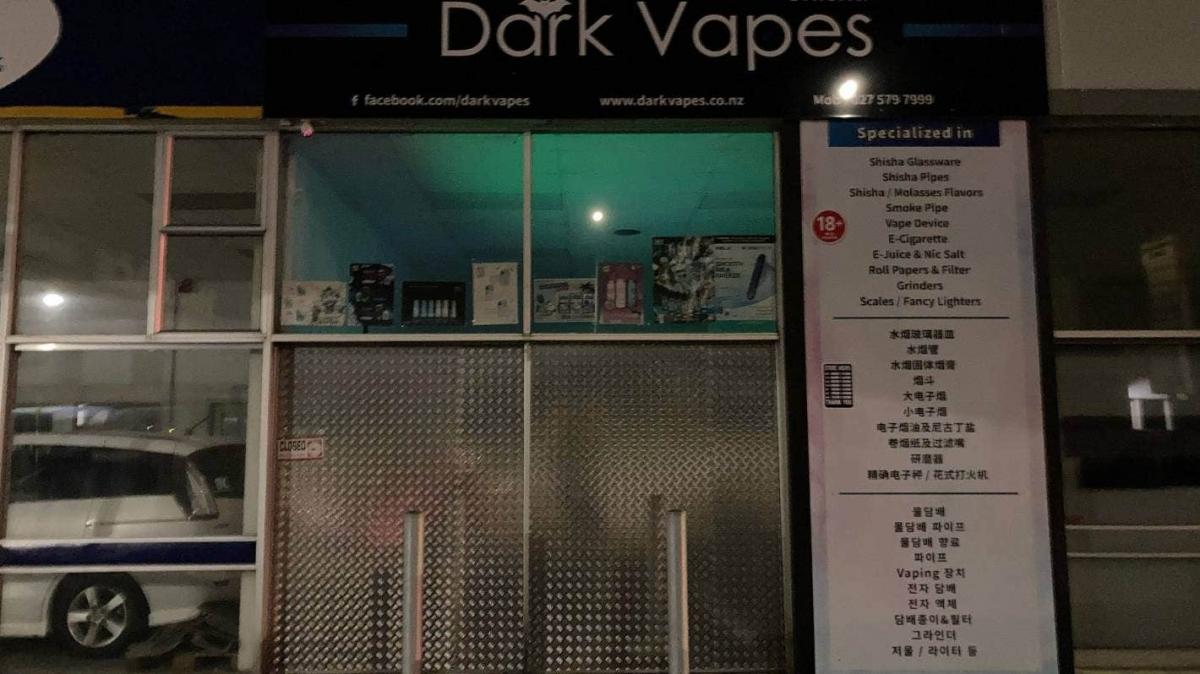
A Kmart and a vape store in Auckland are the latest locations linked to the movements of a person who has tested positive for Covid-19.
The owner of the vape store, Dark Vapes, in East Tamaki, said the closure of his shop on Wednesday for deep cleaning, followed by his mandatory self-isolation, would be tough for his small business.
Three new community cases of Covid-19 in south Auckland were announced on Tuesday.
The first was a student at Papatoetoe High School, which the Ministry of Health announced earlier in the day. Two other cases – the student’s siblings, who are a teenager and an infant – were confirmed on Tuesday evening.
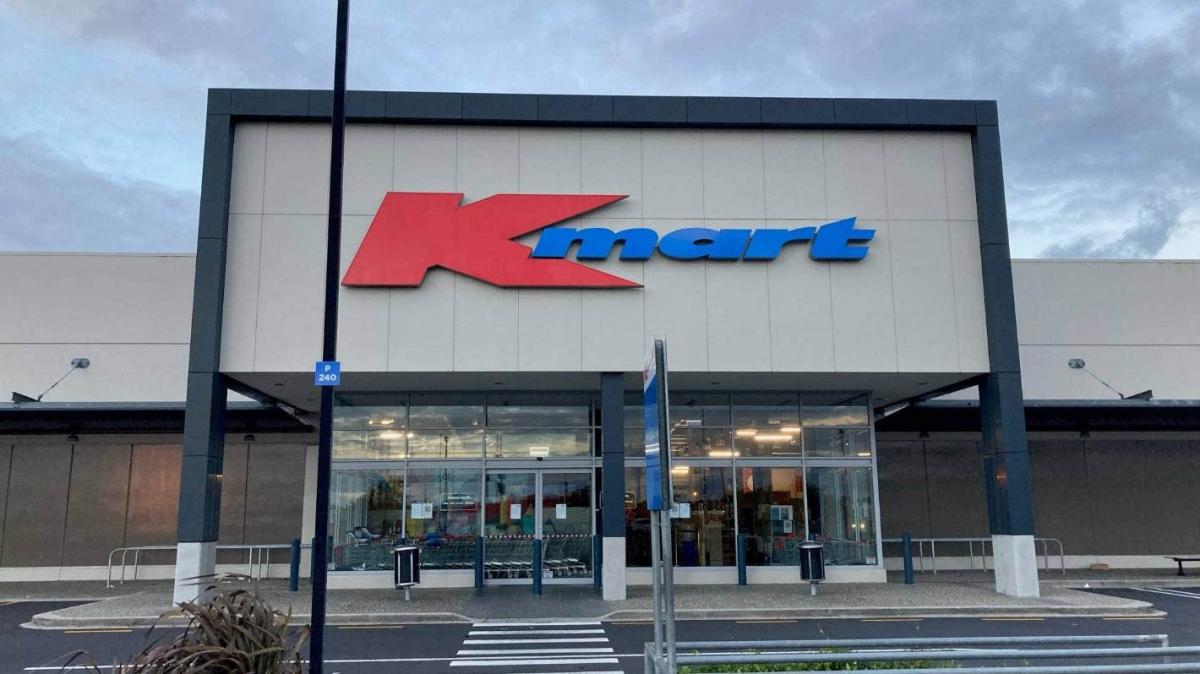
Kmart in Botany, in east Auckland, and Dark Vapes are among the places of interest visited by one of the cases, with further locations expected to be released on Wednesday.
Kmart Botany
The teenager reported as a new case on Tuesday night works at Kmart Botany.
They were at work on Friday, February 19 and Saturday, February 20, between 3.30pm and 10.30pm.
The store was closed on Tuesday night, and a thorough sanitisation of the store was being carried out, a Kmart spokesperson said.
Thirty-one Kmart staff have been identified as close contacts and are self-isolating, the ministry said.
Any members of the public who visited Kmart Botany at the times the student was working is considered a casual plus contact, and must self-isolate at home immediately.
Casual plus contacts are those who would have been considered casual contacts, but have been upgraded due to the risk of the more transmissible strains of the virus.
“If you are a casual plus contact, you are advised to immediately isolate at home and call Healthline on 0800 358 5453 for advice on isolation time frames and testing requirements,” the ministry said.
Dark Vapes
One of the two high school students announced as new cases on Tuesday also twice visited Dark Vapes in East Tamaki, on Friday and Saturday.
The owner, who did not want to be named, said the store would be closed on Wednesday for deep cleaning, and he would isolate at home for 14-days, as per Ministry of Health advice.
“It's going to be tough for the business.”
He said the store would be able to reopen after cleaning as another staff member was available to help run it.
The owner did not know the identity of the case who visited.
A Ministry of Health spokeswoman said she was not sure which of the cases visited the store.
The visits to the vape store took place on Friday, February 19 between 2.30pm and 4pm, and also Saturday, February 20, between 7pm and 8.30pm.
People who visited the store during these times are considered to be casual-plus contacts.
More locations are expected to be released by the ministry on its website.


Poll: 🗑️ Would you be keen to switch to a fortnightly rubbish collection, or do you prefer things as they are?
Aucklanders, our weekly rubbish collections are staying after councillors voted to scrap a proposed trial of fortnightly pick-ups.
We want to hear from you: would you be keen to switch to a fortnightly rubbish collection, or do you prefer things as they are?
Keen for the details? Read up about the scrapped collection trial here.
-
83.1% Same!
-
16.9% Would have liked to try something different

Why we need cash to stick around----Cash is king – Using notes and coins to pay for everyday goods and services is quickly becoming obsolete. When will cash disappear from our lives? And who'll miss out when it does?
Every March, the New Zealand Red Cross sends out teams of street volunteers across the country. With their white buckets and red vests, they're instantly recognisable. The idea, says philanthropy director Jasmine Edwards, is to raise awareness for Red Cross’ work and hopefully get some donations in the process. “It’s part of our largest fundraising event of the year,” she says.
But, over the past five years, the amount the street appeal brings in has been trending down. Edwards describes a combination of contributing factors: COVID, the ongoing cost-of-living crisis and a lack of cash. “We’ve seen a pretty steady decline in people carrying cash, and that’s had a big impact on our street appeals,” she says. “It’s really affected what we’re able to raise.” That, in turn, affects how much aid work the Red Cross can do.
Edwards and the teams she co-ordinates have pivoted to other fundraising methods. They’ve trialled EFTPOS, tap-and-go donation machines and even QR codes. Each has downsides, says Edwards. EFTPOS isn’t quick, and QR codes often rely on the person taking a photo and remembering to donate later. “The tap-and-go machines are quicker because you just pop your card on, but they’re quite costly. You could never afford to have one of those at every site.”
So far, the cashless options haven’t worked as well as people reaching into their pockets and grabbing a couple of notes or a handful of coins to throw into the Red Cross buckets. However, those days, it seems, are over. In 2023, Stats NZ reported just 7% of transactions were made in cash. Everyone is using alternative methods to pay for goods and services these days, from EFTPOS and apps like Afterpay to swiping their phones and watches loaded with their credit cards.
Edwards wonders how long Red Cross has got until it needs to make more changes to its street appeals. “Our volunteers have amazing conversations with people on the street,” she says. “It’s a real moment of human connection. You can’t quite replicate that with online donations.”
Cash is king – until it’s not
=====================
Cash use is declining – rapidly. In its 2023 Cash Use Survey, the Reserve Bank of New Zealand found cash usage for everyday purchases had decreased from 95.8% in 2019 to 60.4% in 2021 and just 57.2% in 2023. The bank says 15% of New Zealanders prefer to use cash for everyday payments, but only 8% are regular or daily cash users.
Despite this decline, cash remains important, according to the Reserve Bank: it all depends on the situation. “Research establishes that New Zealanders place a high value on having access to cash,” a spokesperson told Consumer NZ. They cited short-lived personal emergencies, long-term complex personal challenges, community-level emergencies and digital payment outages as reasons for cash’s importance.
In December 2024, the Australian government announced it would mandate businesses selling essential goods and services in that country to accept cash from 2026. “For many Australians, cash is more than a payment method, it’s a lifeline,” officials said. Australians support this, with a survey by Australia’s consumer watchdog Choice showing 97% of respondents think stores shouldn’t be able to turn down cash for essentials.
But that’s not the case in New Zealand, where there are no rules to protect cash. If a business doesn’t want to accept cash, it just has to put up a sign saying so. The only rules limit how much a consumer can pay in coins. “The Reserve Bank is currently considering further changes to the law to support the cash system and ensure New Zealanders can access and use cash as desired,” the Reserve Bank spokesperson said.
How cash can help you spend less
=============================
Tom Hartmann, the personal finance lead at New Zealand’s independent money guide Sorted, says cash can be used as an important tool for some people to make better budgetary choices. He says credit cards or apps like Afterpay removes a buffer and encourage consumers to spend more. “You go up to the till; you get what you want; you pay, wave, swipe, whatever you do ...,” he says. “It’s all pleasure because you’re getting the thing, and any pain is sort of reserved for the future, when you get the bill.”
Cash, he says, helps those who may be struggling with their budgets get their spending under control. “With cash, it’s a different experience. You’re holding cash in one hand, and you receive the goods in the other. So, your brain is processing the trade-off right in that moment – is this worth the pain of letting go of this cash for what I’m getting?”
Carrying cash, he admits, is becoming an antiquated notion. It depends on your personality. When he’s got cash, he’s more likely to spend it faster. But Hartmann recalls a conversation he recently had with his 17-year-old son, who has an entirely different attitude. “He sold something on Trade Me recently, and he wanted to be paid in cash, because he holds on to [cash] better,” Hartmann says.
How small businesses are coping
===========================
Every Sunday, Carol Gunn opens the Grey Lynn community centre early to let in stall-holders. By 8am, the markets are humming with customers grabbing freshly-baked pastries, recently picked vegetables, hot drinks, cheese, eggs and more. Gunn has noticed more stall-holders offering EFTPOS and credit card facilities, and fewer customers taking cash.
But she also recognises the issues, saying operating EFTPOS machines can be pricey for stall-holders, especially when they’re just getting going. “At this time of the year, we get lots of NCEA students trying out business ideas as part of their course assessments – they can only use cash,” she says. “We get community fundraisers who can only use cash. Getting rid of cash could disenfranchise the grass-roots activities in society.”
Frank Argent, the owner of Barefoot Gardens, a small produce farm in Kumeu, Auckland, agreed. While bagging up my potatoes and chillis recently, he told me about 40% of his customers paid in cash, which he encouraged. Why? “Every time you swipe your card, the bank takes a sizable chunk,” he said. “For a small business like ours, it adds up to a reasonable amount over a week.”
Other factors to consider in the death of cash
=====================================
There are still many elderly people who cannot use, or forget how to use, tech. Cash, therefore, remains very important to them for everyday items like groceries. “A cashless society makes things very difficult for older [generations],” one financial advisor told me.
Natural disasters or emergencies can affect internet networks, shutting down EFTPOS and credit capabilities. “Cash is often the only option at that time,” an advisor said. “Everyone should have a small amount of cash put aside.” How much is a personal decision, but the National Emergency Management Agency suggests it’s logical to have enough for three days’ worth of food and petrol. It also says small denominations, like $5 notes, are useful because some businesses may not be able to offer change.
Putting coins into a piggy bank is often a child’s first interaction with money. An advisor said the process can teach children important financial basics about saving money from an early age.
The king is dead; long live the king!
=============================
Claire Matthews, an associate professor at Massey University’s business school, says it’s too soon to say we’re on the brink of becoming a cashless society. “We have already moved a long way towards it, but I think cash transactions will be difficult to eliminate,” she says. “I think probably most of us are ready to move to a cashless society. But there are a few who aren’t and will likely find it very hard.”
But my own experiences suggest the shift could be happening faster than anyone thinks. While researching this piece, I found a sign at my local Pak’nSave declaring the store’s self-service check-outs would soon stop accepting cash. “Cashless,” warned a printed sign in red.
Then, at a recent Auckland Football Club match, I approached a cashier while balancing drinks and hot chips. When I handed her a $50 note, she turned it away, saying, presciently, “We don’t accept cash here”. I smiled and waved my phone over the terminal. That $50 will have to wait for another day.
====================================================
Poll: Is it ok to regift something that you have been given?
🎁 Holiday Gift Chat!
Do you ever regift?
What’s your take on asking for a receipt if a gift doesn’t fit?
-
79.3% Yes! It's better to regift what I don't need
-
20.7% No. It's the thought and effort that matters
 Loading…