






You're probably recycling wrong - here's how to get it right
When I saw a Waste and Recycling Industry Forum report this week that said nearly a fifth of New Zealand's recycling winds up in landfill due to contamination, I thought, "How hard is it to recycle, you idiots?"
And then someone at work casually mentioned that they had been very good and removed all the lids from their recycling that morning.
Reader, I have not been removing the lids from my recycling.
It's me, hi, I'm the idiot, it's me.
What else might I and my fellow New Zealanders be getting wrong when bin day rolls around?
A recycling education
==================
When I confessed my recycling sins to Parul Sood, general manager of waste solutions at Auckland Council, she was very kind to me, saying that up until a few months ago, I was doing the right thing keeping the lids on my bottles.
But New Zealand's recycling systems moved to a national standard in February, which is when removing lids became a nationwide requirement.
There are a few problems with lids on recyclables, Sood said.
"When you put the lid on the bottle pack, sometimes people leave liquid in it, so it's not completely rinsed out," she said.
"Then in some facilities the lids can fall through the [sorting] machines, too, and they can't be recycled."
Other recycling crimes
==================
Leaving lids on recyclables and failing to properly clean containers out are common recycling issues, but Sood said the bigger issue is people still contaminating their recycling bins with rubbish that should be going to landfill or recycled elsewhere.
She said that just because some items, like batteries or metal, can be recycled in other ways, they have no business being in a curbside recycling bin.
"People need to be really aware that your recycling bin is for packaging that comes out of your kitchen, laundry and your bathroom ... no other material," she said.
"People are even putting electronics [in their recycling bin]. We had a truck come into the facility recently which had caught fire because it had electronics in it."
Bags of soft plastics and clothing are also common culprits, which Sood said can pose extra problems at recycling facilities because they get tangled in machinery.
While there are people manually sifting through items on the conveyor belts at recycling facilities, they are mostly there to remove any offending large pieces.
If too many contaminated items make it through the sorting process, the recyclables can be rejected by the markets that are going to repurpose the materials. And that could ultimately mean large quantities of recycling must be sent to landfill instead.
When it comes to putting items in your recycling bin, Sood said: "If in doubt, leave it out."
"If you're not sure if [something] goes in the recycling bin or not, just put it in the rubbish; that's probably better," she said.
"I think taking a minute to just do the right thing with that packaging is worth it."
Becoming a recycling superstar
==========================
What should you be putting in your recycling bin then?
============================
Glass bottles and jars
Tin, steel, and aluminium cans
Plastic containers (that are grades 1, 2 and 5) from your kitchen, bathroom or laundry. These containers should not be larger than 4 litres.
Newspapers and magazines
Paper and cardboard, including window envelopes, egg cartons and (empty) pizza boxes. Bubble wrap, polystyrene, and plastic packaging should be removed from the cardboard boxes — any tape or labels can stay on.
Items that cannot go in your recycling bin include:
=====================================
Soft plastics (these can instead be dropped off at supermarkets or other retailers that are part of the soft plastics recycling scheme)
Food
Liquid paperboard (such as milk or juice Tetra Pak cartons)
Aerosol cans
Garden or building waste
Nappies or sanitary products
Window or mirror glass
Light bulbs
Electronics or batteries
Before you throw your recyclables in your bin, there are a couple of other things to do.
You need to ensure any items you're recycling are bigger than 50mm x 50mm.
You should also make sure the items are loose in the bin — recyclable items shouldn't be lumped together in a bag.
Finally, don't forget to empty and rinse out your bottles and containers and, of course, make sure you remove those offending lids.
===========================================
www.1news.co.nz...
===========================================

Poll: Do you set New Year’s resolutions?
🎉 2026 is almost here!
We’re curious ... how do you welcome it?
Do you set resolutions, follow special traditions, or just go with the flow?

-
10.5% Yes! New Year, New Me
-
19.9% Yes - but I rarely stick to them
-
69.6% Nah - not for me
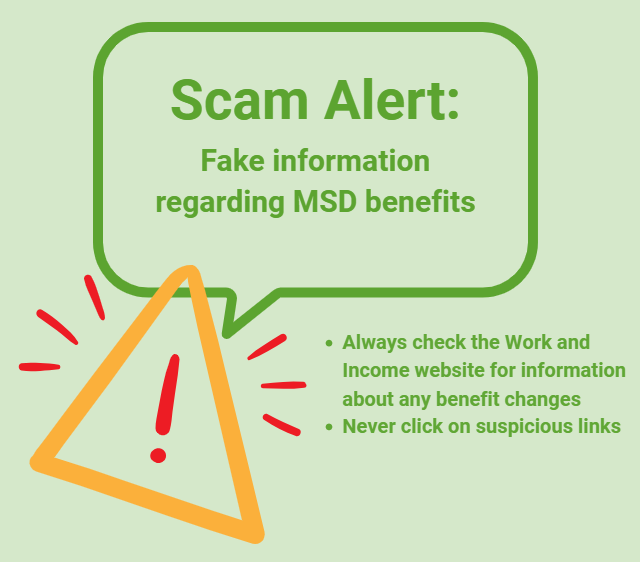
Scam Alert: Fake information regarding December Bonuses from MSD
The Ministry of Social Development is reporting that fake information is circulating about new ‘December bonuses’ or ‘benefit increases’
If you get suspicious communication, please contact Netsafe.
Here's wishing you a TERRIFIC and FANTASTIC 2026
Compliments of the Season.
Best wishes for a happy, healthy and prosperous NEW YEAR. I sincerely pray that GOD will bless each one of you and your family with good health, more wealth, endless joy, love and happiness in 2026 and the many many years ahead. STAY BLESSED.



 Loading…