





Landowners contacted as Significant Natural Areas identified in Mid Canterbury
By local democracy reporter Jonathan Leask:
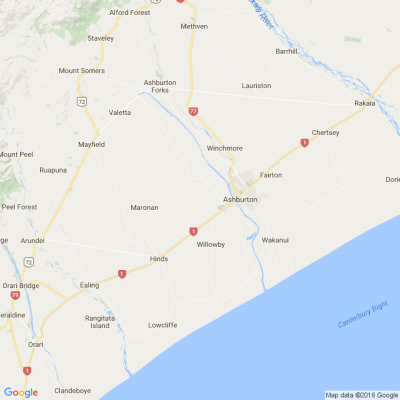
Five landowners have already been contacted as Significant Natural Areas (SNA) are identified in Mid Canterbury.
The SNA process has been contentious in other parts of the country, particularly in Northland and the West Coast, as greater restrictions can be placed on designated land.
In Mid Canterbury the process is in its infancy, but is building on previous environmental provisions.
It is not known how many private properties could be affected, but five letters have already gone out to landowners in the region, the Ashburton District Council confirmed.
The council started a survey earlier this year of existing areas of significant nature conservation value (ASCV) that could be deemed SNAs.
Council compliance and development group manager Jane Donaldson said the move came in anticipation of the National Policy Statement for Indigenous Biodiversity (NPSIB), which has recently come into force.
This policy statement directed councils to have consistent approaches in their policies, plans and strategies to maintain indigenous biodiversity.
"The survey is currently an audit of existing SNAs, referred to as ASCV’s, but it also has crossover with council’s responsibilities under the NPSIB, and also council’s draft biodiversity strategy.”
The process of identifying SNAs was still under development, with the council required to identify SNAs by 2028, Donaldson said.
It was unknown how many landowners in Mid Canterbury are likely to be affected, she said.
“It is expected that affected owners will initially be contacted individually”.
So far five letters had been sent out, Donaldson said, noting that some additional land was within the conservation estate.
A copy of a letter to affected property owners provided by the council outlined how it was undertaking an initial assessment of the existing ASCVs and “has discovered some areas where further investigation is needed”.
“In some cases, this might be because of vegetation change, but in others, it might be because of errors in the initial creation of the overlay maps.
“There is the possibility that these might be creating unnecessary regulatory hurdles or risks for farming operations,” the letter stated.
The letter also explained that due to the NPSIB, the council “may have to take a district-wide look at biodiversity” to ensure its existing mapping is correct and accurate.
The preference is “for this to be a collaborative project between council and landowners.”
Eventually, a Resource Management Act process would need to be followed to seek any changes in the District Plan, Donaldson said.
The District Plan, adopted in 2014, has provisions regarding ASCVs – listing 67 sites across the district, but the current project and related work may result in changes, Donaldson said.
“But these are yet to be developed and would also require a Resource Management Act process to be considered”.
Local iwi have been briefed and approached for discussion about involvement in the process, but those discussions are yet to occur, Donaldson said.
-------------------------------------
EXPLAINER: What is an SNA?
Significant Natural Areas are considered to be areas of New Zealand’s most important remnants of native habitat that must be protected to ensure the ongoing biodiversity of the country.
The Resource Management Act (RMA) 1991 requires that they are protected.
It refers to "the protection of areas of significant indigenous vegetation and significant habitats of indigenous fauna" - or SNAs.
The term 'significant' is not defined by the Resource Management Act, and its ambiguity has resulted in confusion among resource managers and users, as well as national disparity in approach to the identification of SNAs.
Councils around the country are responsible for identifying SNAs in their territory, and because of that issue around "significant", each council can apply different standards when assessing SNAs.
Part of the public concern about SNAs is that most are on private land, and those who own that land are worried about losing it, or the land itself losing its value and adding complications for owners.
Existing practices in or near SNAs will generally be able to continue, but restrictions will apply if a landowner wants to use the land for a new activity, and therefore need to apply for consent.


Poll: Do you set New Year’s resolutions?
🎉 2026 is almost here!
We’re curious ... how do you welcome it?
Do you set resolutions, follow special traditions, or just go with the flow?

-
10.2% Yes! New Year, New Me
-
19.2% Yes - but I rarely stick to them
-
70.6% Nah - not for me
Scam Alert: Fake information regarding December Bonuses from MSD
The Ministry of Social Development is reporting that fake information is circulating about new ‘December bonuses’ or ‘benefit increases’
If you get suspicious communication, please contact Netsafe.


The Summer Kiwi Quiz is back by popular demand
Grab a copy of your local Stuff newspaper between 1 Jan - 28 Jan and participate in the Summer Kiwi Quiz! Test your knowledge, answer the daily New Zealand based questions, and find out how well you know our beautiful country!
Each correct answer will get you one entry into the draw to WIN 1 of 5 Ooni Karu 2 Portable Pizza Oven bundles, valued at $1024! Each bundle includes: an Ooni Karu 2 Multi-Fuel Portable Pizza Oven, Ooni Karu 2 Carry Cover, Ooni 12" Perforated Peel, Ooni Digital Infrared Thermometer and an Ooni Cookbook: Cooking with Ooni. The more answers you enter correctly, the higher your chance of winning. For more information and to submit your answers, click here
The Team at Stuff

 Loading…