






Waimakariri council debates reforms
By David Hill, Local Democracy Reporter
Government reform was on top of the agenda at a Waimakariri District Council meeting on Tuesday, February 7.
Councillors debated submissions on the draft future of local government report, and two Three Waters reform bills.
In a draft submission prepared by senior policy analyst Temi Allinson, the council advocated for five year long term plans, supported the concept of ‘‘citizen-led participatory democracy’’, called for stronger relations between central and local government, and reiterated concern for ‘‘unfunded mandates’’.
The council chose not to give feedback on the proposal to lower the voting age to 16 in its submission.
‘‘We decided it was a matter we didn’t need to have a view on,’’ mayor Dan Gordon said.
‘‘It is before the courts, and really it is a matter for the government.’’
The Water Services Legislation Bill and the Water Services Economic Efficiency and Consumer Protection Bill caused considerable discussion with councillors raising a number of concerns.
Cr Joan Ward questioned how creating additional bureaucracy would led to lower costs.
She said the council needed to re-enforce its opposition to the proposed reforms, and she expressed concerned about the lack of transparency in the draft legislation.
She noted there was no reference in the bills requiring the new entities to be audited by Audit New Zealand.
Cr Jason Goldsworthy questioned whether the Commerce Commission was the right body to have oversight over the new Three Waters entities, as proposed in the legislation.
He noted the Commerce Commission had found concerns with the supermarket duopoly model, so how could an entity with a monopoly over three waters be subject to market competition?
Deputy mayor Neville Atkinson said the Commerce Commission was not the right body to have oversight of Three Waters.
‘‘It needs to have the Auditor-General over the top of it.’’
Cr Niki Mealings noted there was no guarantee for drinking water to be supplied in the proposed legislation, if it was to be treated like other utilities such as power or phone.
‘‘Will people get their water cut off if they can’t pay their bill?’’
Cr Philip Redmond noted the proposed legislation did not address the question of ownership of water.
‘‘Is that a deliberate omission? There are differing views on what ownership of water means and I wonder if this bill is opening the way for an alternative to come in.’’
Submissions on the draft future of local government report close on February 28, while the Three Waters reforms submissions close on February 12.
■ Public interest journalism is funded by New Zealand on Air.

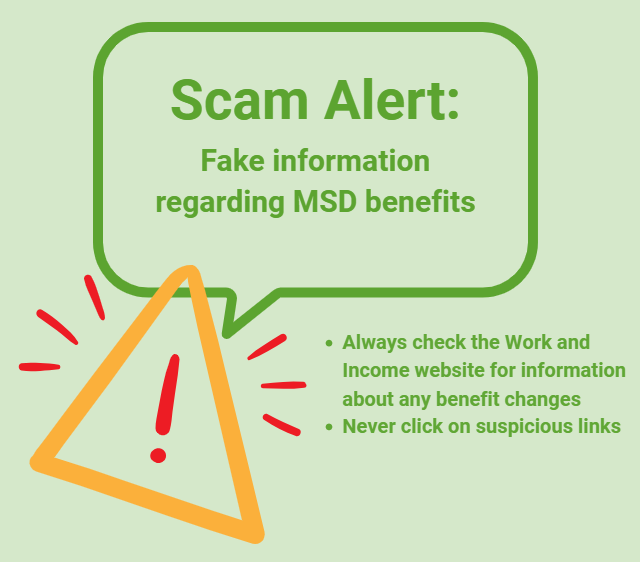
Scam Alert: Fake information regarding December Bonuses from MSD
The Ministry of Social Development is reporting that fake information is circulating about new ‘December bonuses’ or ‘benefit increases’
If you get suspicious communication, please contact Netsafe.
Poll: Do you set New Year’s resolutions?
🎉 2026 is almost here!
We’re curious ... how do you welcome it?
Do you set resolutions, follow special traditions, or just go with the flow?

-
10% Yes! New Year, New Me
-
16.9% Yes - but I rarely stick to them
-
73.1% Nah - not for me
Update to Neighbourly members on data breach 06/01/2025 8am
Yesterday in the High Court at Auckland, Neighbourly was successful in being granted an injunction against any unauthorised use of the data taken in a recent breach.
As we alerted you on January 1 and confirmed on January 3, our systems were accessed illegally and members’ information, including names, email addresses, GPS coordinates from the address you provided to us, forum posts and direct member communications were among the data that was accessed.
We acted immediately upon hearing of a potential breach: we temporarily disabled the site, notified members and authorities and worked with our external security consultants to understand if and how it had occurred. We then confirmed the breach with members, safely restored the site to service and began the process of seeking the injunction. Yesterday’s decision by Justice Johnstone prohibits the use of the data by any unauthorised person, and requires them to permanently delete it, or any information obtained from it.
This does not mean that vigilance against scammers is not still required: there is a large industry globally that seeks to use stolen information for identity fraud or to dupe people into providing details of their financial affairs for theft. Again, to keep yourself safe from scammers it is critical that you:
- Don’t click links in emails. Instead, type the web address directly into your browser. This helps ensure you’re visiting a real site, not a fake one
- Enable two-factor authentication where available as this adds an extra layer of security to your data
- Stay alert for phishing emails. Be cautious of unexpected emails asking for personal information, especially ones that create a sense of urgency.
Again, we want to apologise to you for this illegal access to the Neighbourly database and to assure you that we have carefully worked through how this occurred. We have safely secured the site and its services for use and ensured we have robust processes in place so this cannot happen again.
We are continuing to work with the relevant authorities, including the National Cyber Security Centre, on any further steps we need to take.
If you have any further questions please contact us via our customer support team at helpdesk@neighbourly.co.nz.
 Loading…