







Four year terms supported by North Canterbury Mayors
From local democracy reporter David Hill:
Four year terms could produce better outcomes, Waimakariri mayor Dan Gordon says.
Longer terms is one of the options proposed in the future of local government report presented last year by a panel led by former Waimakariri District Council chief executive Jim Palmer.
Gordon said a longer term would allow councils and governments to implement change in a more considered manner.
‘‘It would give the opportunity for a government that wants to make change, which most governments do, to adequately consult and consider the options.’’
He was referring to the Three Waters reform and the proposed legislation to replace the Resource Management Act.
He wondered if the present government would have spent more time consulting on its reform agenda if it had an extra year.
A four year term would also allow more time for local councils to consider what was best for the community they served, he said.
Developing a long-term plan every four years, instead of three, would also give councils more time to consider the impacts of government policy changes.
Hurunui mayor Marie Black said she had been opposed to a four-year term, but had changed her view.
‘‘I do see the value in terms of getting some strategic goals completed.
‘‘Quite often you come in as a new mayor or councillor and it takes a year to settle in, so in your second year you might get a start on some of those projects, but then your third year is focused on re-election.
‘‘So a fourth year would give you a bit more time to achieve your goals.’’
Waimakariri MP Matt Doocey said there were more important issues such as the cost of living crisis, youth and retail crime and the lack of after hours medical care in North Canterbury.
‘‘I think it is the last thing on people’s minds.
‘‘I think part of the issue is we are focusing on ideological issues rather than the issues that matter.
‘‘It is not on my radar.’’
Waimakariri-based Labour List MP Dan Rosewarne said he backed a four year term for Parliament.
‘‘If I came in at the last election cycle, it might have taken a year to get myself established and then by the third year you’re into an election year.
‘‘So you don’t get a lot of time to get into it.
‘‘Four years would give you more time to make a difference.’’
He said if local government went to a four-year term it made sense to synchronise general elections and boards of trustees elections into four year terms.
Submissions on the future of local government report close on February 28.

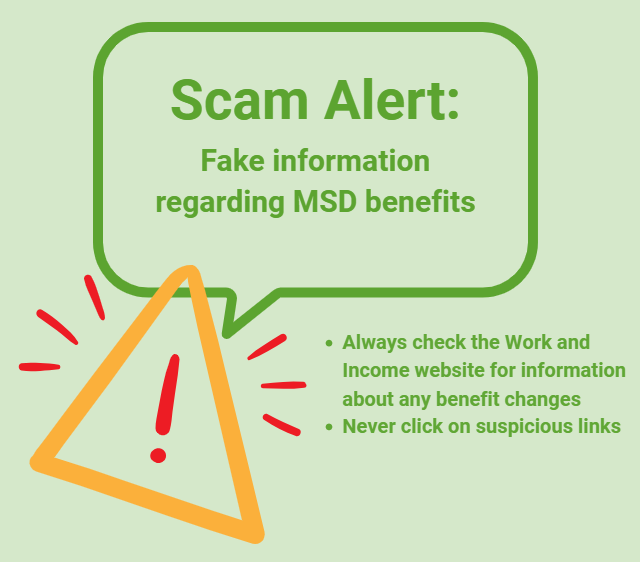
Scam Alert: Fake information regarding December Bonuses from MSD
The Ministry of Social Development is reporting that fake information is circulating about new ‘December bonuses’ or ‘benefit increases’
If you get suspicious communication, please contact Netsafe.
Poll: Do you set New Year’s resolutions?
🎉 2026 is almost here!
We’re curious ... how do you welcome it?
Do you set resolutions, follow special traditions, or just go with the flow?

-
10% Yes! New Year, New Me
-
16.9% Yes - but I rarely stick to them
-
73.1% Nah - not for me
Update to Neighbourly members on data breach 06/01/2025 8am
Yesterday in the High Court at Auckland, Neighbourly was successful in being granted an injunction against any unauthorised use of the data taken in a recent breach.
As we alerted you on January 1 and confirmed on January 3, our systems were accessed illegally and members’ information, including names, email addresses, GPS coordinates from the address you provided to us, forum posts and direct member communications were among the data that was accessed.
We acted immediately upon hearing of a potential breach: we temporarily disabled the site, notified members and authorities and worked with our external security consultants to understand if and how it had occurred. We then confirmed the breach with members, safely restored the site to service and began the process of seeking the injunction. Yesterday’s decision by Justice Johnstone prohibits the use of the data by any unauthorised person, and requires them to permanently delete it, or any information obtained from it.
This does not mean that vigilance against scammers is not still required: there is a large industry globally that seeks to use stolen information for identity fraud or to dupe people into providing details of their financial affairs for theft. Again, to keep yourself safe from scammers it is critical that you:
- Don’t click links in emails. Instead, type the web address directly into your browser. This helps ensure you’re visiting a real site, not a fake one
- Enable two-factor authentication where available as this adds an extra layer of security to your data
- Stay alert for phishing emails. Be cautious of unexpected emails asking for personal information, especially ones that create a sense of urgency.
Again, we want to apologise to you for this illegal access to the Neighbourly database and to assure you that we have carefully worked through how this occurred. We have safely secured the site and its services for use and ensured we have robust processes in place so this cannot happen again.
We are continuing to work with the relevant authorities, including the National Cyber Security Centre, on any further steps we need to take.
If you have any further questions please contact us via our customer support team at helpdesk@neighbourly.co.nz.
 Loading…