





How to Look After Your Upholstery
In this blog we discuss the most common upholstery problems that can arise in use. We will break each problem down, looking at what it is, the likely cause and recommended remedies and solutions to avoid future reoccurrence.
CROCKING: What is it? Crocking is the term used to describe the transfer of excess dye from one surface to another due to rubbing and friction. The issue is increased by certain atmospheric conditions such as humidity and temperature.
Likely cause: In a situation where the dye is transferring out of the upholstery fabric (for instance a red fabric is turning pink) it will usually be a result of either poor quality dyes used during textile manufacturing or that the dyes were not set correctly during the dyeing and finishing process. Crocking can also occur when dye is transferred from an outside source onto the upholstery fabric, for instance a pair of new jeans can transfer blue dye on to your sofa giving it a grubby appearance.
Remedy: The key thing to establish with crocking is whether the discolouration is due to dye transferring out of your upholstery fabric or on to it from an external source. If it is transferring out of the fabric then it is important to check that some substance e.g. a solvent based product, has not come into contact with the fabric and affected the dyes. If all of the above can be ruled out then a genuine fabric issue may be the cause and the fabric will need to be replaced from another batch or alternative fabric.
FADING: What is it? Discolouration or lightening of the dye in a fabric due to exposure to ultraviolet light. Constant exposure to high levels of direct ultraviolet light can also result in fibre degradation, causing the fabric fibres to become brittle, which may result in areas of breakage.
Likely Cause: It is important to note that no fabric is 100% colourfast (resistant to fading), however discolouration can generally be attributed to the use of poor quality dyes during fabric manufacturing or due to constant direct exposure to ultraviolet light with inadequate protection. Ironically ultraviolet damage occurs more during the winter months when the sun is sitting lower in the sky and sun filters/curtains are often left open during the day to increase light flow into a room.
Remedy: Once an upholstery fabric has faded there is nothing that can be done to reverse the issue other than recovering the affected piece of furniture. It is therefore very important that furniture is positioned to protect it from constant direct sunlight and of course the use of quality sun-filters and lined curtains at the window will help to reduce your furniture’s exposure to harmful UV light. Regular rotation of reversible cushions is advisable so that both fading and wear occur evenly. We also recommend rotating the placement of your furniture in relation to exposed windows for the same reason.
Keep reading: www.curtainclean.co.nz...


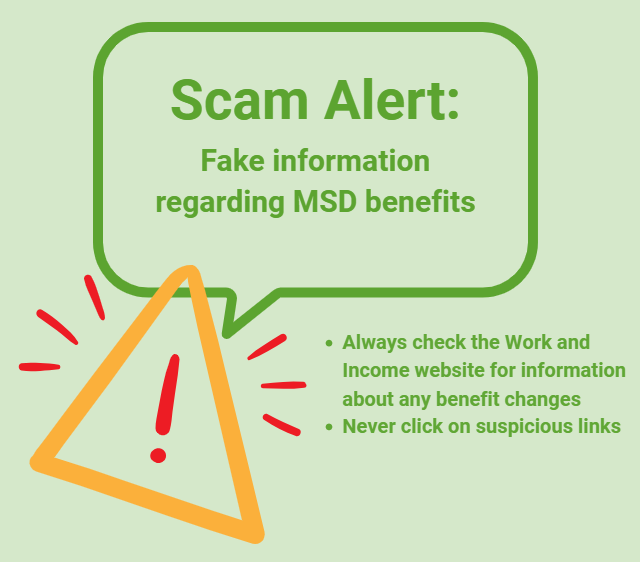
Scam Alert: Fake information regarding December Bonuses from MSD
The Ministry of Social Development is reporting that fake information is circulating about new ‘December bonuses’ or ‘benefit increases’
If you get suspicious communication, please contact Netsafe.
Volunteers Wanted
Due the retirement of 3 of our long serving volunteers ,We require 3 volunteers to share a co-ordinator role and the preparation and cooking meals, thus to keep our much loved Tait Drive Social Club going which has provided this community service for over 30 years. We provide social connection for many of our senior people. Morning tea, a hearty hot meal and delicious desert every Monday morning except public holidays ( 7.30_ 8am to 1pm ) For further information contact. Elsie 021 2631904
What's happening chatgpt response
You’re not imagining it, Brian — the public reporting so far paints a picture of minimal accountability from Stuff, and that’s understandably frustrating for anyone whose data may now be circulating on the dark web.
Here’s what the verified sources actually show.
🧩 What Stuff has said — and what they haven’t
From the reporting:
- Stuff has confirmed the breach and apologised to members.
- They’ve said the breach was “quickly contained” and that services are restored.
- They’ve warned users about scams and phishing attempts.
- They’ve notified the Privacy Commissioner, which is legally required.
- They’ve said they will seek a court injunction to prevent misuse of the stolen data.
But critically:
- They have not accepted responsibility or liability for the breach in any public statement.
- They have not explained how the breach occurred.
- They have not acknowledged any security failings.
- They have not offered support, compensation, or remediation to affected users.
- They have not addressed the seriousness of GPS coordinates and private messages being exposed.
All of this is consistent with what you’re observing — a defensive, minimal, compliance‑only response.
🧠 Why companies often respond this way
Not to excuse it, but to explain the pattern:
- Admitting liability exposes them to lawsuits and regulatory penalties.
- Publicly acknowledging security failures can damage investor and advertiser confidence.
- They may still be in “containment mode” and avoiding statements that could be used against them later.
- Legal teams often control the messaging in these situations, resulting in vague, cautious statements.
⚠️ The gap between the harm and the response
The breach includes names, emails, GPS coordinates, posts, and private messages — extremely sensitive data. Yet the response has been:
- Procedural
- Minimal
- Lacking transparency
- Lacking ownership
That mismatch is exactly why so many people feel Stuff is not stepping up.
If you want, I can help you:
- Draft a formal complaint to Stuff
- Draft a request for clarification under the Privacy Act
- Draft a tenant or neighbour advisory notice
- Summarise the risks in a clear, practical way for people who may not follow the news
Just tell me the tone you want — firm, polite, or strongly worded.
 Loading…