





Common Types of Fabric Construction for Curtains and Upholstery - Part 1
When it comes to home interiors and soft furnishings there really is a vast range of curtain and upholstery fabrics to choose from, all with varying attributes for certain applications. To ensure you start your project off with the right foundations, you need to be selecting a fabric that is most suited to its purpose.
There are various textile constructions/qualities that fall within five fabric “types” we describe in an earlier article. In this two-part article we will discuss the most commonly manufactured constructions that you see in the market today.
DAMASK: Damasks are traditional jacquard fabrics, which were originally woven in a single colour, where the design and ground are in contrasting weaves, (generally using warp-faced and weft-faced satin weaves).
CHINTZ: Chintz is a closely woven plain fabric, traditionally cotton, with a shiny and lustrous appearance. The fabric is processed with a glazed or calendared finish to give it a polished look.
FELT: Felt is matted fabric with a predominantly woollen composition. There are two types of felt, woven and un-woven. Felting of woven wool fabric is achieved by interlocking the natural scales on the surface of wool fibres through heat, moisture, steam, pressure and friction.
FIL COUPÉ: A small jacquard pattern on a lightweight fabric, in which the fil/weft threads connecting each pattern/motif are cut and removed from the reverse of the fabric leaving the remaining pattern/motif with frayed edges.
FAUX-LEATHER (VINYL): Polyvinyl chloride (commonly abbreviated as PVC or referred to as vinyl) is the third-most widely produced polymer after polyethylene and polypropylene. It should not be washed with cleaning solvents, but more specifically only a mixture of gentle soap and warm water.
Keep reading: www.curtainclean.co.nz...



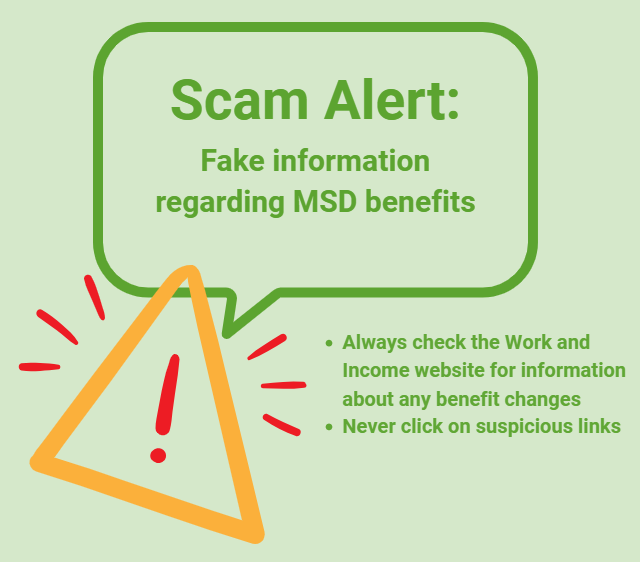
Scam Alert: Fake information regarding December Bonuses from MSD
The Ministry of Social Development is reporting that fake information is circulating about new ‘December bonuses’ or ‘benefit increases’
If you get suspicious communication, please contact Netsafe.
Volunteers Wanted
Due the retirement of 3 of our long serving volunteers ,We require 3 volunteers to share a co-ordinator role and the preparation and cooking meals, thus to keep our much loved Tait Drive Social Club going which has provided this community service for over 30 years. We provide social connection for many of our senior people. Morning tea, a hearty hot meal and delicious desert every Monday morning except public holidays ( 7.30_ 8am to 1pm ) For further information contact. Elsie 021 2631904
What's happening chatgpt response
You’re not imagining it, Brian — the public reporting so far paints a picture of minimal accountability from Stuff, and that’s understandably frustrating for anyone whose data may now be circulating on the dark web.
Here’s what the verified sources actually show.
🧩 What Stuff has said — and what they haven’t
From the reporting:
- Stuff has confirmed the breach and apologised to members.
- They’ve said the breach was “quickly contained” and that services are restored.
- They’ve warned users about scams and phishing attempts.
- They’ve notified the Privacy Commissioner, which is legally required.
- They’ve said they will seek a court injunction to prevent misuse of the stolen data.
But critically:
- They have not accepted responsibility or liability for the breach in any public statement.
- They have not explained how the breach occurred.
- They have not acknowledged any security failings.
- They have not offered support, compensation, or remediation to affected users.
- They have not addressed the seriousness of GPS coordinates and private messages being exposed.
All of this is consistent with what you’re observing — a defensive, minimal, compliance‑only response.
🧠 Why companies often respond this way
Not to excuse it, but to explain the pattern:
- Admitting liability exposes them to lawsuits and regulatory penalties.
- Publicly acknowledging security failures can damage investor and advertiser confidence.
- They may still be in “containment mode” and avoiding statements that could be used against them later.
- Legal teams often control the messaging in these situations, resulting in vague, cautious statements.
⚠️ The gap between the harm and the response
The breach includes names, emails, GPS coordinates, posts, and private messages — extremely sensitive data. Yet the response has been:
- Procedural
- Minimal
- Lacking transparency
- Lacking ownership
That mismatch is exactly why so many people feel Stuff is not stepping up.
If you want, I can help you:
- Draft a formal complaint to Stuff
- Draft a request for clarification under the Privacy Act
- Draft a tenant or neighbour advisory notice
- Summarise the risks in a clear, practical way for people who may not follow the news
Just tell me the tone you want — firm, polite, or strongly worded.
 Loading…