





All About Curtain & Upholstery Fabrics
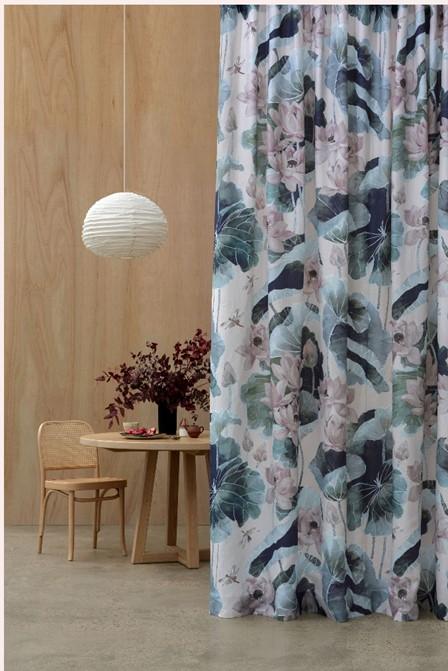
There are five different styles/category of fabric that form the foundation for the vast array of curtain and upholstery fabrics you see on the market today. Each fabric style outlined below has its own unique characteristics and are produced using different techniques. Some of these fabric types will be well known to you like plain and printed fabrics, while others less so.
You may be wondering why cotton and linen for example are not included here – this is because they are a type of composition that falls within one of these categories below.
Here we give you a high-level overview of the styles of fabrics available to you for your home interior or commercial interior project.
PLAIN
Plain fabrics are characterised by simple weaves and textures not showing any complex design.
Simple weaves are for instance – hopsacks, twills, herringbones and satins. Common fabric compositions used for plain fabrics include natural fibres (cotton, linen) as well as synthetic fibres (polyester, acrylic, etc.)
Plain interior fabrics take on a simple and paired back aesthetic. Ideal for a minimalist décor, you can complement plain fabrics with more textured and tactile textiles for added interest to your home décor.
PRINTED
Printing is the process of applying coloured designs and patterns to a woven textile. One or more colours are applied to the fabric in specific parts only, using thickened dyes to prevent the colour from spreading beyond the limits of the pattern or design. In quality printed fabrics, the colour is bonded with the fibre so as to resist loss of dye from washing and friction (crocking). Printing is an ancient textile manufacturing technique of which there are five print production methods you can use:
Burn Out Printing:
A process which uses chemicals, rather than colour, to burn out or dissolve away one fibre in a fabric. The purpose is to achieve a sheer design on a solid or opaque fabric. The chemicals used during production can make this fabric sensitive to ultraviolet degradation when hung in direct sunlight.
Digital Printing:
Rapidly becoming a popular and commercially viable printing method due to its flexibility, precision and consistency. With this new printing technique it is now possible to print any design, even with photographic detail, onto fabric. There are no restrictions in the amount of colour that can be used.
Engraved Roller Printing:
The printing method used for the majority of fabrics worldwide. The colours are printed directly onto the fabric. There must be one roller for each colour used in the print. The more colours used, the better the print definition and depth of colour. The number of colours used is printed on the left hand selvedge of a fabric along with the brand.
Hand Block Printing:
The oldest form of printing. Print designs are created by transferring dyestuffs onto fabric with the help of wooden, linoleum, or copper blocks. Artisans hand craft individual blocks to carry each different colour in a design and perfectly match block placement to create the all-over design.
Keep reading: www.curtainclean.co.nz...


Scam Alert: Fake information regarding December Bonuses from MSD
The Ministry of Social Development is reporting that fake information is circulating about new ‘December bonuses’ or ‘benefit increases’
If you get suspicious communication, please contact Netsafe.

Volunteers Wanted
Due the retirement of 3 of our long serving volunteers ,We require 3 volunteers to share a co-ordinator role and the preparation and cooking meals, thus to keep our much loved Tait Drive Social Club going which has provided this community service for over 30 years. We provide social connection for many of our senior people. Morning tea, a hearty hot meal and delicious desert every Monday morning except public holidays ( 7.30_ 8am to 1pm ) For further information contact. Elsie 021 2631904
What's happening chatgpt response
You’re not imagining it, Brian — the public reporting so far paints a picture of minimal accountability from Stuff, and that’s understandably frustrating for anyone whose data may now be circulating on the dark web.
Here’s what the verified sources actually show.
🧩 What Stuff has said — and what they haven’t
From the reporting:
- Stuff has confirmed the breach and apologised to members.
- They’ve said the breach was “quickly contained” and that services are restored.
- They’ve warned users about scams and phishing attempts.
- They’ve notified the Privacy Commissioner, which is legally required.
- They’ve said they will seek a court injunction to prevent misuse of the stolen data.
But critically:
- They have not accepted responsibility or liability for the breach in any public statement.
- They have not explained how the breach occurred.
- They have not acknowledged any security failings.
- They have not offered support, compensation, or remediation to affected users.
- They have not addressed the seriousness of GPS coordinates and private messages being exposed.
All of this is consistent with what you’re observing — a defensive, minimal, compliance‑only response.
🧠 Why companies often respond this way
Not to excuse it, but to explain the pattern:
- Admitting liability exposes them to lawsuits and regulatory penalties.
- Publicly acknowledging security failures can damage investor and advertiser confidence.
- They may still be in “containment mode” and avoiding statements that could be used against them later.
- Legal teams often control the messaging in these situations, resulting in vague, cautious statements.
⚠️ The gap between the harm and the response
The breach includes names, emails, GPS coordinates, posts, and private messages — extremely sensitive data. Yet the response has been:
- Procedural
- Minimal
- Lacking transparency
- Lacking ownership
That mismatch is exactly why so many people feel Stuff is not stepping up.
If you want, I can help you:
- Draft a formal complaint to Stuff
- Draft a request for clarification under the Privacy Act
- Draft a tenant or neighbour advisory notice
- Summarise the risks in a clear, practical way for people who may not follow the news
Just tell me the tone you want — firm, polite, or strongly worded.
 Loading…