





What is Yarn: What It’s Made From, How You Make It and More
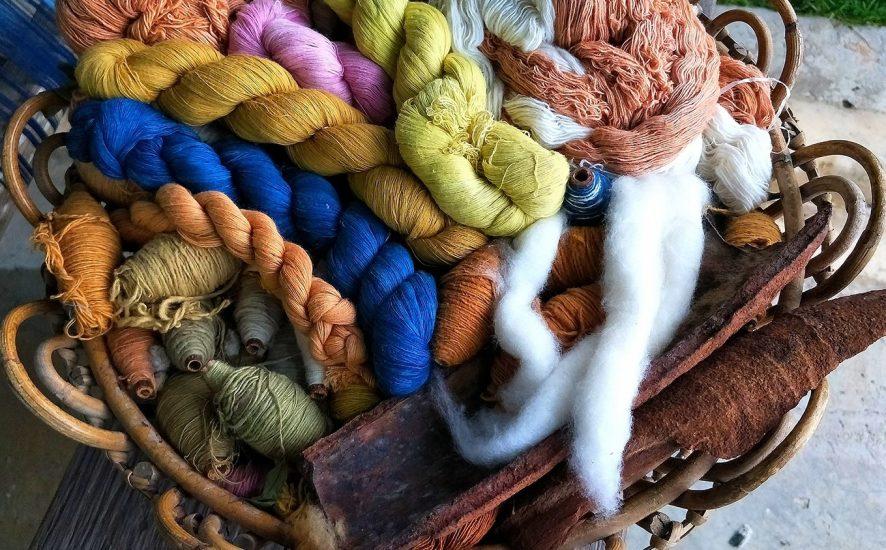
When researching or reading about different fabrics, you are likely to see the word yarn mentioned a lot. ‘Made from spun yarns’ or ‘with synthetic yarns’ are a couple of examples. But what is yarn? What is spun yarn? Are there other types? What does it all mean, and how much relevance does this bear to your final fabric? That’s what we are here to look at in a little more detail.
What is Yarn?
Yarn is a length of fibres. That’s the simplest way to explain it. It is a continuous length of fibres which are interlocked, and it’s used to produce fabrics, as well as in crocheting, knitting, embroidery and ropemaking.
This means that we can split yarn into two different ‘categories’ of sorts. The thread that is used for embroidery or in sewing machines, as well as yarn (commonly known as balls-of-wool) used in crafts such as knitting or crocheting, are long lengths that are bought as yarns.
The alternative would be a yarn which is then knitted or woven into a fabric. The textile is then bought as fabric, in lengths, rather than the yarn itself being purchased separately. This second description is the one that we will explore further in this post.
What is Yarn Made From?
Yarn can be made from such a variety of different fibres. This includes both natural and synthetic fibres. The most common plant fibre is cotton, however, you can also use other natural fibres such as bamboo. Alongside cotton, the synthetic polyester fibre makes up the two most commonly used fibres. Animal fibres are also often used, such as wool, harvested from sheep, as well as cashmere (harvested from goats) Angora (from rabbits) and silk (from insect larvae).
What is the Difference Between Spun and Filament Yarn?
Spun yarn is made by twisting staple fibres together in either an S or Z twist, to make a single thread. The process of twisting the fibres together into yarn is called spinning and it was one of the first processed to be industrialised. Spun yarns can contain a single type of fibre, or you can spin various types of fibre together to give you a blend.
Filament yarn is made up of filament fibres which are either twisted together or simply grouped together. It can either be composed of one filament, which is called a monofilament, or it could be made of more than one, in which case it would be known as a multifilament. This can be as few as two or three filament fibres, or even up to 50, or more.
Keep reading: www.curtainclean.co.nz...

Today’s Mind-Bender is the Last of the Year! Can You Guess It Before Everyone Else? 🌟🎁🌲
I dance in the sky with green and gold, a spectacle few are lucky to behold; I’m best seen in the south, a celestial sight—what am I, lighting up the New Zealand night?
Do you think you know the answer? Simply 'Like' this post and we'll post the answer in the comments below at 2pm on the day!
Want to stop seeing these in your newsfeed? No worries! Simply head here and click once on the Following button.

Scamwatch: How to recognise, avoid and act against scams.
A scam or a fraud is any scheme designed to con you out of money or steal your personal information. If someone contacts you unexpectedly – whether over the phone, through the post, by email, on a website, in person or on social media – always consider the possibility that it may be a scam.
Scammers target lots of people, often for small amounts of money. They constantly evolve their approach making scams harder to spot. Most scams come from overseas, but they may pretend to be locally based — from a reputable company, bank, or government agency, or even from your friends on social media if your account has been hacked. It is very difficult to get your money back once it is sent overseas.
Scams hurt us all. You can protect yourself and others by learning how to spot scams, share what you see and report them.
Figure out if you are being scammed: Use these questions to help figure out if you have been targeted by a scammer.
Article compiled from information kindly supplied by ConsumerProtection.govt.nz
Q&A regarding Neighbourly data breach
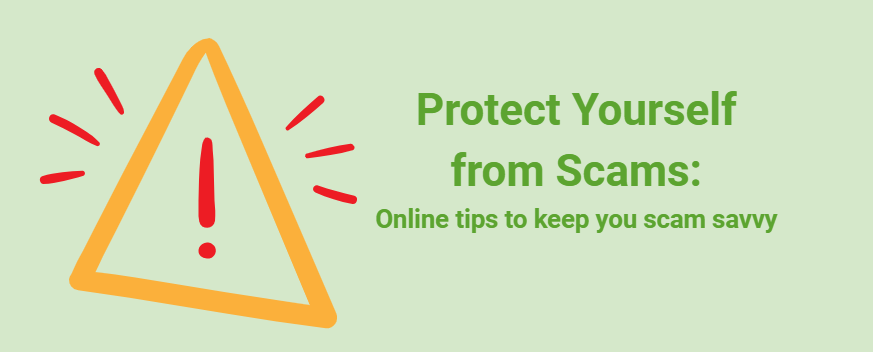
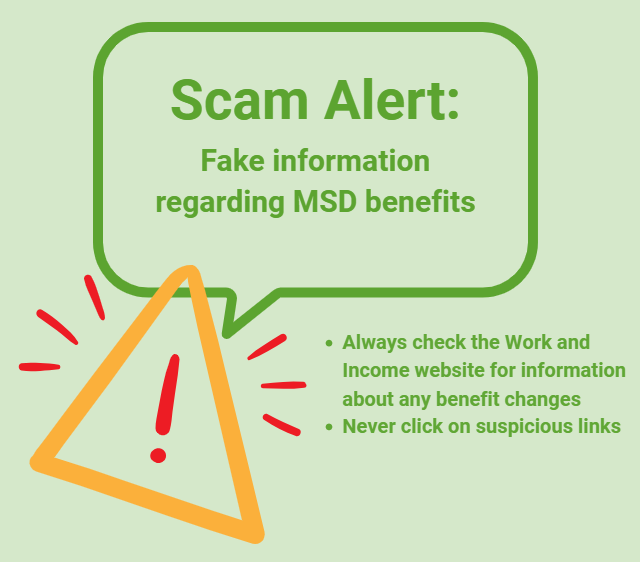
Scam Alert: Fake information regarding December Bonuses from MSD
The Ministry of Social Development is reporting that fake information is circulating about new ‘December bonuses’ or ‘benefit increases’
If you get suspicious communication, please contact Netsafe.
 Loading…