





Thinking of Living in a Retirement Village?
The Commission for Financial Capability is running free seminars about living in retirement villages with support from the Retirement Villages Association and experienced legal practitioners.
The seminars focus on things to consider before choosing to live in a retirement village and provide practical tips before you sign up to live in a retirement village.
Speakers from the Commission, Retirement Village Association and the legal profession (if available), will discuss types of retirement village structure, costs, and operations. The seminar will also explain some important resident's rights and where you can find out more information.
The seminars are 90 minutes long and include plenty of dedicated question and answer time throughtout the event.
Places are limited and registering attendance is essential.
Tea, coffee and light refreshments provided.
Register by clicking on the link.

Today’s Mind-Bender is the Last of the Year! Can You Guess It Before Everyone Else? 🌟🎁🌲
I dance in the sky with green and gold, a spectacle few are lucky to behold; I’m best seen in the south, a celestial sight—what am I, lighting up the New Zealand night?
Do you think you know the answer? Simply 'Like' this post and we'll post the answer in the comments below at 2pm on the day!
Want to stop seeing these in your newsfeed? No worries! Simply head here and click once on the Following button.

Scamwatch: How to recognise, avoid and act against scams.
A scam or a fraud is any scheme designed to con you out of money or steal your personal information. If someone contacts you unexpectedly – whether over the phone, through the post, by email, on a website, in person or on social media – always consider the possibility that it may be a scam.
Scammers target lots of people, often for small amounts of money. They constantly evolve their approach making scams harder to spot. Most scams come from overseas, but they may pretend to be locally based — from a reputable company, bank, or government agency, or even from your friends on social media if your account has been hacked. It is very difficult to get your money back once it is sent overseas.
Scams hurt us all. You can protect yourself and others by learning how to spot scams, share what you see and report them.
Figure out if you are being scammed: Use these questions to help figure out if you have been targeted by a scammer.
Article compiled from information kindly supplied by ConsumerProtection.govt.nz
Q&A regarding Neighbourly data breach
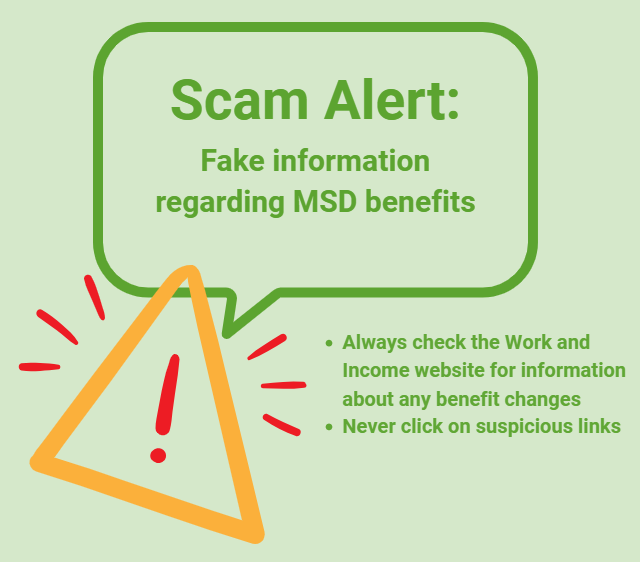
Scam Alert: Fake information regarding December Bonuses from MSD
The Ministry of Social Development is reporting that fake information is circulating about new ‘December bonuses’ or ‘benefit increases’
If you get suspicious communication, please contact Netsafe.
 Loading…