





SCAMS - General Tips
Scams
There seems to be a scam for every demographic - people with money to invest, shopaholics buying online, online banking customers and new migrants from countries where corruption is rife.
The people who operate scams use increasingly sophisticated ways to defraud you from your money, and are getting better at posing as legitimate organisations when they contact you. This includes developing fake websites and organisation letterheads that look like the real thing.
They rely on common human vulnerabilities, such as:
a belief in the legitimacy of companies and websites
a willingness to trust others
a wish for greater wealth
feeling obliged to follow through with something that was agreed to
not wanting to miss out on products or services that might only be available for a short time.
Your best defence is to educate yourself in the way that fraudsters work. You can find out about the wide range of scams on Consumer Protection’s ScamWatch website.
Some recent scams to be aware of include:
calls targeting migrant communities, claiming to be from Immigration New Zealand. They demand payment (sometimes in the form of iTunes vouchers) on threat of deportation or arrest;
emails claiming to be from a courier company, telling you that you missed a delivery and asking you to provide personal information so that you can retrieve the item.
There's a lot you can do to protect yourself. Below are a few tips:
Government agencies will never call, email or text demanding payment or threatening deportation. Banks will never call or email you to ask for your PIN or Internet banking password.
Salespeople and charity donations collectors will always wear clothing or accessories that identify them as such.
Microsoft is unlikely to call you to offer IT support services over the phone. Your internet provider is not likely to try to fix your internet problem by remotely controlling your computer. If you get an unexpected call with an offer to fix “problems” with your computer over the phone, just hang up.
If a bargain sounds too good to believe, it may be a stolen item – it may not even exist.
Before doing business with an unfamiliar company, do some research on them so you can be sure they are reputable.
Be careful about who you give your personal details to, as someone could use this information to steal your identity.
Check your banking and credit card statements regularly and look out for unexpected or unusual account transactions.
Be suspicious if the person you met online starts talking about their problems and suggesting that only you can help them.
If you didn’t buy a lottery ticket then it’s not possible for you to have won the lottery.
Don’t let anyone pressure you into making a decision quickly, whether it’s about investing, purchasing or donating.
If you receive a suspicious email, letter, fax or phone call, you can check whether it is a known scam. Reported scams are recorded on a number of websites:
The Department of Internal Affairs’ list of reported scams;
On the website of the business or organisation which the scammer wants you to believe they are representing (e.g. Inland Revenue, Immigration New Zealand);
You can also try doing an Internet search on the name of the organisation supposedly contacting you, followed by the word “scam”.
If you suspect it’s a scam but it isn’t listed as a reported scam, you can easily report it (on NetSafe's website, The Orb) so that others don't fall victim to it.
If you believe you have become a victim of a scam, report it to the Police. If you gave out your personal banking details you’ll also need to tell your bank.
www.cab.org.nz...

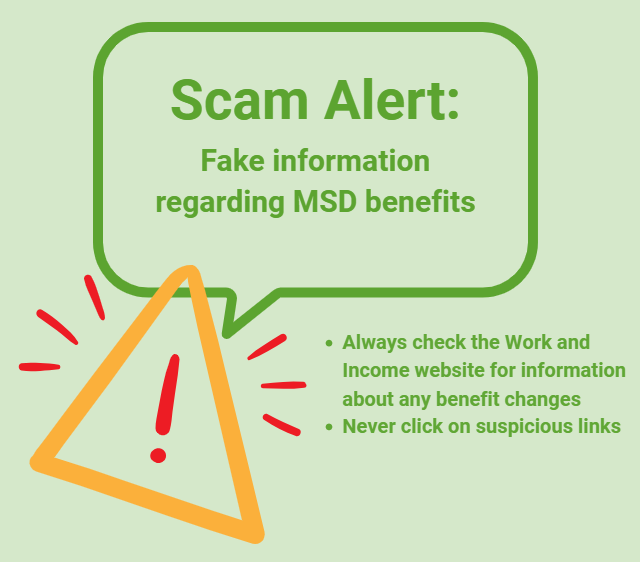
Scam Alert: Fake information regarding December Bonuses from MSD
The Ministry of Social Development is reporting that fake information is circulating about new ‘December bonuses’ or ‘benefit increases’
If you get suspicious communication, please contact Netsafe.
Poll: Do you set New Year’s resolutions?
🎉 2026 is almost here!
We’re curious ... how do you welcome it?
Do you set resolutions, follow special traditions, or just go with the flow?

-
10% Yes! New Year, New Me
-
16.9% Yes - but I rarely stick to them
-
73.1% Nah - not for me
Update to Neighbourly members on data breach 06/01/2025 8am
Yesterday in the High Court at Auckland, Neighbourly was successful in being granted an injunction against any unauthorised use of the data taken in a recent breach.
As we alerted you on January 1 and confirmed on January 3, our systems were accessed illegally and members’ information, including names, email addresses, GPS coordinates from the address you provided to us, forum posts and direct member communications were among the data that was accessed.
We acted immediately upon hearing of a potential breach: we temporarily disabled the site, notified members and authorities and worked with our external security consultants to understand if and how it had occurred. We then confirmed the breach with members, safely restored the site to service and began the process of seeking the injunction. Yesterday’s decision by Justice Johnstone prohibits the use of the data by any unauthorised person, and requires them to permanently delete it, or any information obtained from it.
This does not mean that vigilance against scammers is not still required: there is a large industry globally that seeks to use stolen information for identity fraud or to dupe people into providing details of their financial affairs for theft. Again, to keep yourself safe from scammers it is critical that you:
- Don’t click links in emails. Instead, type the web address directly into your browser. This helps ensure you’re visiting a real site, not a fake one
- Enable two-factor authentication where available as this adds an extra layer of security to your data
- Stay alert for phishing emails. Be cautious of unexpected emails asking for personal information, especially ones that create a sense of urgency.
Again, we want to apologise to you for this illegal access to the Neighbourly database and to assure you that we have carefully worked through how this occurred. We have safely secured the site and its services for use and ensured we have robust processes in place so this cannot happen again.
We are continuing to work with the relevant authorities, including the National Cyber Security Centre, on any further steps we need to take.
If you have any further questions please contact us via our customer support team at helpdesk@neighbourly.co.nz.
 Loading…